-
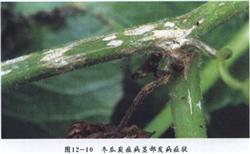
How to control wax gourd anthracnose? These techniques must be mastered
Wax gourd anthracnose can harm the cotyledons, true leaves, petioles, main vines and fruits, with fruit symptoms being the most obvious and causing the greatest damage. Wax gourd fruit infection with anthracnose mostly occurs at the top; the symptoms initially appear as small water-soaked spots, which gradually expand into round brown sunken spots. When humidity is high, pink granular substances grow in the center of the lesions,...
-
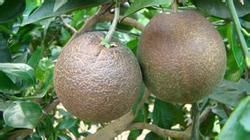
What are the control measures for citrus rust mites?
Pay attention to inspecting citrus plants. When a rapidly spreading pale yellow powdery layer appears on the leaf and fruit surfaces, when individual black-skinned fruits appear on the citrus plants, or when examination with a 10x magnifying glass reveals 2~3 rust mites per field of view, timely control should be carried out. You can choose M-45 Daconil 600x solution, or 25% azocyclotin 1...
-
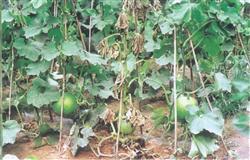
What are the control methods for winter melon pests and diseases?
Fusarium wilt is the most serious disease affecting autumn-planted winter melon. It strikes when the plant begins to flower and set fruit, causing the vines to wither and die. This disease is a fungal disease, and when it occurs severely, it spreads aggressively and rapidly, affecting entire patches and killing whole plants, resulting in heavy losses. Close attention must be paid to its control in order to protect the stems and vines and promote flowering and fruit set....
-
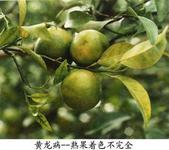
How to identify and control citrus huanglongbing (citrus greening disease)?
I. Symptoms The typical early symptom of a diseased tree is that 1-2 or several shoots with yellowing leaves appear in the deep green canopy. There are two symptom types of these yellowed shoots: one is uniform yellowing of the entire leaf, and the other is a leaf with one patch yellow and one patch green, alternating yellow and green, called the mottled type. The common feature of these two types of leaves...
-
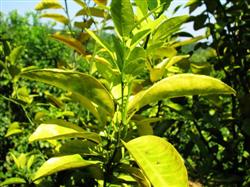
What to Do When Citrus Gets Huanglongbing? Symptom Identification and Control Techniques
Citrus huanglongbing is also known as "citrus cancer." It is a bacterial disease caused by a bacterium called Candidatus Liberibacter asiaticus, and is spread through grafted nursery stock and an insect called the Asian citrus psyllid. The harm it causes to citrus is enormous; if allowed to spread, it will deal a fatal blow to the citrus industry, killing trees and destroying orchards, and must be taken with the utmost seriousness...
-
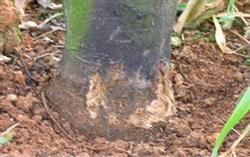
What to Do When Citrus Gets Foot Rot? Detailed Prevention and Control Measures
Distribution and damage symptoms: Foot rot, also known as skirt rot, is a root crown disease that occurs in all citrus-growing areas of our country. It damages the root crown and main root cortex of citrus. The diseased bark rots and turns brown with a smell of distillers' grains, and often exudes a gummy substance. Under dry conditions, the diseased part cracks and hardens, and it is clearly demarcated from the healthy part. In the early stage, it only damages the tree surface...
-
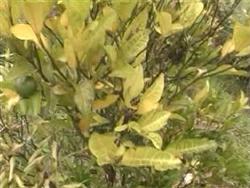
A Detailed Introduction to the Asian Citrus Psyllid and Its Control Methods
Asian citrus psyllid [Diaphorina citri Kuwayama] belongs to the order Homoptera, family Psyllidae. It is an important pest during the tender shoot stage of citrus, mainly damaging citrus, and can also damage Rutaceae plants such as orange jasmine (Murraya paniculata) and wampee (Clausena lansium). Damage characteristics: adults and nymphs gather in groups on tender shoots, young leaves and new buds to suck sap. The damaged tender shoots...
-
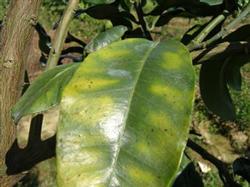
What are the control methods for magnesium deficiency in citrus?
In recent years, as a large amount of rural labor has moved to cities and towns, the number of livestock raised by farming households has declined, and the sources of organic fertilizer have decreased significantly. Coupled with years of low fruit prices, fruit growers have greatly reduced or even stopped using organic fertilizer in fruit production, causing the phenomenon of nutrient deficiency in orchards to worsen continuously in recent years. This is especially true for the secondary element magnesium...
-
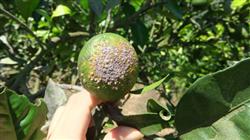
How to prevent heat damage in citrus? A detailed guide to practical control techniques
Citrus is a tropical and subtropical evergreen fruit tree (with the exception of trifoliate orange), preferring warm and humid conditions, but it is also sensitive to heat. If abnormally high temperatures of 30°C and above occur between the flowering stage and the fruit-setting stage of citrus, normal flowering and fruiting will be affected, and the earlier the high temperatures occur, the greater the damage. During this period, abnormal flower drop...
-
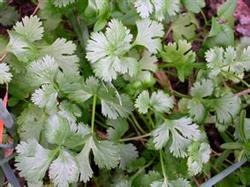
What are the common diseases of cilantro? Detailed explanation of prevention and control methods
Coriander (cilantro) is used as a seasoning vegetable; it is nutritious and simple to cultivate and manage. The key points of coriander cultivation techniques are introduced as follows: Characteristics of coriander. Coriander belongs to the Apiaceae family. It can withstand low temperatures of -1°C to 2°C, and its suitable growing temperature is 17°C to 20°C. Above 20°C it grows slowly, and at 30°C it stops growing. Coriander has requirements for soil...
条件筛选