A Detailed Introduction to the Asian Citrus Psyllid and Its Control Methods
Asian citrus psyllid [Diaphorina citri Kuwayama] belongs to the order Homoptera, family Psyllidae. It is an important pest during the tender shoot stage of citrus, mainly damaging citrus, and can also damage Rutaceae plants such as orange jasmine (Murraya paniculata) and wampee (Clausena lansium). Damage characteristics: adults and nymphs gather in groups on tender shoots, young leaves and new buds to suck sap. The damaged tender shoots...
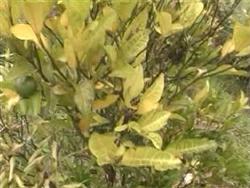
Asian citrus psyllid [Diaphorina citri Kuwayama] belongs to the order Homoptera, family Psyllidae. It is an important pest during the tender shoot stage of citrus, mainly damaging citrus, and can also damage Rutaceae plants such as orange jasmine (Murraya paniculata) and wampee (Clausena lansium).
Damage characteristics: adults and nymphs gather in groups on tender shoots, young leaves and new buds to suck sap. The damaged tender shoots and young buds shrivel and dry up, and the new leaves become deformed and twisted. The insect's excrement, commonly known as "honeydew", can also induce sooty mold. More importantly, this insect has been proven to be the transmission vector of citrus huanglongbing (HLB, citrus greening disease). Therefore, carrying out good control of the Asian citrus psyllid is not only necessary to reduce the insect's damage to citrus, but is also an important part of integrated management of citrus huanglongbing and of controlling the spread and expansion of the disease.
Morphology: The adult is a small insect with a body length of about 3 mm. The whole body is bluish-gray, the forewings are semi-transparent with brown markings, and the body is covered with white waxy powder. The head is pointed and protruding, the mesothorax and metathorax are relatively broad, and the entire insect is nearly diamond-shaped. The nymph is flat and oval, yellow in body color, with 5 instars in total, has wing buds, and the abdominal margin of each instar nymph secretes short white waxy filaments.
Habits: This insect can occur in 8 to 14 generations throughout the year. In citrus orchards in Guangdong, Guangxi, Fujian and Taiwan, China, all stages of the insect can be seen throughout the year. Adults overwinter densely on the undersides of leaves, and in late February of the following year they begin to lay eggs and reproduce on the tender buds of spring shoots, with generations overlapping during the year. The fluctuation of the Asian citrus psyllid population is consistent with the flushing periods of new citrus shoots. In South China, this insect shows 3 peaks during the year, occurring respectively from mid-March to April, from late May to late June, and from July to August and September, which are also the main flushing periods of citrus spring, summer and autumn shoots. Generally, the population on autumn shoots is the largest and the damage is the most severe, which can cause autumn buds to wither and die. In different citrus orchards, due to different nutritional and reproductive conditions, the number of psyllids occurring also varies. Food, climate, cultivation, pesticide spraying and natural enemy activity are factors affecting psyllid population density, among which food is the most important; without tender buds, psyllids cannot lay eggs. Prolonged rainy weather is unfavorable to psyllid reproduction, and the population declines markedly. Usually, the population density on weak trees and trees with huanglongbing is far higher than on healthy trees, with differences reaching more than 10 times to several dozen times, because the canopies of weak and diseased trees are sparse in branches and leaves and flush unevenly, thereby favoring psyllid egg-laying and reproduction.
In citrus orchards, the Asian citrus psyllid mostly shows an aggregated core distribution. Adults are not strong fliers, and migration and spread are slow; nymphs have even weaker activity. Adults are attracted to yellow and red colors. Based on these characteristics, control should strengthen general surveys of pest occurrence, and once a pest source center is found, spray insecticide promptly, which can achieve the effect of controlling the insect and the disease.
Natural enemies of the Asian citrus psyllid include encyrtid wasps, ladybirds, green lacewings, flower bugs, thrips, mantises, hoverflies, mites, spiders and ants, among others. Among them, encyrtid wasps parasitic on nymphs and pupae can reach a parasitism rate as high as 30% to 50%, exerting a certain suppressive effect on the psyllid, and attention should be paid to protecting and utilizing them.
Control methods: The following steps should be carried out well in the control of the Asian citrus psyllid:
1. Agricultural control: (1) Plan the citrus orchard well and avoid mixed planting of multiple varieties. (2) Promptly cut down and remove huanglongbing trees and weak trees that have lost the ability to bear fruit, so as to reduce insect sources. (3) Strengthen canopy management so that branches and shoots flush uniformly, worsening the places for insect egg-laying and reproduction.
2. Ecological control: Mainly establish shelterbelt tree strips to create environmental conditions unfavorable to psyllid reproduction and spread. In nurseries and orchards where conditions do not allow establishing shelterbelts, at least interplant tall green manure crops at the orchard edges and between rows to hinder the migration and transmission of the psyllid, which can achieve the effect of suppressing the insect and preventing the disease.
3. Spray pesticide promptly to protect new shoots: On the basis of good monitoring and forecasting of the insect's occurrence period and occurrence quantity, spray pesticide promptly when the sprouting young shoots of each new flush are about 5 cm long. The following can be selected: 95% diflubenzuron aqueous solution at 1,000 times dilution, or 20% fenvalerate emulsifiable concentrate at 3,000 times dilution, or 2.5% Decis (deltamethrin) emulsifiable concentrate at 1,000 to 1,500 times dilution, or 50% dichlorvos emulsifiable concentrate at 1,000 times dilution, or 44% Duochongqing emulsifiable concentrate at 1,500 times dilution, or 10% dichlorvos-cypermethrin emulsifiable concentrate at 4,000 times dilution, or 2.5% rotenone emulsifiable concentrate at 500 times dilution.