What are the control methods for winter melon pests and diseases?
Fusarium wilt is the most serious disease affecting autumn-planted winter melon. It strikes when the plant begins to flower and set fruit, causing the vines to wither and die. This disease is a fungal disease, and when it occurs severely, it spreads aggressively and rapidly, affecting entire patches and killing whole plants, resulting in heavy losses. Close attention must be paid to its control in order to protect the stems and vines and promote flowering and fruit set....
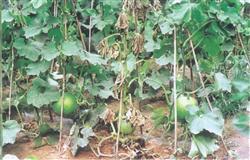 There are many diseases in winter melon cultivation, such as fusarium wilt, phytophthora blight, and anthracnose. Based on many years of production experience, the author believes that vegetable growers should start from the causes of disease and adopt comprehensive measures to control and reduce disease occurrence to the greatest extent possible.
1. Practice crop rotation to control soil-borne transmission
Crop rotation gives relatively good disease control results. Farmers with larger-scale vegetable operations should divide their vegetable fields into 3-5 zones and practice zoned rotation. Even on small plots, the field should be divided into two zones, with melons grown in alternate years. During the rotation period, where conditions permit, it is best to plant one year of rice or aquatic crops, or crops such as scallions and garlic that can secrete bactericidal substances, and to avoid planting crops that share similar diseases with cucurbits. If raising seedlings for transplanting, the seedling bed should be chosen from fields where melons have not been grown for many years; for bagged seedlings, use fertile soil free of cucurbit diseases. Attention should also be paid to cleaning up the melon field and burning diseased plant residues in a concentrated manner. If melon vines are used for composting, it is best to use high-temperature pile composting to kill pathogens; fertilizer made by water composting melon vines should not be used on melon fields. Aphids are transmitters of viral diseases, so crops prone to aphid infestation should be avoided near melon fields.
2. Improve fertilization techniques and emphasize organic fertilizer
Using biofertilizers mixed and composted (soaked) with conventional fertilizers not only improves fertilizer efficiency, but also, through the massive proliferation of beneficial microorganisms, increases available soil nutrients and greatly raises the proportion of beneficial microorganisms in the rhizosphere, thereby enhancing antagonistic capacity against pathogens and suppressing their pathogenicity. Through years of demonstration and extension on vegetables and fruit trees, using Guomanduo bio-organic fertilizer and Kekaxi bio-organic fertilizer together with farmyard manure as a base fertilizer, and soaking them together with manure and urine fertilizer for multiple topdressings (combined with some chemical fertilizer), not only gives good fertilizer efficiency, but the incidence of fusarium wilt and phytophthora blight at the seedling stage and in mature plants can be very noticeably reduced (with crop rotation as a premise and in combination with chemical control).
In addition to ecological fertilizers, high-quality compound fertilizers can provide the N, P, and K essential for winter melon, combining the long-lasting effect of organic fertilizer with the quick-acting effect of chemical fertilizer. The critical period for P and K nutrition in winter melon is the seedling stage, so the base fertilizer must contain sufficient phosphorus and potassium. Domestic Yangfeng compound fertilizer and Japanese Sumitomo compound fertilizer have shown clear effects on abundant harvests after years of demonstration use. Sumitomo compound fertilizer in particular has both quick-acting and long-lasting functions, with high fertilizer utilization efficiency.
In many melon fields, few seedlings die early on, but after the vines reach the trellis (frame), the number of dead plants suddenly increases, sometimes even exceeding 50%. The cause is related to improper nitrogen fertilizer application under high-temperature and rainy conditions. The experience summarized is: do not apply before heavy rain, and do not apply immediately after rain; one-sided application of overly concentrated quick-acting nitrogen fertilizer easily causes fusarium wilt and phytophthora blight. For overly acidic soil, applying lime to neutralize soil acidity helps improve disease resistance.
Winter melon has a high fertilizer requirement, and among the three major elements, potassium is needed the most. After flowering and fruiting, on the basis of topdressing with high-quality compound fertilizers such as Yangfeng and Sumitomo, foliar spraying of high-potassium foliar fertilizers such as Fuwanjia and PuLuodan 2-3 times can effectively supplement the insufficiency of root uptake and provide various trace elements needed by winter melon.
3. Use high beds for drainage and select disease-resistant varieties
Winter melon plants grow vigorously, with large leaves, large fruits, and high yields, consuming large amounts of nutrients and water. However, winter melon and wax gourd are not tolerant of waterlogging; in the rainy season, water-saturated melon fields and root suffocation can trigger various diseases. Building high beds and ensuring smooth drainage are basic requirements for high quality and high yield; ensuring uniform watering (sprinkling) during the fruiting period is also very important for normal fruit growth. Alternating dry and wet conditions lead to misshapen fruits, poor quality, and even halted development.