-
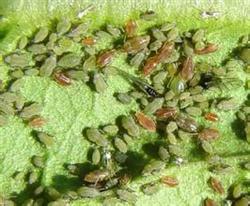
Identification and Control Methods for Green Peach Aphid on Cilantro
Description of Characteristics and Control Methods The green peach aphid, Myzus persicae (Sulzer), belongs to the order Hemiptera (formerly Homoptera; however, Homoptera has now been moved within Hemiptera), family Aphididae. Also known as the greasy bug, tobacco aphid, peach red aphid, and oil bug. The green peach aphid is a polyphagous pest, with host plants numbering approximately 74 families and 28...
-
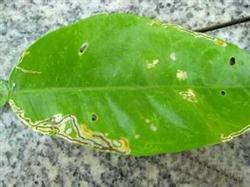
Key Technical Points for Pest and Disease Control in Citrus in Summer and Autumn
1. Whitefly: Both adults and larvae can harm citrus leaves and fruits, sucking sap with piercing-sucking mouthparts and secreting large amounts of honeydew that contaminates leaves and fruits, causing sooty mold. Because whitefly reproduces quickly, has many hosts, and spreads easily, large-scale coordinated control is needed to achieve good results. (1) Control timing: when...
-
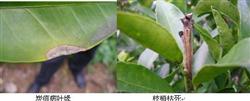
How to prevent and control citrus anthracnose? Mastering these methods is key
(1) Reasonable fertilization. Increase the application of organic fertilizers, such as plant ash and rapeseed cake fertilizer, to improve the physical and chemical properties of the soil and create good conditions for root growth; according to the measured soil properties, carry out formula fertilization with nitrogen, phosphorus, potassium and micronutrients. (2) Reasonable pruning and thinning of branches and fruit. Combined with garden clearing and year-round management, prune diseased and pest-infested branches...
-
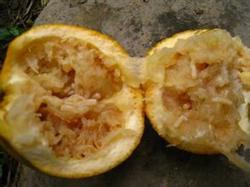
May control methods for the Chinese citrus fruit fly
The Chinese citrus fruit fly, commonly known as the citrus maggot, and the damaged fruit known as maggot fruit, was a nationally quarantined pest before 2009. It damages four citrus types: pomelos, sour oranges, navel oranges, and mandarins (loose-skin citrus), with sour oranges and sweet oranges suffering the most severe damage. Its larvae tunnel through and feed on the segments inside the fruit, causing the fruit to turn yellow before ripening, with red tinges amid the yellow, and the damaged fruit severely...
-
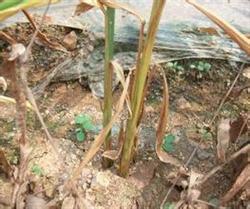
How to control ginger stem base rot with good results
In recent years, as the area of continuous ginger cropping has continued to expand, combined with extensive field management, ginger diseases have also shown a worsening trend, especially since June, when high temperatures and frequent rain make ginger stem base rot most likely to occur. Recently, Li Hualiang and Lu Changlei of Renzhao Town, Pingdu City, Shandong Province, and Yu Wanquan of Ju County, among others, reported that in their area...
-
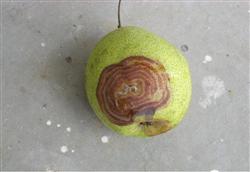
How to control pear tree pests? These small measures are simple and practical
Pear fruit borer. It has 2-3 generations per year and has the habit of moving between buds and fruits to cause damage. At this time, the pear fruit borer is inside the dead flower stalks. When the young fruit develops to the size of a thumb, it moves to damage the young fruit. One larva can damage 1-4 young fruits, so systemic insecticides such as 40% Haolaoli should be used for control. Oriental fruit moth...
-
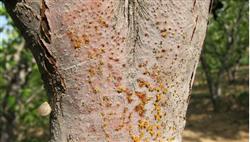
How to prevent and control pear tree canker? Mastering these methods is enough
1. Strengthen the tree to prevent disease: (1) Reasonable load: According to the tree's growth condition and fertilization level, determine an appropriate fruit load. Do not let the tree bear too heavy a load, and even less should you adopt excessive measures such as branch bending and girdling to increase fruit production for short-term gain. Properly thin flowers and fruits so that both fruiting and tree growth are achieved. (2...
-
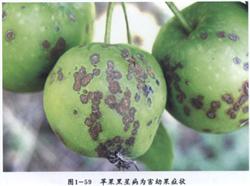
What are the control methods for pear scab?
1. Strengthen orchard management. Pear trees that grow weakly are easily infected by the pathogen. Therefore, applying more fertilizer, especially organic fertilizer, can strengthen the tree vigor and improve disease resistance. 2. Chemical control. Spray once just before the pear trees approach flowering and once when about 70% of the flowers have fallen, to protect the inflorescences, young shoots and new leaves. After that, according to rainfall conditions...
-
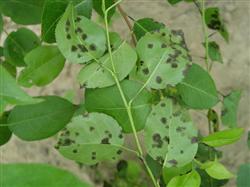
Detailed Explanation of Control Methods and Technical Key Points for Pear Scab
In the early stage of fruit infection, pale yellow spots appear; after the lesions expand, they become slightly sunken and develop black mold, after which the lesions become corky and cracking appears. Control measures: in the early stage of fruit infection by pear scab, the pesticides to spray include 1:2:200 Bordeaux mixture; 70% thiophanate-methyl wettable powder at 800-1000 times dilution; 50% carbendazim wettable...
-
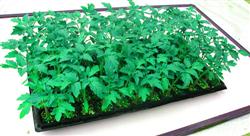
Key Technical Points for Temperature and Light Control in Winter Tomato Production
Spring tomato seedling raising: because there are many low-temperature and overcast-rainy days, the seedbed temperature is low and the humidity is high, which often leads to seedling-stage diseases such as damping-off and causes seedling raising to fail. Therefore, a place with loose soil texture, fertile soil, a sunny aspect, no water accumulation, and where no solanaceous crops have been planted within 2 years should be chosen as the seedbed. Generally choose an overcast or sunny day...
条件筛选