How to identify and control citrus huanglongbing (citrus greening disease)?
I. Symptoms The typical early symptom of a diseased tree is that 1-2 or several shoots with yellowing leaves appear in the deep green canopy. There are two symptom types of these yellowed shoots: one is uniform yellowing of the entire leaf, and the other is a leaf with one patch yellow and one patch green, alternating yellow and green, called the mottled type. The common feature of these two types of leaves...
I. Symptoms
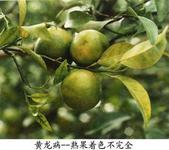
The typical early symptom of a diseased tree is that 1-2 or several shoots with yellowing leaves appear in the deep green canopy. There are two symptom types of these yellowed shoots: one is uniform yellowing of the entire leaf, and the other is a leaf with one patch yellow and one patch green, alternating yellow and green, called the mottled type. The common feature of these two types of leaves is that the leaf texture becomes hardened and lacks luster. The old leaves at the lower part of the yellowed shoot remain normally green. However, because the onset period differs, the symptoms of diseased leaves also differ slightly. The spring shoots newly produced by a diseased tree in that year can turn green normally, but as the spring shoots mature, the green of the leaves gradually fades and turns yellow, and the number of yellowing shoots is also relatively greater. For the summer shoots and autumn shoots produced by a diseased tree in that year, the leaves cannot turn green normally and gradually change from pale yellow to yellow, and the number of diseased shoots is also fewer than that of spring shoots. The leaves on the yellowed shoots that turned yellow that year gradually fall off by late autumn, and all have fallen before the spring buds sprout the following year. In the second year, diseased shoots appear earlier, and are short and weak; the diseased leaves are small, narrow and elongated, with hardened leaf texture; the main and lateral veins are green, while the rest of the leaf mesophyll is pale yellow or yellow, similar to zinc deficiency symptoms. At this time, new shoots in other parts of the canopy also successively show symptoms of uniform yellowing or alternating yellow and green from top to bottom. With further development of the disease, the yellowed diseased shoots increase day by day, leaves fall off, and in addition to root rot, the diseased tree gradually weakens in growth; the shoots that became diseased early gradually dry up, and afterward the diseased plant gradually dies. Diseased trees flower early, and the petals are relatively small, thick, and pale yellow. Some stigmas are often curved and exposed, and flowers on small branches often gather in clusters, a phenomenon farmers call "flower balls." These flowers almost all fall off in the end, and only very few can set fruit. Diseased fruit is deformed, the peel becomes soft and lusterless, and the taste is sour; during coloring, some are unevenly yellow and green, and in some varieties the area near the fruit stalk turns orange-red while the rest remains green, called a "red-nose fruit." Whether for a single tree or a single shoot, huanglongbing starts from the topmost leaves and then spreads downward. Moreover, the leaves become hard. Even after strengthened management, the symptoms will not subside. Physiological diseases generally start from the lower part of the canopy and then spread upward; the diseased leaves are soft and will not become hard. After strengthening water and fertilizer management, the symptoms will gradually subside. If the leaf symptoms are of the mottled type and the leaves are relatively hard, then it can be confirmed as a huanglongbing tree.
II. Control measures
Citrus huanglongbing is a destructive disease that spreads rapidly, and all existing citrus cultivars are susceptible, so controlling citrus huanglongbing requires comprehensive measures to achieve good results.
1. Strictly implement quarantine. The transport of nursery stock and disease-carrying materials (such as scions) from diseased areas to new areas and disease-free areas should be strictly prohibited. Within diseased areas, diseased or possibly diseased nursery stock should be planted in a controlled and relatively concentrated manner to prevent further spread. Newly established orchards must all be planted with disease-free seedlings.
2. Establishing disease-free nurseries and cultivating disease-free seedlings is a key measure for controlling citrus huanglongbing. Disease-free seedlings free of huanglongbing and certain dangerous diseases (such as canker and exocortis) must be cultivated for planting in new orchards in new areas and disease-free areas.
3. Dig out and remove diseased plants. Since there is currently no effective method that can cure citrus trees suffering from huanglongbing, and diseased trees left in the field are a source of disease, immediately digging out and removing any tree found to have huanglongbing is an important measure for controlling the spread of huanglongbing. The method is: for the 3 shoot periods each year in spring, summer and autumn, especially the autumn shoot period, carefully inspect every tree, and immediately dig out and burn in a centralized manner any diseased or suspected diseased plants. Before digging out diseased trees, spray diseased trees and nearby plants with chemicals such as 40% omethoate 1000-fold solution to prevent the Asian citrus psyllid from transferring and spreading from diseased trees to the surroundings. In new citrus orchards with an incidence below 10% and old citrus orchards with an incidence below 20%, disease-free seedlings can be used for replanting after the diseased plants are dug out.
4. Control the Asian citrus psyllid. The Asian citrus psyllid is the vector insect that transmits huanglongbing. It lives on the new buds and tender shoots of citrus. Control shoot flushing through water and fertilizer management so that the new shoots emerge uniformly and the shoot-flushing period is shortened. When new shoots have flushed to 1-2 cm, comprehensively spray insecticide 1-2 times. In winter, Asian citrus psyllids all like to fly to orange jasmine near the orchard to overwinter. Spraying insecticide on orange jasmine has a certain effect on reducing the number of psyllids. In addition, planting shelterbelts around the orchard can obstruct the migration and flight of psyllids.
5. Strengthen management, especially water and fertilizer management of fruiting trees, to keep the tree vigor strong and improve disease resistance, which plays an important role in reducing the occurrence of huanglongbing and the losses caused by the disease.
6. Transform diseased areas into new areas. For some orchards where citrus huanglongbing occurs very severely and economic value has already been lost, diseased-area transformation should be implemented, that is, dig out all the citrus trees in the entire orchard (including those citrus trees that may already be infected but have not yet shown symptoms), and then replant with disease-free citrus seedlings. By doing a good job in insect control, promptly digging out and removing diseased trees and strengthening management, the diseased area can be transformed into a new disease-free area.