How to prevent heat damage in citrus? A detailed guide to practical control techniques
Citrus is a tropical and subtropical evergreen fruit tree (with the exception of trifoliate orange), preferring warm and humid conditions, but it is also sensitive to heat. If abnormally high temperatures of 30°C and above occur between the flowering stage and the fruit-setting stage of citrus, normal flowering and fruiting will be affected, and the earlier the high temperatures occur, the greater the damage. During this period, abnormal flower drop...
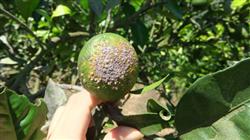
Citrus is a tropical and subtropical evergreen fruit tree (with the exception of trifoliate orange), preferring warm and humid conditions, but it is also sensitive to heat. If abnormally high temperatures of 30°C and above occur between the flowering stage and the fruit-setting stage of citrus, normal flowering and fruiting will be affected, and the earlier the high temperatures occur, the greater the damage. During this period, abnormal flower and fruit drop caused by high temperatures, resulting in yield loss, is known as citrus heat damage.
I. Causes of abnormal fruit drop from heat damage
1. Varieties and strains and abnormal fruit drop Different varieties and strains show different degrees of abnormal fruit drop. Among 9-year-old Miyagawa Satsuma mandarin, Owari Satsuma mandarin, Nanfeng tangerine, Ponkan and Zhangtouhong, the fruit-setting rates were 0, 0.8%, 4.1%, 4.8% and 5.3% respectively. It can be seen that seedless varieties drop fruit more severely than seeded varieties, and early-maturing Satsuma mandarin varieties drop fruit more severely than mid-to-late-maturing varieties.
2. Tree age and tree vigor and abnormal fruit drop An investigation of 6-, 7- and 8-year-old Owari Satsuma mandarin trees showed fruit-setting rates of 0, 0.8% and 1.1% respectively, indicating that the younger the tree, the more severe the fruit drop. At the same time, an investigation of 9-year-old trees found that trees with excessively vigorous growth and rapid spring shoot emergence, or trees that were weak, had a large number of flowers, and produced few or no spring shoots, dropped fruit more severely, while trees of moderate vigor with moderate spring shoot emergence dropped less fruit.
3. Fruit-bearing branch type and abnormal fruit drop Under normal conditions, leafy fruit-bearing branches, especially long leafy fruit-bearing branches, have a higher fruit-setting rate, while leafless fruit-bearing branches have a lower fruit-setting rate. However, under abnormally high temperatures, leafless degenerated branches set more fruit (accounting for 91% of the total fruit), short leafy fruit-bearing branches set less fruit (accounting for 9%), and all fruit on long leafy fruit-bearing branches dropped.
4. Fruit-setting position and abnormal fruit drop Fruit drop was severe on the upper and outer parts of the canopy (almost all fruit dropped), while more fruit set on the lower part and inside the canopy.
5. Fertilization and hormone spraying and abnormal fruit drop When winter base fertilizer was delayed until the end of December and spring fertilizer was excessive, a large number of spring shoots emerged, intensifying the conflict between shoots and fruit and worsening fruit drop. When high temperatures arrived during the flowering stage and no measures were taken to protect flowers and fruit, abnormal fruit drop worsened.
6. Winter leaf drop and abnormal fruit drop Severe winter leaf drop led to declined tree vigor, affecting flower bud differentiation and flower quality, and causing severe abnormal flower and fruit drop.
7. Timely irrigation and abnormal fruit drop Trees that could be irrigated promptly during high temperature and drought had higher fruit-setting rates. During the high temperature period in May, 3 Owari Satsuma mandarin trees were irrigated with 40 kg, 80 kg and 120 kg of pig urine water respectively. As a result, the tree irrigated with 120 kg had the highest fruit-setting rate and a yield of 40 kg per tree; the one irrigated with 80 kg was intermediate, with a yield of 30 kg per tree; the one irrigated with 40 kg was the lowest, with a yield of 10 kg per tree; while the adjacent unirrigated trees had almost no harvest.
8. Citrus producing areas and abnormal fruit drop In China, abnormal fruit drop caused by citrus heat damage is most severe in the citrus producing areas of the middle and lower reaches of the Yangtze River, and occurs most frequently in early May at the turn of spring and summer.
II. Heat damage warning
At present, the high temperature warning signals issued by meteorological observatories in China are divided into three levels, represented by yellow, orange and red, respectively indicating that the 24-hour maximum temperature is about to rise above 36°C, above 37°C and above 39°C. Citrus growers should pay attention to high temperature forecasts from meteorological observatories, issue warnings for impending high temperatures, and take corresponding preventive measures to reduce the occurrence of citrus heat damage.
III. Heat damage prevention
1. Choose a good orchard site When selecting a citrus orchard site, the impact of high temperature should be considered as a major factor, and heat-avoiding cultivation should be adopted as far as possible. For example, choose a site with a suitable local microclimate within the broader climate, establish conservation forests, and improve the ecological environment. Cultivation along rivers and streams can also reduce heat damage.
2. Choose good varieties It is advisable to choose varieties and rootstocks with strong heat resistance. For example, for Satsuma mandarin it is best to choose mid-to-late-maturing varieties, and for sweet orange it is best to choose seeded varieties.
3. Build a good orchard site Improve the soil and build fertility in the planting site. Citrus planted in deep, loose and fertile soil has stronger heat resistance; conversely, citrus planted in poor, thin soil has poor heat resistance.
4. Strengthen cultivation management Strengthening cultivation management can reduce citrus heat damage, mainly including the following aspects of management:
① Soil management. Focus on deepening the soil layer and increasing soil organic matter content; tree-disk mulching can also be carried out. When the temperature is above 30°C, mulch bearing trees that have not yet closed their rows. Implementing whole-orchard grass cultivation from March to September is also helpful for reducing heat damage.
② Fertilizer management. First, apply heavy bud-promoting fertilizer. In early March, when spring buds begin to sprout, apply a heavy fertilizer based mainly on quick-acting nitrogen fertilizer to meet the needs of the tree for shoot emergence, flowering and fruit setting. Second, increase phosphorus and potassium fertilizer. Frequently spraying phosphorus and potassium fertilizer on the leaves in spring has an obvious effect on preventing heat damage and reducing abnormal fruit drop.
③ Water management. Irrigate promptly and keep the soil moist, which can reduce heat damage, and spraying water is more effective than irrigation.
④ Shoot management. First, protect overwintering leaves. Manage autumn shoots well, and after fruit harvest apply an appropriate amount of urea or dilute manure water to strengthen tree vigor and protect leaves; a 2,4-D solution at a concentration of 10 mg/kg can also be sprayed to protect leaves through winter. Second, heavily remove spring shoots to reduce the amount of new leaves. Spring shoots should be removed early, heavily and repeatedly: early removal means starting from the bud stage; heavy removal means removing excess spring shoots according to the ratio of new to old leaves, or first removing 70% of spring shoots and then using early summer shoots to make up for the tree's insufficient leaves; repeated removal means removing shoots in batches multiple times, generally once every 7-10 days, until the end of the second physiological fruit drop. All late spring shoots and early summer shoots after the end of full bloom can also be removed. Before the flowering stage, remove 30%-50% of spring shoots, and pinch the retained spring shoots after leaving 3-5 leaves.
⑤ Pest and disease control. Carry out good control of citrus blossom midge, mites, leaf beetles and anthracnose to protect leaves and fruit.
5. Emergency measures
① Spray flower- and fruit-preserving agents. Use enhanced liquefied cytokinin (BA) + gibberellin (GA, fruit-dipping type) or enhanced liquefied gibberellin + gibberellin (spray type). For the fruit-dipping type, add 0.5-1 kg of water per bottle (10 mL) (for adult orange trees add 0.6-0.75 kg of water, for young trees add 0.75-1 kg of water, and for Satsuma mandarin add 0.75-1 kg of water), stir thoroughly and prepare a dilute solution. 5-10 days after citrus petals fall, dip a brush in the dilute solution and coat the entire surface of the young fruit, just enough to moisten it; generally one fruit-dipping treatment is enough to ensure sufficient fruit retention. For some plants that grow weakly or have excessively vigorous vegetative growth and are very prone to fruit drop, apply once more at the beginning of the second physiological fruit drop. For the spray type, add 10-15 kg of water per bottle (10 mL), stir thoroughly and prepare a dilute solution. When 70%-80% of citrus flowers have fallen, use a sprayer to spray the young fruit on the canopy, mainly spraying the fruit and spraying as little as possible on leaves and new shoots. Spray once more 10-25 days after the first spray. For varieties or plants that are extremely prone to fruit drop, spray a third time 30-40 days after petal fall. If rain occurs within 12 hours after spraying, respray once when the weather clears. Using a micro-sprayer (using a mosquito-killing type or other micro sprayer aimed at flowers and young fruit) gives better results. For the micro-sprayer, add about 5 kg of water per bottle. For pummelo, a small-scale test should be conducted before spraying to ensure safety. For Satsuma mandarin, its special fruit-preserving agent, Baoganling, can also be used. Method of use: add 25-50 g of 50%-70% alcohol or white liquor to each packet of Baoganling powder, stir to dissolve, then add 25 kg of water and spray the canopy. Spray the first time at the end of full bloom, and spray again 15-25 days later, mainly spraying flowers and fruit, just enough to moisten them.
In addition, gibberellin 10 mg/kg + 0.4%-0.5% monopotassium phosphate + 0.1% borax solution can also be sprayed at the bud stage; within 7-15 days after petal fall, spray gibberellin 30-40 mg/kg + cytokinin 800-fold solution; at the second physiological fruit drop, spray 10 mg/kg 2,4-D + Lubao 800-fold solution to prevent abnormal fruit drop in Satsuma mandarin. Paclobutrazol can also be used to preserve fruit. When spring shoots are 1.5 cm long, spray the growth inhibitor paclobutrazol to preserve fruit (late application gives unsatisfactory results), and spray once more after 7-10 days.
② Girdling and scoring. From the initial flowering stage to the end of full bloom, carry out scoring or girdling on large branches of young bearing trees or overly vigorous trees.
③ Spray fungicides. Spray fungicides such as thiophanate before rain to prevent mold infection, and promptly shake off residual flowers and raindrops after rain, which also has a certain effect on fruit retention.