How to control wax gourd anthracnose? These techniques must be mastered
Wax gourd anthracnose can harm the cotyledons, true leaves, petioles, main vines and fruits, with fruit symptoms being the most obvious and causing the greatest damage. Wax gourd fruit infection with anthracnose mostly occurs at the top; the symptoms initially appear as small water-soaked spots, which gradually expand into round brown sunken spots. When humidity is high, pink granular substances grow in the center of the lesions,...
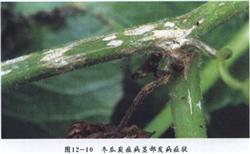
Wax gourd anthracnose can harm the cotyledons, true leaves, petioles, main vines and fruits, with fruit symptoms being the most obvious and causing the greatest damage. Wax gourd fruit infection with anthracnose mostly occurs at the top; the symptoms initially appear as small water-soaked spots, which gradually expand into round brown sunken spots. When humidity is high, pink granular substances grow in the center of the lesions, which is one of the most obvious signs of the disease. In severe cases, the flesh beneath the rind turns brown and rots, causing the wax gourd to lose its commercial value. Leaf lesions are round, brown or reddish-brown, surrounded by a yellow halo, with a lighter center. Lesion size varies greatly, with lesions 8-10 cm in diameter being more common. When there are many lesions, the leaves dry up. Chieh-qua anthracnose mainly harms leaves, stems, vines and fruits. Fruit infection mostly starts near the stem end; it initially appears dark green and water-soaked, then turns dark brown and slightly sunken, and when humidity is high, sticky substances or gum exudate can be seen on the lesions. Leaf lesions are round and yellow-brown, with an indistinct boundary between diseased and healthy tissue, and a yellow halo around the lesions. Lesions on petioles and stems are oblong or spindle-shaped, brown and slightly sunken, with amber-colored gum exudate when moist; after the lesion encircles the vine, the affected part shrinks and the part above it dies. Wax gourd and chieh-qua anthracnose are both caused by a fungus called Colletotrichum lagenarium. The mycelium or sclerotia overwinter with diseased residues in the soil, and in the following spring produce conidia that spread with rain, wind or irrigation water to the gourds or plants and cause infection. Seeds can also carry the fungus; after emergence it first infects the cotyledons, produces spores and causes repeated infection. The disease occurs most severely at around 25°C and 90%-95% relative humidity, and the conditions for disease development are optimal when fruits set during spring planting. If the vines grow too densely, ventilation and light penetration are poor, and field drainage is poor, the disease is easily triggered; it can also develop during transport and storage after harvest.
Control of wax gourd and chieh-qua anthracnose should begin from the following aspects:
1. Select disease-free plants for seed production, and disinfect the seeds before sowing. Soak seeds in 55°C warm water for 15 minutes, then cool; or soak in 40% formalin at 150 times dilution for 15 minutes, then soak in clean water and sprout.
2. Practice crop rotation with non-cucurbit crops. Pay attention to draining accumulated water from the field and to rational close planting and vine training, ensuring ventilation between plants during fruit set and reducing humidity. Also apply balanced fertilization to improve disease resistance.
3. Pay attention to spraying promptly when lesions appear on leaves to prevent the pathogen from infecting the fruit; especially in the early fruit-set stage, spraying is essential for early control. The optional fungicides are: Iprodione (70% wettable powder) at 800-1000 times; Lunduoke (45% wettable powder) or Dashuangning (75% wettable powder) at 600-800 times; myclobutanil (12.5% emulsifiable concentrate) at 1000-1500 times. Choose one of the above fungicides and apply once every 7-10 days, spraying 2-3 times in succession.