-
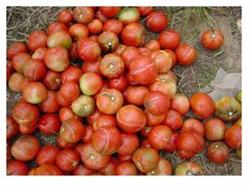
What to Do About Tomato Fruit Cracking? A Detailed Guide to Prevention and Control Techniques
1. Strengthen water and fertilizer management. Deeply plow the soil and apply more organic fertilizer so the plant's root system grows well. For late-autumn tomatoes, when temperatures drop sharply, pay even more attention to soil moisture management and avoid overly rapid moisture changes. In open-field cultivation, water more regularly to avoid drastic soil moisture changes when rain suddenly falls, and drain promptly after rain...
-
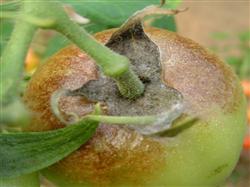
Identification and Control Methods of Tomato Late Blight
Tomato late blight, which vegetable growers call persimmon blight, is a devastating disease of tomatoes. - Symptom identification: The disease can occur in both seedlings and adult plants. When seedlings are affected, dark green water-soaked lesions appear on the leaves and quickly spread to the petioles and stems, making them thinner and dark brown, causing the whole plant to wilt or break at the stem. When humidity is high, the diseased area...
-
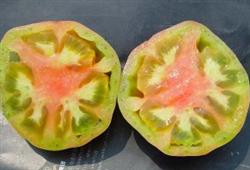
How to reduce hollow tomatoes? Key points of control techniques
Hollow tomatoes refer to tomatoes that develop gaps between the flesh and the seed cavity. Mildly hollow tomatoes still have relatively low market value, while severely hollow ones have no market value. Therefore, reducing the occurrence of hollow tomatoes should draw the attention of vegetable growers. Seedlings whose flower buds drop easily generally have poorer root development and fewer roots...
-
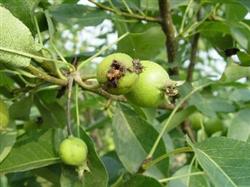
Chemical control methods for the pear fruit moth
Sex pheromone lures can be hung in the orchard, and the number of trapped moths checked daily; generally, 1 lure per 15 mu of orchard is sufficient. When the number of trapped adults increases sharply, check for egg-infested fruit once every 3 days. When the rate of egg-infested fruit reaches 0.5%-1%, chemical control can be carried out. The main chemicals are: 1. 20% diflubenzuron suspension concentrate or 25% diflubenzuron wettable...
-
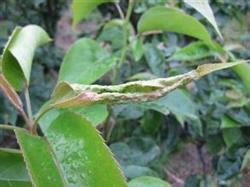
Control Methods for Pear Aphid Pests on Pear Trees
Pear aphid, also known as pear two-branched aphid or pear leaf-curling aphid, commonly called "greasy bug," occurs in pear-growing areas throughout the country and is one of the major pests of pear trees. When damage is severe, it causes early defoliation, affecting both the current year's yield and flower bud differentiation. This insect belongs to the order Homoptera, family Aphididae. 1. Damage symptoms: Adults and nymphs gather in colonies on buds, leaves, and tender shoots to suck...
-
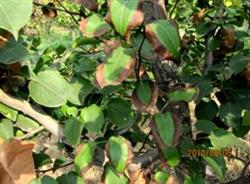
What are the control methods for potassium deficiency in pear trees
Villagers reported that in a pear orchard in a mountain village, some pear tree branches were found to have shortened internodes, smaller leaves that were yellow-green in color, with leaf margins curling upward, browning, and scorching; in severe cases, the entire tree's leaves were like this, resembling fire damage, and it was even more severe on trees in poor, thin soil with exposed roots, affecting tree vigor and yield. Many fruit growers could not figure out...
-
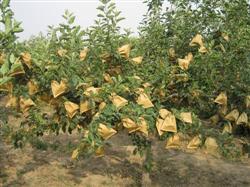
Pest and Disease Control Methods for Pear Trees Before Bagging in Early Spring
The period before and after bud break in early spring is when diseases and pests begin their activity, and once the pear orchard is bagged, spraying becomes considerably more difficult. Therefore, pest and disease control before bagging is the key to pest and disease management in bagged pear orchards. During this period, the focus should be on strengthening control of the pear psylla (Psylla pyrisuga), pear aphid, and red spider mite, among others. (1) Strengthen soil, fertilizer, and water...
-
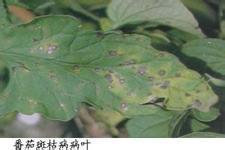
Early prevention and control of autumn tomato leaf spot disease works well
Leaf spot disease: In the early stage of the disease, spray with a 500-fold dilution of 70% mancozeb wettable powder, or a 500-fold dilution of 50% carbendazim wettable powder, once every 7 days, for 3~4 consecutive sprays.
-
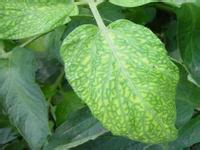
Early prevention and control of autumn tomato virus disease gives good results
Virus disease: In the early stage of the disease, spray with a 500-fold dilution of 20% Virus A wettable powder, or a 1000-fold dilution of potassium permanganate, once every 7 days, for 2 to 3 consecutive sprays.
-
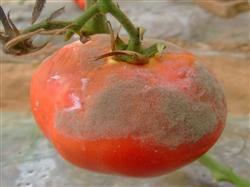
Early prevention and control of gray mold in autumn tomatoes gives good results
Gray mold: During the flowering period, 0.1% of 50% procymidone wettable powder or 50% iprodione wettable powder can be added to the flower-dipping medicinal solution, with very good results. Spraying the fruit is also possible, but care should be taken to rotate the medications to prevent the pathogen from developing resistance. 50% duoke dust formulation can also be used, applying 1 kg of dust per mu.
条件筛选