What to Do When Citrus Gets Huanglongbing? Symptom Identification and Control Techniques
Citrus huanglongbing is also known as "citrus cancer." It is a bacterial disease caused by a bacterium called Candidatus Liberibacter asiaticus, and is spread through grafted nursery stock and an insect called the Asian citrus psyllid. The harm it causes to citrus is enormous; if allowed to spread, it will deal a fatal blow to the citrus industry, killing trees and destroying orchards, and must be taken with the utmost seriousness...
Citrus huanglongbing is also known as "citrus cancer." It is a bacterial disease caused by a bacterium called Candidatus Liberibacter asiaticus, and is spread through grafted nursery stock and an insect called the Asian citrus psyllid. The harm it causes to citrus is enormous; if allowed to spread, it will deal a fatal blow to the citrus industry, killing trees and destroying orchards, and must be taken with the utmost seriousness.
I. Symptom Identification
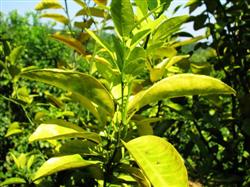
(1) Yellow shoots: The typical early symptom of a diseased tree is the appearance of 1-2 or more yellowing shoots among the dense green canopy.
(2) Blotchy yellowing: This appears after the leaves turn green, starting from the base of the leaf and gradually spreading, forming leaves with patches of yellow and patches of green, yellow and green alternating.
(3) Shoots: New shoots that grow again from diseased branches are short and weak; diseased leaves are small, narrow and elongated, with hardened leaf texture, similar to zinc deficiency symptoms. The diseased tree gradually weakens in growth, and then the diseased plant gradually dies.
(4) Fruit: The fruit of a diseased tree is deformed, the rind becomes soft, the taste is sour, and the fruit is small. In some varieties, the area near the stem end yellows first, which is called "red-nose fruit."
II. Control Techniques
(1) Strengthen plant quarantine: Strictly prohibit the introduction and spread of diseased nursery stock and scions.
(2) Establish disease-free nurseries: Cultivate disease-free nursery stock, and always use disease-free seedlings for planting.
(3) Promptly dig out and remove diseased trees: During the two shoot periods each year in spring and autumn, especially the autumn shoot period, once a diseased plant or suspicious diseased plant is found, immediately dig it out and burn it in a centralized manner. Before digging out diseased plants, spray organophosphorus pesticides on the diseased trees and nearby plants to prevent the Asian citrus psyllid from moving from diseased trees to surrounding areas and spreading the disease. In citrus orchards with mild incidence, disease-free seedlings can be used for replanting after the diseased plants are dug out.
(4) Control the Asian citrus psyllid: Psyllid nymphs grow on the new buds and tender shoots of citrus. By removing scattered new shoots and controlling water and fertilizer so that the emerging new shoots are uniform, the shoot emergence period is shortened. When new shoots have grown to 1-2 cm, spray pesticides comprehensively 2-3 times (at 7-10 day intervals) to control the Asian citrus psyllid and also control aphids and leafminers. Pesticide options include 20% carbosulfan emulsifiable concentrate at 1000 times dilution, or 4.5% beta-cypermethrin at 1000 times dilution, or 40% chlorpyrifos at 1000 times dilution. The Asian citrus psyllid likes to feed and reproduce on orange jasmine (Murraya paniculata) and overwinter there. Clearing orange jasmine and other Rutaceae plants around the orchard and spraying insecticides can help reduce the psyllid population to a certain extent.
(5) Orchard management: Carry out cultivating and weeding 2-3 times each year, strengthen water and fertilizer management, and enhance tree vigor.