-
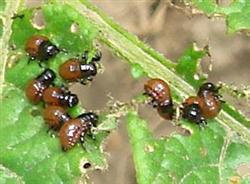
How do you identify and control Colorado potato beetle damage?
The Colorado potato beetle, also known as the Colorado potato leaf beetle, is a class I quarantine pest in China. This insect originally lived on wild solanaceous plants on the eastern slopes of the Rocky Mountains in the western United States. Because cultivated potatoes provide this beetle with good nutrition, and because potatoes are widely grown and transported around the world, ...
-
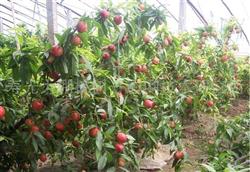
Peach Tree Pest and Disease Control Methods and Technical Key Points
1. Note that peach trees are chlorine-sensitive crops. Applying chlorine-containing fertilizer easily causes root rot and yellowing leaves; in mild cases the tree vigor weakens, and in severe cases the plant dies. Therefore, do not apply chlorine-containing fertilizers. 2. Be careful about watering during the flowering period. Watering during flowering can easily lower soil temperature and reduce soil air content, affecting root growth and absorption, leading to...
-
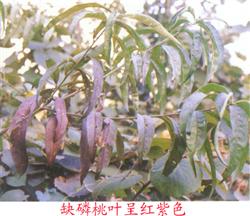
What Are the Symptoms of Phosphorus Deficiency in Peach Trees? Detailed Guide to Prevention and Control Methods
I. The Role of Phosphorus in the Growth and Development of Peach Trees Phosphorus has two roles in the growth and development of peach trees. On one hand, it can strengthen tree vigor, maintain healthy tree growth, promote flower formation, lead to earlier fruiting, promote the maturation of fruit and seeds, increase sugar content, and improve fruit quality. On the other hand, it can enhance the peach tree's adaptability to the external environment...
-
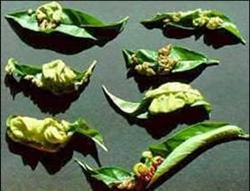
Technical Guidance on Early Spring Pest and Disease Control for Peach Trees
Peach leaf curl mainly damages leaves, but can also harm young shoots and young fruit. It generally occurs from April to May and happens only once a year. When fruit is affected, it turns red, the diseased part swells, the fuzz falls off, and the surface becomes smooth. For agricultural control, select high-yield, high-quality, disease-resistant varieties. In peach orchards that have entered the fruiting stage, manage the soil and fertilizer well...
-
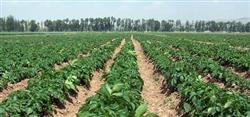
How to control broadleaf weeds in potato fields
It is currently the season for harvesting no-till potatoes in Guangxi. At the no-till potato base in Baqiao Village, Shuangqiao Town, Wuming County, Guangxi, on-site yield measurement showed that the average yield of no-till potatoes reached 25 sha-kilograms per mu, more than 1.5 times the national average potato yield per mu. Renowned potato expert Sun Huisheng said that Guangxi's rice-straw-mulched no-till cultivation...
-
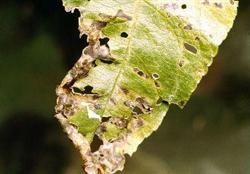
Smart prevention and control of nectarine pests and diseases: new strategies are here
During the growing period of nectarines, the main diseases include bacterial shot hole disease and brown spot shot hole disease, etc. Spray with "Xingao Zhimo" + 70% thiophanate-methyl wettable powder 800-fold solution, 65% zineb wettable powder 500-fold solution. The main pests include aphids, red spider mites, etc., and 10% imidacloprid 3000-fold solution can be used. At the same time, spray Xingao...
-
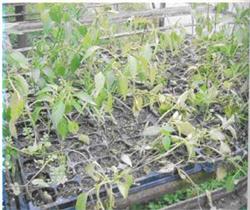
How to prevent and control pepper (bell pepper) seedling death
The problem of pepper plant death gives vegetable growers a real headache, especially in greenhouses with more than 3 years of continuous cropping, as there are not a few cases where plant death leads to reduced or total loss of yield. Right now is the critical period for raising and transplanting pepper seedlings, and it is also the key stage for preventing plant death. Preventing plant death at this key point is much more effective than drenching roots to prevent plant death during the full fruit stage...
-
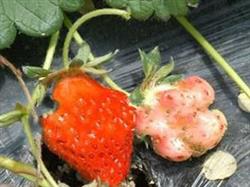
What causes deformed strawberries? Causes and key control points explained
First, unsuitable temperature and humidity. Low temperature, high temperature or high humidity can all easily cause deformed fruit. In sunny weather with suitable temperatures, the petals can open very early in the morning, and after a few hours the anthers begin to dehisce, exposing the pollen, during which pollination and fertilization take place. Under low temperature conditions, however, the petals cannot fully open and turn back...
-
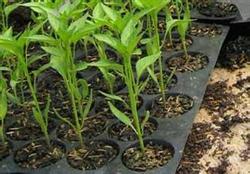
What to do when pepper seedling transplanting to control excessive growth goes wrong
Soilless cultivation for raising seedlings mainly means that instead of using soil and farmyard manure in the seedling tray as the seedling substrate, peat and vermiculite are mixed at a ratio of 3:1 and used as the seedling substrate. Put the mixed seedling substrate into the seedling trays, stack several seedling trays filled with the seedling substrate together, place a wooden board on top, press down with a little force,...
-
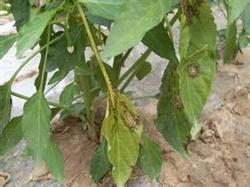
Detailed Guide to Identifying and Controlling Phytophthora Blight in Peppers
Control methods: 1. Phytophthora blight in peppers mainly damages leaves, fruits and stems, and is most likely to occur at the base of the stem. When the disease occurs at the seedling stage, infection mostly starts from the base of the stem; the affected part shows water-soaked soft rot, the lesion is dark green, and the plant lodges above the diseased part. Control methods: 1. Practice crop rotation and deep plowing to improve the soil, and combine...
条件筛选