-
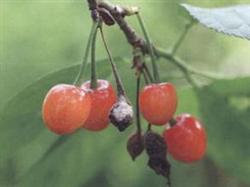
What pesticides are commonly used for cherry pest and disease control?
Cherry trees are often attacked by pests and diseases during cultivation, and correct prevention and control of pests and diseases is very important for planting returns. Below we introduce the pesticides corresponding to cherry pest and disease control, for farmers' reference. 1. Pesticides corresponding to the main cherry diseases: 1.1 Pesticides for bacterial canker...
-
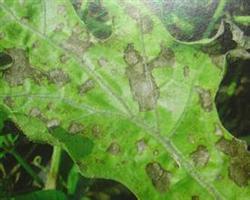
What are the simple techniques for watermelon disease control?
Before sowing, choose a greenhouse that has not grown cucurbit crops, or one that has been subjected to high-temperature sealed treatment during the summer fallow period, to prevent soil-borne diseases such as Fusarium wilt, damping-off, Rhizoctonia rot, and anthracnose from invading during the seedling stage. For seed treatment, soak the seeds in warm water at 55°C for 10 minutes, stirring constantly, then after cooling soak for another 6 hours, then...
-
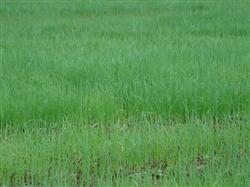
Key Integrated Pest and Disease Control Techniques for Onion Seedlings
I. Selecting Superior Varieties In production, purple-skinned varieties such as Ziyu No. 1, Ziyu No. 2, Zixing, and Shuanghuanhong can be selected. These varieties have the characteristics of strong pungency, high yield, excellent quality, and suitability for export. These varieties generally yield about 5000 kg per mu, and high-yielding plots can reach 7500 kg per mu. II...
-
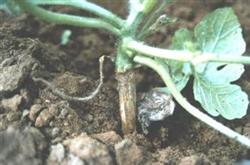
How to prevent and control watermelon seedling diseases? A detailed guide to integrated control techniques
I. Symptoms of the main diseases 1. Damping-off. In the early stage, the root collar of the seedling (the junction of root and stem) develops lesions that look as if scalded by boiling water and become rotten, after which the diseased part turns yellowish-brown, dries out and shrinks; the cotyledons have not yet wilted, but the seedling topples over. Damping-off mostly occurs from the emergence of the cotyledons to the stage when 2 true leaves have flattened out. The disease spreads very quickly; a few days after the appearance of the first diseased plants, seedlings topple over in patches. Under conditions of high temperature and high humidity, the diseased parts of the seedlings and the ground nearby,
-
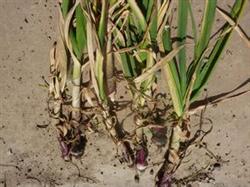
How to prevent and control spring rot in spring garlic? These key points you need to master
Spring rot of garlic can last until mid-June, and in years with low temperatures and high humidity, it even continues until the harvest period. It mainly affects the base of the leaf blade of the lower leaves. Water-soaked softened lesions appear, and after expanding upward and downward, they become light brown rot. In the middle and late growth stages, the central leaves are affected, and the soft rot spreads to below the flower stalk. Sometimes it can cause new...
-
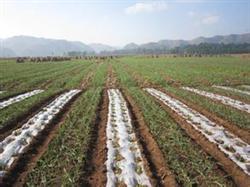
Key Technical Points for Green Prevention and Control of Garlic Pests and Diseases
Green prevention and control of crops means using agricultural control, physical control, biological control, precision pesticide application and other techniques during agricultural production to control pests and diseases, with the aim of reducing pesticide use, lowering pesticide residues in agricultural products, and comprehensively improving the quality and safety level of agricultural products. This year, the garlic planting area in our town...
-
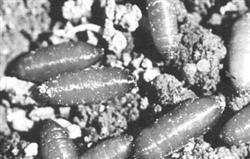
A Detailed Explanation of the Occurrence Patterns and Control Methods of Garlic Root Maggots
Root maggots is the collective term for the larval stage of Diptera pests that damage garlic and other crops. In recent years, the occurrence of garlic root maggots has shown a trend of increasing year by year. Root maggot damage can cause garlic yield reduction and has a major impact on garlic quality, with severe damage leading to serious economic losses. Garlic root maggots (larvae) generally gather on garlic roots and...
-
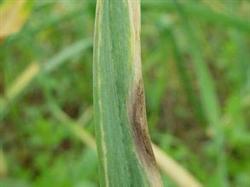
Characteristics and Control Methods of Garlic Gray Leaf Spot
(1) Symptom characteristics: It mainly affects the leaves. The lesions are long elliptical, initially light brown, later turning grayish white. On both sides of the leaves, the lesions produce fine grayish-black mold-like growth. In severe cases, the lesions merge, causing localized death of the leaves. The disease is severe in weather with warm days and cool nights, heavy fog, and heavy dew. (2) Control methods: ① Promptly remove damaged leaves...
-
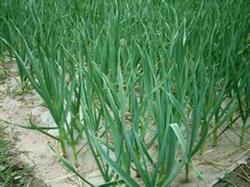
Symptom Identification and Control Measures for Nutrient Deficiency in Garlic
(1) Watering. Although garlic leaves are fairly drought-tolerant, the roots are shallow and have weak absorption capacity, so garlic requires relatively high soil moisture, and different growth stages have different requirements for soil moisture. After sowing, maintain relatively high soil moisture; if it is too dry, water in advance to achieve suitable moisture for sowing. Before winter...
-

Key Cultivation and Control Techniques for Major Watermelon Pests and Diseases
Yu Yongjun, a villager from Group 3 of Yuwanggang Village, Qifang Town, Zaoyang City, Hubei Province, once hailed as the "Watermelon King," has through years of practice worked out a good method for making watermelons sweeter, now offered to fellow growers for reference. 1. About 1 week after fruit set, dig a hole 10 cm from the main root, apply 50 g of cake fertilizer per plant, cover with soil and water. This method can make...
条件筛选