-
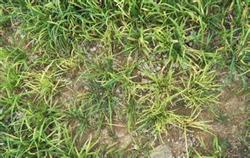
What to Do When Chives Get Fusarium Wilt? A Full Guide to Prevention and Control Measures
Symptoms of chive Fusarium wilt: In hot seasons, it may suddenly break out within 2 to 3 hours after rain followed by blazing sun. Water-scalded symptoms appear in the middle of the leaves or at the leaf tips touching the ground, and in severe cases all leaves show these symptoms and then completely die. Although diseased root clumps may sprout new plants, sometimes the spr...
-
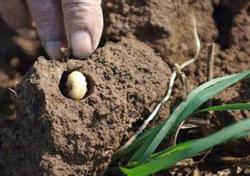
How to treat white grubs in chives? Detailed control methods
Drench the roots with a 1000-fold dilution of 50% phoxim, a 1000-fold dilution of 80% trichlorfon, a 4000-fold dilution of 50% phoxim-cypermethrin emulsifiable concentrate, a 300-fold dilution of 20% fenvalerate, or a 3000-fold dilution of 2.5% deltamethrin. Alternatively, before sowing or transplanting, mix the above pesticides with poisoned bait and broadcast it, or use a seed coating agent for coating.
-
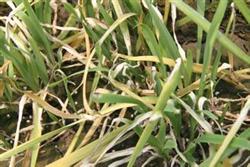
Control Methods and Technical Key Points for Chive Blight
Treat seeds with 25% metalaxyl at 0.3% of the seed weight. After disease onset, use 64% oxadixyl mancozeb at 600 times dilution, 69% dimethomorph mancozeb at 600 to 800 times dilution, 50% iprodione at 500 times dilution, and 77% copper hydroxide at 600 to 700 times dilution, applied alternately, once every 5 to 7 days, for 2 to 3 treatments.
-
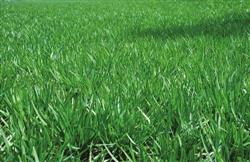
Safety management points for the control of leek blight in greenhouse and shed conditions
Damage symptoms: It mainly affects the false stem and bulb, and the leaves, roots, and flower stalks can also be affected. Lesions on affected leaves mostly begin on the lower part, initially producing dark green water-soaked lesions, and when they later spread to about 1/2 of the leaf, the whole leaf turns yellow, droops, and becomes soft-rotted. When humid, grayish-white mold develops on the diseased part. When the false stem is affected...
-
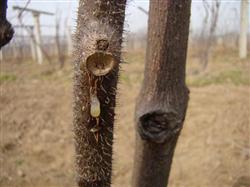
How to prevent and control kiwifruit bacterial canker in autumn? Remember these key points
Kiwifruit bacterial canker is the most serious disease affecting kiwifruit. As the weather turns cooler, temperatures drop and rainy days increase, favorable conditions are created for the occurrence and infection of this disease. Prevention and control of kiwifruit bacterial canker should be carried out early. The technical key points are as follows: Strengthen cultivation management. In autumn, increase the application of organic fertilizer, apply medium and trace element fertilizers in a balanced way...
-
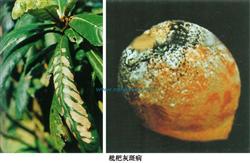
Comprehensive Control Methods and Key Technical Points for Loquat Gray Leaf Spot
Loquat gray leaf spot, also known as "ring spot." It is the most important disease of loquat. It attacks branches, leaves, flowers, and fruit. There are two types: acute and chronic: in the chronic type, leaf spots are initially light brown circular spots; later they join into irregular large spots, with small black dots scattered on them. On young shoots, the disease starts as small water-soaked brown...
-
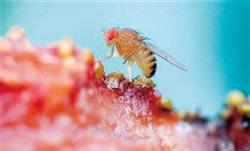
How to control fruit flies on Chinese bayberry? Introduction to practical control methods
In recent years, the occurrence of fruit flies has reduced the yield and quality of Chinese bayberry, seriously affecting the economic development of the Chinese bayberry industry. In order to explore the occurrence patterns and control techniques of fruit flies on Chinese bayberry, the author has observed this pest since 2008, and has now basically clarified its occurrence situation in our county and summarized the corresponding control techniques. Fruit flies...
-
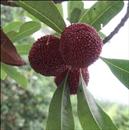
What to Do About Copper Deficiency in Waxberry? Causes and Control Methods Explained
Waxberry twig blight is caused by boron deficiency, so planned boron supplementation can eliminate the harm of this disease. Spraying a 0.1 to 0.2 borax solution 2 to 3 times during the waxberry growing period can effectively control the disease. Root application can also be used; for mild boron deficiency, use 0.3 to 0.6 kg of borax per mu, and for severe boron deficiency, use 1.3...
-
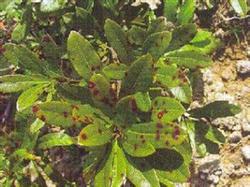
A Detailed Guide to the Main Diseases of Chinese Bayberry (Yangmei) and Their Control Methods
I. Chinese Bayberry Crown Gall Disease 1. Symptoms: Chinese bayberry crown gall disease is a bacterial disease. It mainly affects the branches and trunks of 2-3 year old fruiting trees, mostly forming tumors on the branches and trunks. The tumors are nearly spherical, vary in size, are very hard and corky, and range in color from brown to dark brown. Generally, the tumors on the branches and trunks begin to enlarge in early April, and from July to August...
-
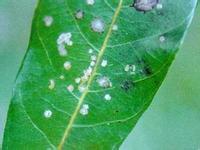
Methods for Controlling Pests and Diseases of Lychee and Longan in Autumn and Winter
I. Pest species during the autumn shoot stage and their control. Autumn shoots are next year's fruiting branches; if they are eaten bare by pests, it will seriously affect next year's flower bud formation. The main pests of autumn shoots are leaf-eating types, including various geometrid moths and various leaf-rolling insects. Among them, the eriophyid mite (felt disease) and the longan psyllid, etc., cause the most serious damage from September to November each year...
条件筛选