What are the common diseases of cilantro? Detailed explanation of prevention and control methods
Coriander (cilantro) is used as a seasoning vegetable; it is nutritious and simple to cultivate and manage. The key points of coriander cultivation techniques are introduced as follows: Characteristics of coriander. Coriander belongs to the Apiaceae family. It can withstand low temperatures of -1°C to 2°C, and its suitable growing temperature is 17°C to 20°C. Above 20°C it grows slowly, and at 30°C it stops growing. Coriander has requirements for soil...
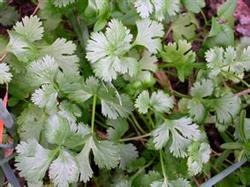 Cilantro has a long history of cultivation in Shanhaiguan District, Qinhuangdao City, and an annual planting model based mainly on protected cultivation (greenhouses, large tunnels, medium tunnels) has now been formed. However, as the cilantro planting area has continued to expand and continuous successive cropping has been practiced, cilantro diseases have also become increasingly serious. The main diseases include sclerotinia rot, leaf blight, spot blight, and root rot. Their occurrence characteristics and prevention and control methods are introduced below.
I. Sclerotinia rot
Sclerotinia rot of cilantro is the most common in our district, especially in protected cultivation, where the incidence rate can reach more than 50%. The reason is that sclerotia can persist in the soil for a long time, and year-round greenhouse production provides favorable conditions for the reproduction of the pathogen, so sclerotinia rot can occur throughout the entire growth period of cilantro. The peak incidence period in greenhouses is December, and the peak incidence period in large tunnels is April. The main symptoms are as follows: it mainly infects the base of the stem or the branching points of the stem. After the lesion expands around the stem in a ring, it develops upward and downward. When humid, white mycelium grows on the surface of the diseased part, and afterward the cortex rots, with black sclerotia inside. The method for controlling sclerotinia rot in our district is to place equal emphasis on prevention and treatment and to combine ecological control with chemical control: implement crop rotation or carry out soil disinfection in diseased fields. Use disease-free seed or treat seed with chemicals. After closing the greenhouse, spray 1000-fold dimethachlon once, spray again 10 days later, spray a third time around the beginning of spring, and thereafter spray once every 7-9 days. Throughout the growth period, ventilation should be strengthened to reduce humidity so as to lessen disease occurrence.
II. Leaf blight and spot blight
These two diseases occur in scattered patches in our district, but once they appear, the disease spreads rapidly and causes relatively serious damage. They mainly damage the leaves. After the leaves are infected, they turn yellow-brown; when humidity is high, the diseased part rots, and in severe cases it infects downward along the leaf veins to the tender stems and then to the heart leaves, causing serious yield reduction. Therefore, these two diseases must be especially controlled. These two diseases may be carried by seed, so we adopt preventive measures focused on seed disinfection. The method is to soak the seed in 500-fold carbendazim solution for 10-15 minutes, rinse clean, and then sow. The next step is to strengthen management. At the beginning of greenhouse closure, when humidity is relatively high, attention should be paid to ventilation and dehumidification. Once disease is found, spray promptly for control. Recommended agents include 600-800-fold carbendazim solution, 600-fold mancozeb solution, 800-1000-fold 70% thiophanate-methyl solution, and 500-fold chlorothalonil solution. Mixing two or more of them gives better results.
III. Root rot
It occurs mostly in low-lying, moist plots. After the cilantro root system is infected, the main root becomes yellow-brown or brown, soft-rotted, with no or almost no fibrous roots. When pulled by hand, the plant's root system breaks off. Aboveground, the plant appears stunted, with yellow, withered leaves, losing marketability. The control method is to avoid planting in low-lying land as much as possible, and humidity must not remain excessively high for a long time. Chemical control is based mainly on soil treatment. One kilogram of carbendazim can be mixed with 50 kilograms of soil and spread into the sowing furrow before sowing. In plots prone to the disease, 300-fold continuous cropping agent can be irrigated in together with watering. Because root rot generally occurs before winter in October, control should be carried out before greenhouse closure, mainly by drenching the roots with 500-fold propamocarb solution or 600-fold carbendazim solution.