-
Management advice for spring potatoes after late-spring cold damage
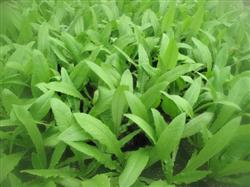
1. Variety selection. Leaf lettuce is grown mainly for its leaves, which are eaten mostly raw, hence it is also called lettuce. The leaves are deeply lobed and wrinkled; it is highly adaptable and easy to cultivate. Good varieties include Guangzhou Dongshan lettuce (soft-tail lettuce), glass lettuce, Lettuce King, and American Great Quick Growth, etc. 2. Seedling raising. Leaf...
-
Greenhouse Nectarine Management Techniques at a Glance
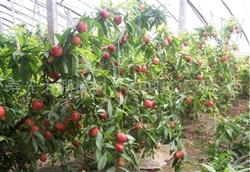
To prevent flower and fruit drop in greenhouse peach trees, start with the following points: strengthen comprehensive management and ensure nutrient supply. The fruit-setting rate and the development of young fruit are closely related to the supply of nutrients. First, late-stage management from the previous year must be strengthened to form good flower buds and raise the nutrient level, such as protecting leaves in autumn, ...
-
Potato Field Management Methods
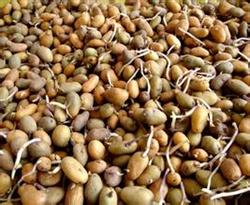
Potato sprouting using the wet sand stratification method: Potato sprouting is generally carried out about 30 to 40 days before sowing. Sprouting can be done in sun-facing beds, cold frames, indoors, plastic tunnels and greenhouses. For sprouting in sun-facing beds, choose a wind-sheltered, sunny spot and build the bed in an east-west direction. Generally the seedbed is 0.4 to 0.5 m deep and 1.3 m wide, with a 0.5 m high windbreak wall of earth built on the north side...
-
Efficient management techniques for peach trees to help achieve high yields
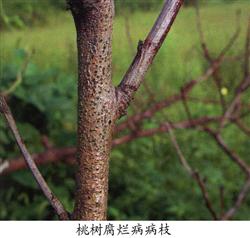
Peach tree rot, also known as dieback disease, causes branches to wither and die after the tree is affected, forming canker lesions on large branches and the trunk. If not treated in time, it quickly causes the entire tree to die. The main causes of this disease are: frost damage and extensive management; improper fertilization and years with abundant autumn rain, which delay the peach tree's dormancy and reduce the tree's cold resistance. It has...
-
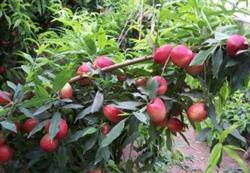
What are the pollution-free cultivation and management techniques for fresh-eating peach trees?
Pollution-free means that under specific conditions, the production environment, production techniques and product quality meet the requirements of the relevant national standards and regulations; the production environment quality meets the requirements of GB/T18407.2-2001; the production regulations of NY/T5114-2002 are implemented; during production, limited amounts of restricted chemical fertilizers, pesticides and other synthetic substances are permitted; and product quality...
-
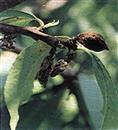
Detailed Explanation of Key Technical Points for Summer Management of Nectarines
Pest and Disease Control The main pests and diseases of nectarines include: peach anthracnose, brown rot, little leaf disease, peach aphid, spider mite, leaf miner, etc. For such pests and diseases, spray 5-degree lime sulfur mixture once before bud break, spray once with 10% pirimicarb-plus wettable powder at 2000 times dilution after petal fall, and in early May and mid-to-late June respectively spray 72% agricultural streptomycin at 3000 times dilution...
-
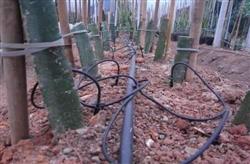
Pitaya (Dragon Fruit) Water and Fertilizer Management Methods and Precautions
Pitaya is relatively drought-tolerant. Water once every 2 to 3 days in the early stage after planting, and thereafter just keep the soil moist. The root system of pitaya is distributed relatively shallowly, so fertilizer should be applied in small amounts but frequently to prevent root burn and root rot. After the planted seedlings sprout, apply dilute human manure and urine in the planting hole about 10 cm from the seedling, about 1 kg per plant, and thereafter...
-
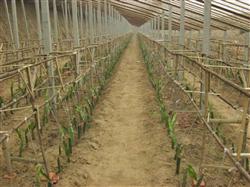
Key Technical Points for Greenhouse Cultivation and Management of Dragon Fruit
Dragon fruit is also known as red dragon fruit, green dragon fruit, fairy honey fruit, etc. Currently cultivated varieties mainly include white dragon fruit, red dragon fruit, and yellow dragon fruit. Dragon fruit is very rich in nutrients, mainly containing vitamins, cellulose, glucose, carotene, fat, amino acids, and minerals needed by the human body such as phosphorus and iron. It has detoxifying...
-
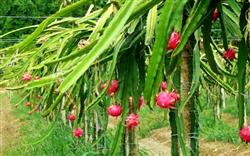
A Detailed Guide to Dragon Fruit Cultivation Techniques and Field Management Methods
I. Orchard Establishment Dragon fruit is relatively heat-tolerant, water-tolerant, and prefers warm, humid, sandy soil rich in organic matter. Before planting the seedlings, set up 100-110 square concrete pillars measuring 10×10×250 cm per mu at a spacing of 1.5 m × 2 m, with the concrete pillars buried 50 cm into the soil to support the climbing dragon fruit branches. On both sides of each concrete pillar, at 5-1...
-
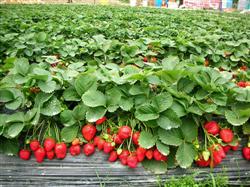
Detailed Explanation of Key Management Techniques for Forcing Culture of Strawberries
1. Change flat-bed cultivation to high-ridge cultivation. With flat-bed cultivation, field humidity is high, ventilation and aeration are poor, pests and diseases are severe, and the fruit is highly prone to mildew and rot, reducing quality and yield. High-ridge cultivation can overcome the above weaknesses and is better suited to the needs of protected cultivation. The specific method of high-ridge cultivation is: select level terrain, sheltered...
条件筛选