Pitaya (Dragon Fruit) Water and Fertilizer Management Methods and Precautions
Pitaya is relatively drought-tolerant. Water once every 2 to 3 days in the early stage after planting, and thereafter just keep the soil moist. The root system of pitaya is distributed relatively shallowly, so fertilizer should be applied in small amounts but frequently to prevent root burn and root rot. After the planted seedlings sprout, apply dilute human manure and urine in the planting hole about 10 cm from the seedling, about 1 kg per plant, and thereafter...
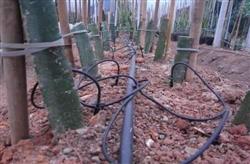
Pitaya is relatively drought-tolerant. Water once every 2 to 3 days in the early stage after planting, and thereafter just keep the soil moist. The root system of pitaya is distributed relatively shallowly, so fertilizer should be applied in small amounts but frequently to prevent root burn and root rot. After the planted seedlings sprout, apply dilute human manure and urine in the planting hole about 10 cm from the seedling, about 1 kg per plant; thereafter, at each sprouting, apply human manure and urine supplemented with 0.3% urea and 0.1% potassium chloride, until the pitaya blooms. In the first year, fertilize 6 to 8 times, mainly with nitrogen fertilizer, combined with potassium, calcium, magnesium, and phosphorus fertilizers. In winter, mulch once with decomposed organic fertilizer or mushroom residue, about 10 kg per plant, to enhance the plant's insulation and cold resistance. After flowering and fruiting, fertilize 3 times a year, namely the pre-flowering fertilizer in April, the fruit-swelling fertilizer in August, and the overwintering fertilizer in December, mainly with decomposed organic fertilizer and ternary compound fertilizer.