-
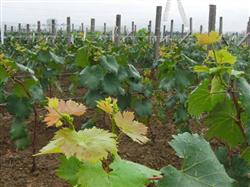
How to strengthen field management after grape harvest
After the grape harvest, the vines become weak, so field management should be strengthened to improve the plants' cold resistance for overwintering and promote new shoot growth the following year. Pruning and orchard cleaning: on the basis of summer pruning, continue pinching and removing side shoots, remove tendrils and thin, weak canes, and pick off diseased leaves to reduce nutrient consumption and promote plump buds. At the same time, clear the weeds in the orchard, ...
-
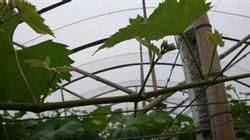
What are the key technical points for spring grape management?
Spring is the season when grapes bud and unfold leaves, canes extend, and clusters form and flowers set fruit. Strengthening spring grape management can improve grape yield and quality. From mid-to-late February to early March, during the budbreak stage, irrigate to promote budbreak and apply quick-acting nitrogen fertilizer. At this stage, orchards with the conditions should irrigate the whole orchard promptly to ensure uniform budbreak. And at this time...
-
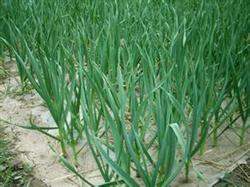
For high garlic yields, good spring management is key
Garlic farmer Qi Xinqiang has grown film-mulched garlic for many years, and through production has worked out a cultivation technique using double-layer plastic film mulching for garlic, achieving an earlier market launch for the garlic and a relatively high yield, with a yield increase of more than 10% per mu, which is worth learning from and drawing on for vegetable growers in the major garlic-producing areas. The cultivation technique is described below: 1. Select...
-
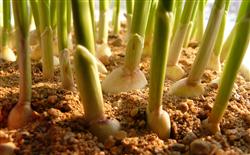
Key Technical Measures for Garlic Seedling Stage Management in Autumn
1. After emergence, cultivate in time. Once the seedlings are fully emerged, water once for emergence and cultivate to remove weeds. Before winter, depending on conditions, apply 1 round of compound fertilizer with watering, 150 kg per hectare. After watering, when the seedlings grow their second leaf, cultivate once to control growth and promote normal root development of the seedlings. 2. In soil sealing...
-
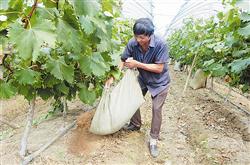
Detailed Guide to Key Grape Fruit Management Points in Summer
In July, grapes should be fertilized in a timely manner. Generally, one topdressing is applied at the early coloring stage of the fruit, mainly with phosphorus and potassium fertilizers. A sulfur-based ternary compound fertilizer can be chosen for soil application; foliar topdressing can also be used, with options such as a 0.5%-1% potassium dihydrogen phosphate solution sprayed 2-3 times consecutively. To improve the storability of grape berries, before harvest one can...
-
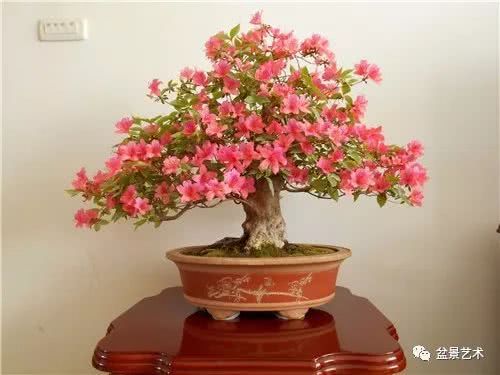
A Detailed Guide to the Cultivation and Management of Azalea Bonsai
Yingshanhong, also known as azalea, belongs to the genus Rhododendron in the family Ericaceae. It is an evergreen, semi-evergreen, or deciduous shrub or small tree, and is one of the ten most famous flowers of China. When spring returns to the earth and the orioles call and the cuckoos sing, it is exactly the time when azaleas are in full bloom, with clusters of flowers and abundant spring vitality...
-
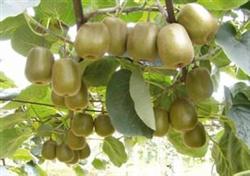
What are the key technical points for summer management of kiwifruit?
1. Preventing wilting. Kiwifruit leaves wilt during the high temperatures of summer, mainly for two reasons: first, high temperature and drought, mostly occurring between 12 noon and 4 pm on sunny days, recovering in the morning and evening, usually occurring over large areas. When this happens, irrigate promptly in the morning and evening, and the wilting will be relieved. Second, the root system suffers from root rot, root-knot nematode disease, etc., which damages root function and causes pathological wilting. It is most severe at noon and lasts a long time; in severe cases symptoms also appear in the morning and evening, and it tends to occur sporadically. Once discovered, dig down to check the roots. If it is indeed caused by pests or disease, appropriately prune branches and leaves, remove some or all of the fruit, and use agents such as Nongkang 120 and Junlimie for root drenching.
-
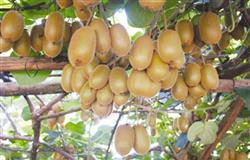
Detailed Explanation of Key Points for Kiwifruit Cultivation and Management Techniques After Autumn
After the autumn fruit harvest, applying base fertilizer in combination with inter-row tillage and weeding is very important. The fertilizer amount accounts for 60%-70% of the annual fertilizer application. Applying base fertilizer early can help restore tree vigor as quickly as possible, benefit the trees through winter, and ensure fruiting the following year. The base fertilizer commonly used is decomposed farmyard manure. Generally, 1500-2000 kg of farmyard manure is applied per mu, and 3000-500... for mature orchards.
-
Summary of Experience in Kiwifruit Cultivation and Management Techniques
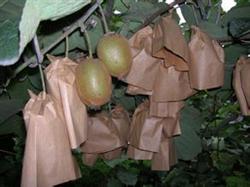
Bagging kiwifruit is a technique that has been promoted in recent years. Due to insufficient experience, many problems have also arisen. After receiving inquiries from association members, and in order to solve this problem, we investigated the current status of bagged kiwifruit in Zhouzhi and Meixian and identified some problems that urgently need to be solved. 1. Why does fruit drop occur after bagging? Investigation...
-
Safety management points for the control of leek blight in greenhouse and shed conditions
Damage symptoms: It mainly affects the false stem and bulb, and the leaves, roots, and flower stalks can also be affected. Lesions on affected leaves mostly begin on the lower part, initially producing dark green water-soaked lesions, and when they later spread to about 1/2 of the leaf, the whole leaf turns yellow, droops, and becomes soft-rotted. When humid, grayish-white mold develops on the diseased part. When the false stem is affected...
条件筛选