Efficient management techniques for peach trees to help achieve high yields
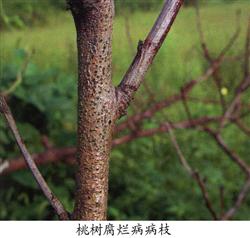
Peach tree rot, also known as dieback disease, causes branches to wither and die after the tree is affected, forming canker lesions on large branches and the trunk. If not treated in time, it quickly causes the entire tree to die. The main causes of this disease are: frost damage and extensive management; improper fertilization and years with abundant autumn rain, which delay the peach tree's dormancy and reduce the tree's cold resistance. It has...
 Peach trees tend to grow excessively, which affects light penetration, causes dead branches and hollow centers, moves fruiting outward, leads to premature decline of tree vigor, low flowering and fruit-setting rates, and severely reduces yield and quality. Therefore, scientific and proper planting management measures must be carried out well.
I. Scientific pruning
Peach tree pruning is very important. By timing, it is divided into winter pruning: natural open-center form, two-main-branch open-center form and slanted palm-leaf fan form, etc.; summer pruning is mainly based on pinching to control excessive growth. The wounds should be promptly coated with wound-healing antiseptic film to promote rapid healing and prevent gumming and infection by other diseases.
II. Effective measures to promote fruiting
1. Some peach trees with little pollen have poor self-pollination, so other peach varieties must be planted as pollinizers. When two or more varieties are mixed-planted, cross-pollination can occur and increase the fruit-setting rate. For varieties with no pollen or a small amount of pollen, artificial supplementary pollination or releasing bees for pollination should be carried out to increase the fruit-setting rate.
2. Controlling shoots to promote flowers and fruit: Peach trees tend to gum and produce excessive shoots, seriously affecting fruit growth. Huacuiwang No. 1 can be used together with girdling technology to prevent and control gummosis and water-flow disease, control excessive shoot growth, transform the peach tree's growth function into reproductive function, and increase the fruit-setting rate of peach trees.
III. Flower and fruit thinning
Timely fruit thinning and fruit setting: For varieties with a high self-fruit-setting rate, flowers and fruits should be thinned in time, and the earlier the better; for varieties with no pollen or a low self-fruit-setting rate, do not thin flowers, only thin fruits. Fruit thinning should be completed within 2 weeks after flowering, and as far as possible select and retain fruits on high-quality fruiting branches with a length of 5-30 cm and a thickness of 0.3-0.5 cm. For each long fruiting branch, retain 2-3 fruits; for medium fruiting branches, 1-2 fruits; for short fruiting branches, select 2-3 branches and retain 1 fruit, with fruit spacing kept at 15-20 cm.
IV. Orchard fertilization
The principle of fertilization requires that the fertilizers used should not have adverse effects on the orchard environment or fruit varieties, and should be fertilizers registered with or exempt from registration by the agricultural administrative department. Formula fertilization and balanced fertilization based on nutrient analysis of soil and leaves are advocated.
① Base fertilizer: Applied after fruit harvest in autumn, mainly organic fertilizers such as compost, barnyard manure, pen manure, dung, as well as green manure, straw, weeds, etc., mixed with a small amount of nitrogen chemical fertilizer. The amount of base fertilizer applied generally accounts for 70% of the total annual fertilizer application for fruit trees.
② Topdressing: For young trees and fruiting trees in the early stage of fruit development, topdressing is mainly nitrogen and phosphorus fertilizers; in the late stage of fruit development, mainly phosphorus and potassium fertilizers. The last topdressing should be carried out more than 30 days before the fruit harvest period. From peach leaf expansion until 20 days before leaf fall, during this period, in addition to spraying foliar fertilizer, spray Zhuangguodiling once each before peach flowering, at the young fruit stage, and at the fruit enlargement stage, which can thicken the peach tree's flower stalks and fruit stalks, prevent flower and fruit drop, and increase the speed of fruit enlargement.
V. New highlight of bagging technology
During the young fruit stage, spray Xingaozhimo on the fruit surface, and then supplement spraying appropriately as the fruit expands, similar to putting on a fruit bag. This can significantly improve fruit surface smoothness, increase color, reduce pests, diseases and pesticide residues, and produce pollution-free fruit.
VI. Applying Hushujiangjun to prevent and control gummosis, rot and canker disease
1. Preventing and controlling fruit tree gummosis: Remove the gum contamination at the gum-contaminated area and apply this emulsion. Cationic active elements penetrate into the tree body, can destroy the substances synthesizing pectin in the tree, inhibit gum production and rapidly hydrolyze gum molecules, thoroughly curing various fruit tree gummosis diseases.
2. Preventing and controlling rot and canker disease: Use a blade to lightly score lines on the diseased bark (vibration can cause rot disease spores to fly up), and apply this emulsion with a brush. This can cause the diseased bark to begin drying up after 3 days, and after 30 days the diseased bark infected with dead spores begins to fall off.