Management advice for spring potatoes after late-spring cold damage
1. Variety selection. Leaf lettuce is grown mainly for its leaves, which are eaten mostly raw, hence it is also called lettuce. The leaves are deeply lobed and wrinkled; it is highly adaptable and easy to cultivate. Good varieties include Guangzhou Dongshan lettuce (soft-tail lettuce), glass lettuce, Lettuce King, and American Great Quick Growth, etc. 2. Seedling raising. Leaf...
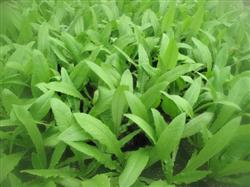 Since the start of spring there has been prolonged low temperature and rain, especially the severe low temperature of minus 3 to minus 6 degrees on March 10, which had a serious impact on potato production. The stems and leaves of open-field potatoes that had already emerged were all frozen to death, and the young sprouts also suffered cold damage to varying degrees. Analyzing the degree of cold damage, multi-span greenhouses are better than greenhouse cultivation, greenhouse cultivation is better than flat covering plus low arch covering, and flat covering with low arch covering is better than flat covering. According to preliminary analysis, this late-spring cold will cause a yield loss of more than 20% in spring potatoes, and the time to market will be delayed by more than 10 days. Based on the current damage situation, the author puts forward the following management advice:
1. Timely break the film to let seedlings emerge. As temperatures rise and the rain becomes intermittent, potatoes have entered the peak emergence period. The film must be broken in time to let seedlings emerge, to prevent high temperatures from damaging the seedlings and to prevent the frozen stems and leaves from rotting and affecting new sprout growth.
2. Clear ditches and drain water. At present, many potato fields have high groundwater levels and blocked low ditches, which is very unfavorable for potato seedling growth. Ditch clearing and silt removal should be carried out promptly, achieving a main ditch depth of 30 cm and a bed ditch depth of 20 cm, so that the field dries after the rain stops.
3. Use topdressing cautiously. Due to the cold damage, some farmers worry that the potatoes lack fertilizer and plan to apply topdressing after emergence. This practice should not be used. Because the potato fields are not short of fertilizer at present, applying topdressing does a hundred harms and no good. In addition, topdressing may be applied only when deficiency symptoms appear in stem and leaf growth.
4. Prevent another "late-spring cold" freeze injury. Before the end of March, another "late-spring cold" may occur. If the freeze injury is severe, the consequences will exceed those of this cold damage. Potato growers should take preventive measures. Yesterday, the weather forecast said that on the afternoon of the day before it arrives, first, straw and other coverings can be used in time, second, film low arches can be used, and third, potassium dihydrogen phosphate can be sprayed 2-3 days before the low temperature to enhance the plants' cold resistance.