Detailed Explanation of Key Technical Points for Summer Management of Nectarines
Pest and Disease Control The main pests and diseases of nectarines include: peach anthracnose, brown rot, little leaf disease, peach aphid, spider mite, leaf miner, etc. For such pests and diseases, spray 5-degree lime sulfur mixture once before bud break, spray once with 10% pirimicarb-plus wettable powder at 2000 times dilution after petal fall, and in early May and mid-to-late June respectively spray 72% agricultural streptomycin at 3000 times dilution...
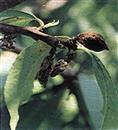 1. Control excessive shoot growth and prevent orchard canopy closure. Nectarines have strong branching ability and readily produce secondary or even tertiary shoots. In addition, nectarine trees are vigorous, and especially before fruiting, the number of water sprouts is large and they grow excessively, often leading to deteriorating light conditions in the orchard, outward migration of fruit coloration, and reduced yield. Therefore, attention should be paid to control in production. The main control measures are:
(1) Strengthen the control of fertilizer and water. Especially the control of nitrogen fertilizer. In the early growth stage of each year and after fruit harvest, never apply excessive nitrogen to prevent excessive shoot growth.
(2) Apply plant hormones for control. During the new shoot growth period, apply 5 g per tree of paclobutrazol in a ring-shaped trench under the tree, or spray (200-300) x 10-6 15% paclobutrazol on the tree during the new shoot growth period. The control effect is relatively good.
(3) Remove buds in time. Useless secondary shoots, tertiary shoots and buds on the upper side of branches should be removed in time. If removal is not timely, branches should be thinned promptly to maintain good canopy permeability.
(4) Keep branch groups extending in a single axis and reduce the number of branching orders.
2. Strengthen flower and fruit thinning to increase fruit size. Because nectarines have a high fruit-setting rate, if flower and fruit thinning cannot keep up in production, the fruit will become smaller, affecting the fruit's marketability. Therefore, flower and fruit thinning should be strictly carried out in production. According to the growth vigor of fruiting branches, thin flowers and fruits in time before flowering. Leave 4-6 flowers per vigorous branch and keep 2-3 fruits; leave 2-4 flowers per medium branch and keep 1-2 fruits; leave double flowers on short branches and flower cluster branches and keep a single fruit. Ensure about 120 fruits are retained per sq m of tree space, so as to facilitate full fruit enlargement and improve the fruit's marketability.
3. Improve tree light conditions and promote fruit coloration. Because nectarine trees are vigorous and can branch multiple times a year, if control is inadequate, it easily leads to poor fruit coloration, especially poor coloration of fruits in the inner canopy and lower canopy. Therefore, measures should be taken in production to promote coloration.
(1) The "Y" shape, which is easy to receive light and conducive to high yield, should be selected as the main tree form.
(2) During the bud break period, remove buds and sprouts in time. During the growing season, promptly prune secondary and tertiary shoots, control branch quantity, and prevent deterioration of light conditions.
(3) At the beginning of fruit coloration, remove shading leaves so that the fruits are fully exposed to light.
(4) During the fruit coloring period, carry out branch bending to increase light reception in the inner canopy.
(5) Lay reflective film on the ground to improve the utilization of reflected light.
4. Strictly prevent fruit russeting and keep the fruit surface smooth and clean. Because nectarines are hairless, fruit russeting is extremely easy to infect. When fruit russeting occurs, marketability decreases, affecting the improvement of production benefits. Therefore, prevention and control should be strengthened. Specifically, the following should be done:
(1) Strictly control branch quantity, keep the orchard well ventilated, reduce air humidity in the orchard, and inhibit the occurrence of diseases.
(2) Bag the fruits to protect them.
(3) Carry out chemical protection. In rainy years, when orchard humidity is high, promptly spray 25% wettable chlorothalonil powder at 2000 times dilution or 65% wettable zineb powder at 500-600 times dilution, and 2% agricultural antibiotic "120" at 200 times dilution for prevention, so as to keep the fruit surface clean and improve the fruit's marketability. Generally, the above pesticides should be sprayed alternately about every 7 days to control the damage.
5. Promote sugar accumulation in the fruit and increase fruit flavor. In nectarine production, the phenomenon of weakened flavor easily occurs. The main causes are excessive water supply, unreasonable fertilization and early harvest. The ways to increase flavor are:
(1) Limit water supply. Especially during the fruit enlargement period, if it is not too dry, do not irrigate easily, so as to increase the accumulation of substances in the fruit and increase fruit flavor.
(2) Increase substance supply. Special attention should be paid to the application of organic fertilizer to increase tree nutrition. During fruit coloration, appropriately increase the frequency of foliar fertilization, focusing on spraying potassium fertilizer, to promote sugar accumulation in the fruit and make the fruit sweeter and more fragrant.
(3) Harvest at the appropriate time. At the beginning of fruit coloration, the fruit begins to enter the nutrient accumulation period. The longer the fruit grows, the more nutrients it accumulates, and the sweeter and more fragrant the fruit flavor becomes. Therefore, it should be harvested at the appropriate time.