-
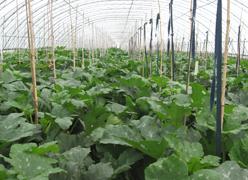
Key recent management focus for zucchini: controlling excessive vigor
Recently, when visiting the countryside, I saw that the zucchini grown in greenhouses by vegetable farmers was generally growing too vigorously, and the plants were setting fruit poorly. When asked why, many vegetable farmers told the reporter: "The weather forecast earlier said this year would be a cold winter, so we thought temperature control alone would be enough to manage plant growth well and avoid excessive vegetative growth. If we also used plant growth regulators, it would very likely seriously affect the growth of the zucchini, so we did not use regulators. But unexpectedly, although the outdoor temperature this year was not high, the weather was clear and fine, and the temperature inside the greenhouse was relatively high, which caused severe excessive growth of the zucchini."
-
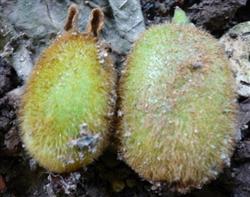
Three measures to take good care of kiwifruit in summer management
What causes kiwifruit to start dropping fruit? A survey of the fruit drop phenomenon found that every dropped fruit has a hard patch, with a spongy texture forming beneath the hard patch, and in severe cases rot. The main cause of fruit drop is considered to be damage by stink bugs, followed by the spotted lanternfly. In response, the following introduces control methods for stink bugs. The species occurring on kiwifruit is called the pear...
-
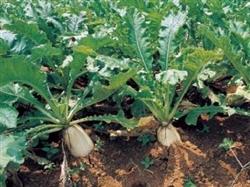
What are the key management techniques for spring radishes in May?
Planting spring radishes in early spring is a path to wealth with low investment, a short cycle, and high returns. It not only supplements the supply of vegetables during the off-season and increases the variety of produce, but also provides a good preceding crop for the following crop. Its main cultivation techniques are introduced as follows: 1. Choose excellent varieties. Generally, choose those with high yield, good quality...
-
Detailed Explanation of Key Technical Points for Spring Management of Ma Walnut Trees
I. Planting of Ma Walnut Trees 1. The suitable time for planting is from March to mid-April, after the soil thaws and before the buds sprout. Early planting makes it easy to survive, with deep rooting. When choosing a site, the specific environmental requirements for walnut growth and development should be considered. The orchard site is best chosen on sunny flat land or gentle slopes, with sandy loam soil being ideal, and requires a soil layer of more than 1 m, with the groundwater level more than 2 m below the surface. The planting area should be leveled, aged, and measures taken to prevent alkalinity and waterlogging. For mountainous areas, fish-scale pits can be built first, then the tree discs gradually expanded. Before planting, large pits must be dug and sufficient base fertilizer applied. The correct method of digging pits is: dig pits 80-100 cm square, keep topsoil and subsoil separate, and apply one small cartload (50-100 kg) of barnyard manure organic fertilizer per tree. When backfilling the pit, first fill with topsoil mixed with base fertilizer, then fill with subsoil, tamping while filling, and water thoroughly before planting.
-
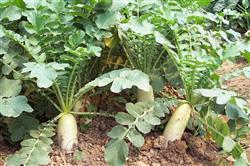
Key Technical Points for Spring Sowing and Cultivation Management of Carrots
The growing temperature range for radishes is 6 to 25°C. Among the winter-spring radish varieties currently in wider use are Korean New White Jade Spring, White Light Spring White Jade, and others. For the soil, choose a sandy loam that is loose in texture, fertile, and well aerated. Before sowing, apply sufficient fully decomposed organic fertilizer and compound fertilizer; generally apply 45,000 to... of organic fertilizer per hectare.
-
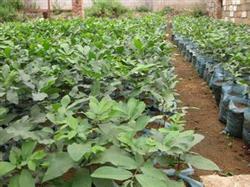
Detailed Explanation of Management Techniques for Young Pecan Trees
1. Timely and appropriate topdressing: topdress 3-4 times a year. In the first half of the year, topdress once each in late March, mid-May, and early July, using 0.5 kg of compound fertilizer each time, applied in a ring trench at the outer edge of the canopy. In the second half of the year, apply a base fertilizer once between November and December, using 10 kg of decomposed chicken manure or 2 kg of rapeseed cake, applied in strip-shaped holes 30 cm below the soil surface. Applying...
-
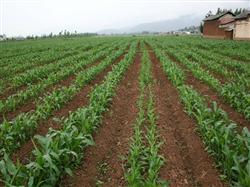
Spring-Sown Corn Planting Management Measures and Key Points
1. Suit measures to local conditions and select improved varieties. In plain and hilly areas, promote Yedan 13 and Xiyu No. 3, paired with Huayu No. 4, Zhongdan 32, Chenghai No. 1, and Yuanzheng 808; for interplanting in cotton fields, select the short-stalked, short-growth-period Yedan 22, Yedan 51, and 9362; in suburban areas, focus on fresh-eating types, and plant Zhongnuo 1...
-
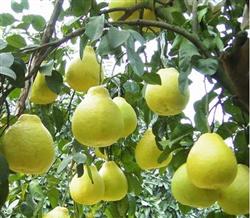
Key Technical Points for High-Quality and Efficient Fertilization Management of Shatian Pomelo
Shatian pomelo is a fruit of important standing in the fruit production of Xingning City. At present, the planting area has reached more than 30,000 mu, and the total output has reached more than 30,000 tons. Quite a number of farmers have already embarked on the road to prosperity by growing pomelo. In the long-term practice of planting Shatian pomelo, fruit growers in Xingning City have continuously experimented and summarized, and explored ways to improve the fruit quality of Shatian pomelo...
-
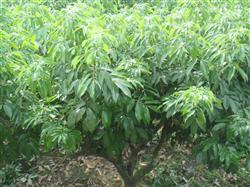
A Complete Guide to Key Lychee Spring Management Techniques
1. Thoroughly clean the orchard. First, cut down overly dense weeds and shrubs around and inside the orchard and clear them outside the orchard; second, thin out overly dense branches and diseased or pest-infested branches inside and outside the tree canopy and clear them outside the orchard; third, spray the whole orchard once with trichlorfon 600x solution + Yunsheng 600x solution to eliminate overwintering insect eggs and pathogens. Orchards with a water source should be irrigated as much as possible...
-
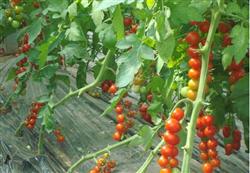
Key Technical Points for Spring Planting and Management of Cherry Tomatoes
As a variety of tomato, cherry tomatoes are increasingly popular with consumers. To achieve high yields when growing cherry tomatoes in spring, the work of planting and management must be done well. 1. Land preparation and planting The planting time for spring cultivation of cherry tomatoes is generally arranged for February to March, choosing land where no solanaceous vegetables have been grown within 3 years...
条件筛选