Detailed Explanation of Key Management Techniques for Forcing Culture of Strawberries
1. Change flat-bed cultivation to high-ridge cultivation. With flat-bed cultivation, field humidity is high, ventilation and aeration are poor, pests and diseases are severe, and the fruit is highly prone to mildew and rot, reducing quality and yield. High-ridge cultivation can overcome the above weaknesses and is better suited to the needs of protected cultivation. The specific method of high-ridge cultivation is: select level terrain, sheltered...
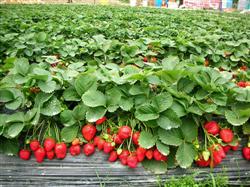 Strawberry is a perennial herbaceous plant of the genus Fragaria in the Rosaceae family, and is one of the world's seven major fruits. It has the reputation of "Queen of Fruits" and "Fruit Milk," is high in VC, and the main cultivation technique promoted is the high-ridge, double-row, four-film mulching technique:
I. Planting strong seedlings. 1. Soil disinfection: mainly using plastic film mulching and sun-baking of clods, high-temperature greenhouse sealing, flooding and waterlogging of soil, and rice-strawberry rotation. 2. Land preparation and fertilization: prepare the land in August combined with fertilization, "heavily applying base fertilizer." The base fertilizer is mainly fully decomposed organic fertilizer such as chicken manure, pig manure and cake fertilizer. Fertilization rate: 3000 kg of organic fertilizer per mu + 60 kg of diammonium phosphate applied in furrows + 10 kg of potassium sulfate. After fertilization, deep plow - rake level - build ridges (ridge height 15cm, width 30cm). 3. Seedling selection and planting: planting time is early September; select virus-free seedlings with 4-7 unfolded leaves, thick leaves, stem diameter above 0.8cm, and many thick white roots. Use double-row planting per ridge, density 6000-7000 plants/mu, row spacing 20cm, plant spacing 15 cm; when planting, "deep enough not to bury the crown, shallow enough not to expose the roots," with the arched back of the seedling facing outward from the ridge, and water thoroughly after planting to establish the plants.
II. Field management. 1. Covering with plastic film: cover with black plastic film around the time of Frost's Descent to keep warm; the film should be stretched tight and sealed firmly. 2. Hoop house covering: locally, a three-layer covering method of large greenhouse + medium tunnel + small arch tunnel is used to help strawberries overwinter; the covering time depends on air temperature, and generally the large greenhouse is covered starting in November. The optimum growth temperature for strawberries is around 25°C during the day and around 8°C at night, and must not fall below 0°C, otherwise freezing damage easily occurs. Strawberries under four-film mulching forcing culture have high yields, generally around 1500 kg per mu, with many inflorescences emerging, continuous fruiting, early marketing, a long supply period, high benefits, and a harvest period lasting more than 5 months. 3. Fertilizer and water management: on the basis of heavy base fertilization, light supplementary fertilization is also needed; the timing and frequency of supplementary fertilization are: ① the fruit-swelling stage of the terminal fruit of the terminal inflorescence; ② when the terminal fruit begins to be harvested; ③ the peak harvest period of the terminal fruit; ④ when the fruits of each inflorescence begin to be harvested successively, as appropriate. Supplementary fertilization should be combined with irrigation, using drip irrigation under black film to water, which can reduce air humidity and decrease the occurrence of pests and diseases. 4. Temperature, humidity and light regulation: use the opening and closing of the greenhouse for ventilation to regulate temperature and humidity; the relative humidity inside the greenhouse should be 30-60%, and if humidity is too high, quicklime can be placed inside the greenhouse to absorb moisture.
III. Plant management. 1. Leaf removal: remove old leaves in appropriate amounts and at appropriate times, and promptly remove diseased and damaged leaves and destroy them by deep burial. 2. Removal of runners: runners consume nutrients from the mother plant and affect ventilation and light penetration. Removing them is beneficial to flower bud differentiation and improves fruit quality. Remove manually or apply chlormequat. 3. Pollination: to reduce deformed fruit, place 2 boxes of bees per mu about 5 days before the first flowering to spread pollen, until late March when temperatures rise. Expert experiments have proven that bumblebees are more suitable than honeybees for pollination at low temperatures. 4. Flower and fruit thinning: moderate flower and fruit thinning can increase single fruit weight, keep fruit size uniform, and advance the ripening period; leaving 10-15 flower buds per plant is sufficient.
IV. Integrated pest and disease control. Strawberries mainly have three diseases: powdery mildew, gray mold and anthracnose. 1. Powdery mildew control: fumigate with sulfur before the first flowering, and use 50% Cuibei or 12.5% myclobutanil at the early stage of the disease. 2. Gray mold: use 75% chlorothalonil and others for control from bud emergence to flowering. 3. Anthracnose: during the disease period, use 50% procymidone 800-fold solution and others for control. In recent years, pests such as aphids and whiteflies have frequently occurred; integrated physical, biological and chemical control is advocated, mainly including the use of natural enemies and yellow sticky traps for trapping and killing.