-
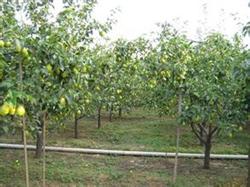
Key Technical Points for High-Yield Fertilization Management of Pear Trees
About one month before pear fruit ripens, the growth rate accelerates, which is called the fruit expansion stage. Topdressing at this time can improve photosynthetic efficiency, promote nutrient accumulation, and benefit fruit expansion and flower bud differentiation. This topdressing can both increase the yield of the current year and lay the foundation for fruiting in the following year. 525 Shandong Fruit Network The fertilization period is generally at the fruit...
-
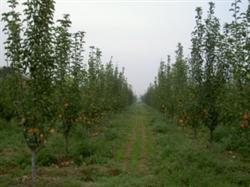
Detailed Explanation of Early Spring Management Techniques for Pear Trees
1. Dig planting holes or planting trenches. ① For pear orchards with colored varieties spaced more than 3 m apart, planting holes can be dug; centering on the planting hole, dig a circular or square planting pit 1 m deep and 1 m wide, placing the topsoil and subsoil separately on either side of the hole. ② For pear orchards with spacing below 2 m, planting trenches must be dug, with a trench depth of 1 m, ...
-
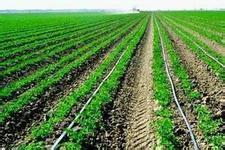
Detailed Explanation of Key Techniques for Tomato Planting and Irrigation Management
Tomatoes begin to be watered after the seedling-stabilizing stage when fruit has set (when the first fruit is about the size of a walnut). Over the whole growing season, 3--4 waterings are given. Generally, one watering is given at the seedling stage as a transplanting and seedling-lifting watering. Water is then withheld until the first fruit cluster swells to where the young fruit is 2--4 cm in diameter, at which point the second watering is given. After that, depending on the condition of the seedlings and the moisture level of the soil, irrigation is carried out once every 10--15 days, with 3--4 irrigations over the whole growing season, each irrigation applying 60--...
-
Key Points and Technical Details for Spring Management of Pear Orchards
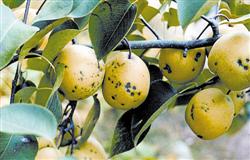
In mid-May, some fruit growers in Xinji, Shenzhou and other places found that after spraying pear trees with pesticides, the young fruit of some pear varieties developed black spots, affecting fruit quality. In order to investigate the causes of the black spots, on May 22, Ni Qunzhou of the Shijiazhuang Fruit Tree Research Institute of the Provincial Academy of Agriculture and Forestry Sciences, Liu Pingjun of the Jinzhou Forestry Bureau, and Xie Zhuang Technicians of Zhaoxian County...
-
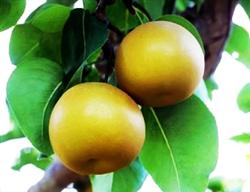
Detailed Explanation of Key Pre-Harvest Management Techniques for Early-Maturing Honey Pears
The cultivation area of early-maturing honey pears has been expanding year by year, but because the majority of growers lack scientific management methods and techniques, premature aging of pear trees has occurred, with fruit production decreasing year by year, fruit quality declining day by day, and poor economic returns. In particular, because last winter was on the warm side, and early spring was also on the hot side, with a cold spell in late spring and other complex and changeable...
-
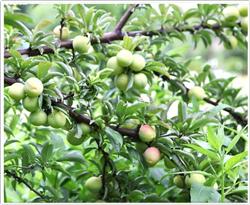
Key Technical Points for Plum Cultivation and Management in Greenhouses
In order to explore early-fruiting and early-high-yield techniques for cultivating plums in greenhouses, our station conducted experimental research from 1997 to 2000. The greenhouse was covered in the winter of the second year after planting, and in 2000, a 4-fen plot greenhouse produced 1000 kg of plums. The output value was over 10,000 yuan, and the maturity period was about 60 days earlier than open-field cultivation. Through the experiments, we summarized the techniques for cultivating plums in greenhouses...
-
Take good care of management in early summer for plum trees, and only then can the plums be high-quality and high-yield
Although the plum is a fruit tree with good yielding ability and strong disease resistance, due to poor management in early summer, it often shows severe alternate bearing, small fruit, and quality that cannot be guaranteed. Plum trees in full fruit period are mainly borne on short fruit branches and bouquet-like fruit branches. At present, plum fruit is in the fruit expansion stage. In order to enlarge the fruit, ensure uniform fruit size...
-
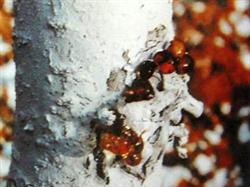
What are the key points of post-harvest management techniques for plum trees
Gummosis is a common non-infectious disease of plum and other stone fruit trees, with an incidence rate as high as 76%-95%. Affected trees show yellowing leaves and weak branches, declining tree vigor, severe fruit drop, and may even die entirely. The bark at the affected area cracks and swells, exuding a soft, transparent gummy sap that oxidizes and congeals into a reddish-brown gelatinous substance. Caused by gummosis...
-
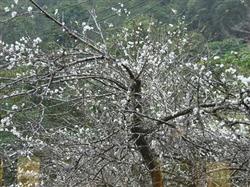
Detailed Explanation of Flower and Fruit Management Techniques for Plum Trees
Plum trees produce a large number of flowers, but their self-pollination fruit-setting rate is low. To achieve stable and high yields, flower and fruit management is an important part. Flower and fruit management is mainly reflected in pollination, flower and fruit thinning, and flower and fruit preservation. 1. Pollination The most suitable time for pollination is in the early full-bloom stage. For pollination, choose flowers that have been open for no more than 3 days. ...
-
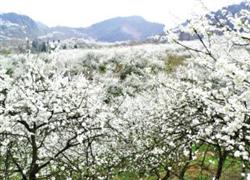
Detailed Explanation of Key Management Techniques for Plum Trees During the Flowering and Fruiting Period
Management of plums during the flowering and fruiting period: Plum trees flower easily and have a high fruit-setting rate, but the fruit is small. To improve fruit quality, in addition to strengthening soil and fertilizer management and adopting summer pruning to control vegetative growth, flower and fruit thinning management should be carried out. Thin flowers during the flower bud swelling stage (late March), leaving one flower cluster branch and removing the next; at 20 to 30 days after flowering...
条件筛选