What are the pollution-free cultivation and management techniques for fresh-eating peach trees?
Pollution-free means that under specific conditions, the production environment, production techniques and product quality meet the requirements of the relevant national standards and regulations; the production environment quality meets the requirements of GB/T18407.2-2001; the production regulations of NY/T5114-2002 are implemented; during production, limited amounts of restricted chemical fertilizers, pesticides and other synthetic substances are permitted; and product quality...
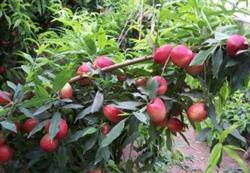
Pollution-free means that under specific conditions, the production environment, production techniques and product quality meet the requirements of the relevant national standards and regulations; the production environment quality meets the requirements of GB/T18407.2-2001; the production regulations of NY/T5114-2002 are implemented; during production, limited amounts of restricted chemical fertilizers, pesticides and other synthetic substances are permitted; the product quality meets the pollution-free fresh peach product standard; after testing by a specialized agency, the fresh peach product is confirmed to meet the pollution-free hygiene standard, a pollution-free agricultural product certification certificate is obtained, and the pollution-free agricultural product mark may be used on the fresh peaches. The product meets the index requirements of NY5112-2002.
The production of pollution-free fresh peaches requires a certain production scale and a clearly defined regional scope. At the same time, there must be corresponding professional and technical personnel and management personnel, complete quality control measures, and complete production and sales record files. The following focuses on pollution-free fresh peach cultivation techniques for fruit growers to study and refer to.
I. Raising seedlings
(I) Selection of nursery site
1. Geographical location. The nursery site should be located in a place with convenient transportation, close to a water source, and far from epidemic areas and pollution sources; it is best to locate it near a mother orchard of high-quality fresh peaches.
2. Terrain. The nursery site should be selected as a field with flat terrain, high and dry and facing the sun, a slope not exceeding 5 degrees, sufficient sunlight, and a low groundwater level.
3. Soil. Peach trees prefer loose, well-aerated soil. It is best to use sandy loam or light loam, with a pH value of 5.5~6.5 being suitable, and a plot where peach trees have not been planted in the previous crop.
(II) Selection of rootstock
Rootstock is the basic condition for cultivating excellent nursery stock. In the south, virus-free wild peach is commonly used as rootstock. It has characteristics such as a well-developed root system, strong nutrient absorption capacity, drought tolerance, tolerance to barren soil, strong compatibility with cultivated peaches, easy grafting survival, rapid growth, and good fruiting performance. It is suitable for the warm and humid regions of the south, but when cultivated on heavy, poorly aerated soil, it is prone to gummosis. Other rootstock varieties such as mountain peach, almond, and Nanking cherry are not suitable for promotion and application in the south.
(III) Cultivation of grafted seedlings
1. Specifications of rootstock. The rootstock seedlings must grow robustly, be virus-free and free of diseases and insects, and have a root crown diameter of more than 0.8 cm at 5 cm above the ground before grafting.
2. Collection of scions. Scions are an important factor determining whether the nursery stock variety is pure and the grafting survival rate is high or low, so special attention must be paid to the correctness of the variety when collecting. Collect virus-free scions from healthy, disease- and pest-free middle-aged fruit trees according to the required variety, selecting well-developed current-year vegetative branches and long fruit branches that are full and plump in bud eyes; water sprouts should not be used as scions.
3. Grafting time and methods. Peach seedling grafting can be divided into bud grafting and stem grafting. The best time for bud grafting is mid-to-late September, while stem grafting is generally in February and March. Peach trees commonly use bud grafting, and the specific methods will not be described one by one in detail.
4. Management of grafted seedlings. After grafting peach seedlings, check the survival rate in time; those that did not survive should be re-grafted as early as possible, and attention should be paid to timely unbinding and cutting the rootstock. After cutting the rootstock, a large number of sprouts are likely to emerge from the base of the rootstock, so multiple timely sprout removals should be carried out. If two branches sprout from the scion in stem grafting, one thick, upright one can be selected for cultivation, and the other should be removed. During the growing period, intensive cultivation and strengthened management are required.
II. Orchard establishment
(I) Selection of orchard site
The selection of a fresh peach orchard site is one of the key factors in producing pollution-free fresh peach food. Peach trees can be planted in mountains or plains, as long as the soil and climatic conditions are suitable and there is no pollution from waste gas, wastewater, or waste residue nearby. However, it is best to choose soil with sufficient sunlight, smooth drainage, loose texture, deep soil layers, and high organic matter content for planting.
(II) Orchard planning
1. Plot planning. When the orchard area is relatively large, it should facilitate soil and water conservation and mechanical operation. The entire orchard should be divided into various planting blocks according to terrain. Generally, for southern peach orchards, the plot area is suitably 20~40 mu on flat land and 10~15 mu in mountainous areas, with reasonable arrangement of early-, mid-, and late-maturing varieties and pollinizer varieties.
2. Roads. Roads consist of main roads and branch roads. The main road should allow medium-sized vehicles to pass, be 5~6 m wide, and connect to external highways. Branch roads are 2~4 m wide; branch roads in mountainous peach orchards should be built along contour lines, and branch roads should be placed on the boundary lines between plots. Paths connect with branch roads, with a width of 1~2 m. Operating paths are set between fruit tree rows.
3. Buildings. This depends on the scale. Generally, consideration should be given to rest rooms for laborers, grading rooms, warehouses, septic tanks, etc. For three-dimensional ecological cultivation and to increase fertilizer sources, livestock farms may also be established.
4. Drainage and irrigation system. Orchard land should focus on storing water, with both storage and drainage taken into account, and water conveyance and drainage facilities should be built; peach orchards with conditions may install sprinkler or drip irrigation. One reservoir should be built for every 30~50 mu (667 m2).
5. Establishment of shelterbelts. Orchard shelterbelts can be combined with roads, ditches, and field blocks, and the tree species in the shelterbelt can combine trees and shrubs to form a three-dimensional structure.
(III) Variety selection
Variety selection should be considered according to many factors such as market demand, convenient transportation, the geographical location of the orchard, the consumer group, and the regulation of orchard labor. It should also be selected from aspects such as variety adaptability, high yield, stress resistance, storage tolerance, and quality. A production orchard should not have too many varieties.
Peaches are self-pollinating fruit trees. Varieties with pollen can be planted alone and still achieve high yields. If mixed with other varieties, the fruit-setting rate can be further increased; varieties without pollen or with poor self-fertility must be provided with pollinizer trees to increase yield. The ratio of main cultivars to pollinizer varieties is 2~3:1. Attention should be paid to selecting varieties with similar flowering periods and abundant pollen for mixed planting.
(IV) Planting
1. Planting time. The planting time for fresh peaches begins after leaf fall in autumn and winter, and planting can continue until before bud break in early spring of the following February. According to practical experience: when planted after leaf fall in autumn and winter, roots grow first and leaves later the following spring, which helps improve the survival rate and branch and leaf growth; when planted in the following spring, buds and branches and leaves grow first and roots later, with a seedling recovery stage, and growth is not as good as autumn-winter planting. Therefore, in the south, autumn-winter planting is more suitable, especially for semi-finished seedlings, where autumn-winter planting can increase the survival rate.
2. Planting density. Peach planting density should be determined according to variety, soil texture, and terrain. Generally, the south is denser than the north, and mountainous areas are denser than flat land. Generally, 33~55 plants are planted per 667 m2 of soil; for vigorous varieties, 33 plants on flat land, and for moderately vigorous varieties, 55 plants in mountainous areas are suitable.
3. Planting techniques. Before planting, dig the planting holes. The size and depth of the holes are suitably 60~80 cm. Apply 50~70 kg of decomposed barnyard manure per hole, add 1 kg of calcium magnesium phosphate fertilizer, mix evenly and apply, then add soil to make a mound shape 100 cm wide and 30 cm high. Before planting, check the quality of the peach seedlings; all diseased plants found should be eliminated and burned, and the grafting film should be removed at planting. The main root of the peach seedling needs to be cut by 1~2 cm, especially damaged broken roots, to promote new root growth. The planting depth should be such that the root crown is slightly above the ground surface. During planting, the root system and covering soil should be fully firmed. After planting, water with 15% clear liquid manure so that the soil and roots are in close contact, which helps seedling survival. One week after planting, check the planting quality so that timely corrections can be made. After planting is completed, immediately head the tree at a height of 60 cm. In areas with severe wind damage, support stakes are also needed.
III. Soil, fertilizer, and water management
Timely and good management of soil, fertilizer, and water for peach trees is the key to early fruiting and stable production of peach trees, and it is also the foundation of comprehensive management technical measures for peach orchards.
(I) Soil management.
1. Deep plowing. Deep plowing in peach orchards can improve soil structure and increase soil nutrient content, thereby promoting root development and aboveground growth. Deep plowing of peach trees is carried out after fruit harvest in autumn, generally combined with autumn base fertilizer application. The depth of deep plowing gradually increases outward from the trunk, 10~20 cm deep near the trunk, and up to 30~40 cm deep at the outer edge of the tree canopy. During deep plowing, try to cut as few conducting roots 1 cm thick as possible.
2. Growing grass, mulching grass, and intercropping. The root system of peach trees is relatively shallow, generally distributed within the 30~50 cm soil layer, and extends horizontally, roughly consistent with the canopy. It is advisable to implement soil management combining growing grass and mulching grass, which can eliminate the need for intertillage and autumn plowing. Growing grass and mulching grass in summer can maintain soil moisture and stabilize surface temperature, achieving cool summers and warm winters, improving the ability of roots to absorb nutrients and water, and improving soil physical, chemical, and biological properties. If weeds are completely cleared and grass is mulched in the early growth stage and after fruit harvest, it can conserve water, preserve fertilizer, and lower temperature.
Reasonable intercropping, especially planting green manure in peach orchards, has a clear promoting effect on the formation of favorable soil physical properties, can also prevent overgrowth of weeds, improve the microclimate of the peach orchard, and combine land use with soil maintenance. Young peach orchards can be intercropped with dwarf crops such as beans, potatoes, leafy vegetables, and green manure. Tall crops and crops with strong nutrient uptake, such as corn and root and tuber crops, are not suitable for intercropping in peach orchards.
3. Intertillage and weed control. During the peach growing period, there is abundant rainfall and many weeds. Generally, loosening the soil and removing weeds after rain or irrigation reduces soil compaction, reduces competition from weeds for soil moisture and nutrients, and reduces sources of diseases and pests. From peach bud break to late June, intertillage and weed control must be carried out to a depth of 5~10 cm, and weeds should be piled around the tree canopy to improve the tree's drought resistance. After fruit harvest, the root system enters its second growth peak, so intertillage and soil loosening should be deeper, generally up to 15 cm, to promote soil aeration and benefit root growth and tree vigor recovery. During the growing period, intertillage and weed control are carried out 2~3 times per year. Weed control in peach orchards advocates manual weeding, and where conditions permit, mechanized weeding (with a mower) can be used.
(II) Fertilization
1. Fertilization principles.
Pollution-free fresh peach fertilizer should mainly promote the use of organic fertilizer, with chemical fertilizer as a supplement, and rational fertilization should be carried out according to optimized formula fertilization techniques. Fertilizers must be able to protect and promote peach tree growth and quality improvement, maintain to the greatest extent the soil nutrient balance and soil fertility improvement of the peach orchard, and must prevent adverse effects of various pollution sources on peach trees, human health, and the ecological environment.
2. Fertilization time and amount
According to the fertilizer requirements of peach trees at different phenological stages, fertilization is generally carried out five times a year, following the principle of heavy application of base fertilizer and skillful application of supplementary fertilizer, grasping the guidelines for fertilizer use in pollution-free fresh peach production, and reasonably selecting fertilizer types and amounts according to factors such as variety, tree vigor, fruit load, and soil fertility, so as to produce fresh peaches that are both high-yielding and high-quality as well as safe.
1) Base fertilizer
① Time: Base fertilizer should be applied in autumn, preferably in September~October after fruit harvest, because after September the peach tree root system enters its second growth peak, and fertilization can promote wound healing, promote new root growth and nutrient absorption, and has a clear effect on improving flower bud quality.
② Type and amount: Organic fertilizers should be selected for base fertilizer (such as pig, cattle, sheep, chicken, and duck manure, as well as rapeseed cake, etc.), then mixed with an appropriate amount of nitrogen, phosphorus, and potassium compound fertilizer to improve fertilizer efficiency.
Amount of base fertilizer: It accounts for 60~70% of the annual fertilization amount. The fertilization amount should be controlled according to tree age, tree vigor, and yield. Generally, for a peach tree with a per-tree yield of about 100 kg, apply 100~150 kg of base fertilizer, with the minimum requirement being "one jin of fertilizer per jin of fruit."
③ Fertilization method: For young trees and trees beginning to bear fruit, furrow application is generally required, with a furrow depth of 30~40 cm and a furrow width of 40~45 cm. For mature trees, ring-shaped fertilization is better, and broadcast application throughout the orchard should be combined with autumn deep plowing.
2) Supplementary fertilizer. It is divided into four applications, including pre-flowering fertilizer and fruit-setting fertilizer, applied by broadcasting or in strip furrows.
① Pre-flowering fertilizer. Generally applied before temperature rise to supplement the insufficient stored nutrients in the tree and make material preparations for bud break and flowering, mainly nitrogen fertilizer with an appropriate amount of phosphate fertilizer. It is advisable to apply human and livestock urine mixed with an appropriate amount of urea. If growth vigor is strong and base fertilizer is sufficient, it may be applied less or not at all.
② Fruit-setting fertilizer. Applied during the fruit-setting period after flower fall. At this time, peach trees consume a large amount of stored nutrients due to bud break and flowering, and with the rapid growth of young fruits and new shoots, quick-acting nitrogen fertilizer should be supplemented in time, along with phosphorus and potassium fertilizers, to promote young fruit enlargement and new shoot growth. If soil fertility is high and more supplementary fertilizer was applied before bud break, fruit-setting fertilizer may also be omitted.
③ Fruit-swelling fertilizer. Fruit-swelling fertilizer is the most important supplementary fertilization, accounting for about 20% of the annual fertilization amount. It should be applied 20~30 days before peach harvest, mainly with phosphorus and potassium fertilizers. Per tree, 1.5 kg of cake fertilizer plus 0.5 kg of compound fertilizer and 0.5 kg of potassium sulfate may be applied. It mainly promotes rapid fruit cell growth and increases fruit weight. It can effectively increase yield and improve quality.
④ Post-harvest fertilizer. Its main purpose is to restore tree vigor as quickly as possible, prolong the green leaf period, promote further growth of the root system and new shoots, make branches and buds full and plump, increase storage of tree nutrients, and lay a good material foundation for high yield the following year. A nitrogen, phosphorus, and potassium compound fertilizer is preferable.
3) Foliar spraying. Also called root-outside supplementary fertilization, this is a simple and easy supplementary fertilization method. It uses less fertilizer and takes effect quickly, can promptly supplement nutrients, and can promptly correct nutrient deficiencies.
(III) Water management
Peach tree irrigation should be determined according to water demand at different growth stages, the amount of precipitation, and soil properties. The south has relatively abundant rain, so irrigation is not suitable in early spring or during the plum rain period. The main irrigation times are the fruit enlargement period and before harvest, and attention should be paid to irrigation in the dry season of July~August. Irrigation methods can use furrow irrigation, and peach orchards with conditions can use drip irrigation or sprinkler irrigation.
Peach trees are most afraid of waterlogging. If soil drainage is poor, mild cases lead to yellowing, and severe cases lead to death. Therefore, when establishing an orchard, the establishment of a drainage system must be considered so that excess water can be discharged in time. When establishing an orchard in places with a high groundwater level, deep furrows and high beds must be made to prevent flooding.
IV. Flower thinning, fruit thinning, and bagging
Flower and fruit thinning in peaches can reduce ineffective nutrient consumption and increase the accumulation of effective nutrients. A reasonable fruit load on peach trees can significantly improve fruit quality. In principle, flower and fruit thinning should be done early rather than late.
1. Flower thinning. Flower thinning should be decided according to weather and tree growth conditions. When the weather is good and pollination is sufficient, thinning should be done early; when flowering is uneven, thinning should be done later; mature trees can be thinned early, while young trees and vigorous trees should be thinned later. Flower thinning should be carried out at full bloom when good and poor flowers can be easily distinguished, removing small flowers, deformed flowers, upward-facing flowers, and leafless flowers. The total flower thinning amount for the whole tree is about 1/3. However, it is not widely used in production, mainly because flower thinning is too labor-intensive.
2. Fruit thinning. Fruit thinning can help the remaining fruits develop larger and improve quality, can also prevent alternate bearing, achieve high and stable yields, and has effects such as reducing disease and pest damage and saving labor for bagging and harvesting.
① Fruit thinning standards. Fruit thinning should be determined according to the size of the variety's fruit, tree vigor, and fertilizer and water management level. Generally, small-fruited varieties should retain more (leaf-to-fruit ratio 20:1), and large-fruited varieties should retain fewer (leaf-to-fruit ratio 25~30:1); trees with good vigor and high management level retain more, while trees with weak vigor and poor management retain fewer; the upper and outer parts of the canopy may retain more, while the lower part and inner canopy should retain fewer. For example, for an 8-year-old "Taqiao" fresh peach with a per-tree yield of 50 kg, if this variety averages 6 fruits per kg, then 300 fruits should be retained. Considering losses from certain factors, the retained fruit number should be increased by 10%, so for a per-tree yield of 50 kg, the retained fruit number is 330. Generally, long fruit branches retain 3 fruits, medium fruit branches retain 2 fruits, and short fruit branches retain 1 fruit; in the lower part and inner canopy of the canopy, long fruit branches retain 2 fruits, medium fruit branches retain 1 fruit, and 2~3 short fruit branches retain 1 fruit. When thinning fruit, grasp the principles of retaining large fruits and removing small ones, retaining superior fruits and removing inferior ones, and even distribution, and remove small fruits, deformed fruits, diseased and insect-damaged fruits, and upward-facing fruits.
② Fruit thinning time. Peach fruit thinning should be done early rather than late. According to fruit thinning practices in various places, peach fruit thinning should be carried out in 2 times. The first time is about 20 days after flower fall, around late April to early May in the Hangzhou area; the second fruit setting is after physiological fruit drop, that is, completed in early to mid-May.
3. Bagging. Fresh peach bagging is one of the important contents of green, pollution-free cultivation and management. It can not only improve fruit surface color, reduce pesticide contamination of fruits, and prevent fruit cracking, but also prevent and control damage from diseases, pests, birds, and animals, thereby promoting "high quality and safety" of the fruit.
The bagging time generally begins after fruit setting is finalized, and in the south it is mostly completed from mid-May to early June. Before bagging, spray once with an insecticide and fungicide plus foliar nutrient solution. After the fruit surface dries, bag the fruit, using bamboo sheath, jute, wire, or a stapler, etc., to tie the bag opening tightly. For bagging materials, single-layer or double-layer special fruit bags can be used. Varieties with more red blush should use yellow or dark-colored bags, while those with less red blush should use white fruit bags. The bag specifications are determined according to fruit size. The order of bagging is from top to bottom and from inside to outside.
V. Disease and pest control
Reasonable control of peach tree diseases and pests is an important link in ensuring high quality, high yield, and stable yield of fresh peaches. Control work should start from the entire ecosystem of peach tree diseases, pests, and weeds, follow the policy of "prevention first, comprehensive control," understand and master the occurrence patterns of diseases and pests, strengthen forecasting and prediction of diseases and pests, comprehensively apply various control measures, take agricultural control as the foundation and physical and chemical control as auxiliary means to control diseases and pests. Strengthen cultivation management, enhance the resistance of peach trees to various harmful organisms, create environmental conditions unfavorable to the breeding of diseases and pests and favorable to the reproduction of various natural enemies, reduce environmental pollution, ensure the balance of the agricultural ecosystem and biodiversity, meet green and pollution-free standards, and promote the sustainable development of the fresh peach industry.
(I) Agricultural control
1. Select excellent fresh peach varieties with strong resistance. Strengthen plant quarantine to prevent the introduction and spread of fruit seedlings, scions, or rootstocks carrying diseases and pests, use seeds to propagate rootstocks, and establish disease-free mother orchards or mother trees, etc. Fruit product quarantine should also be strengthened.
2. Emphasize winter orchard cleaning. The diseased and residual tissues of peach trees are the main overwintering sites for overwintering pathogenic bacteria, overwintering eggs, and pupae. Winter orchard cleaning plays an extremely important role in reducing overwintering sources of diseases and pests and reducing the primary infection sources of diseases and pests in the following spring. Orchard cleaning work mainly includes:
1) Peach orchard cleanup. Prune off branches damaged by diseases and pests, scrape off rough and cracked bark and disease and pest spots on branches and trunks, remove dead branches, dead leaves, and dead fruits on the trees, sweep up dead branches, fallen leaves, rotten fruits, waste bags, etc. on the ground, and burn them in a centralized manner. Timely remove all branches pruned during winter pruning from the orchard. Clean all applied tools in the peach orchard, especially debris prone to harboring diseases and pests, such as straw ropes, baskets, and packaging bags, to eliminate sources of diseases and pests to the greatest extent.
2) Spray lime sulfur mixture and whitewash tree trunks. After winter pruning, spray the whole orchard once with 5 degrees Baume lime sulfur mixture, and timely whitewash the tree trunks to eliminate or reduce overwintering pathogenic bacteria and insect eggs on the trees.
3. Strengthen tree management and regulate growth vigor. Generally, when tree vigor is strong, canopy opening is large, and ventilation and light transmission are good, there are fewer diseases; when tree vigor is weak, diseases are severe; when growth vigor is excessively vigorous and the canopy is closed, diseases are also severe. Therefore, it is necessary to:
1) Fertilize reasonably. Increase the application of organic fertilizer and microbial active fertilizer to strengthen tree vigor. Pay attention to the balance of various fertilizer elements.
2) In the rainy season, clean drainage ditches and remove accumulated water. In low-lying areas, deep ditches should be opened to lower the groundwater level, reduce soil moisture, and control the occurrence of diseases and pests.
3) Deep plowing and soil improvement in autumn and winter. Peach orchards should deep plow the soil every autumn and winter to increase soil aeration. Deep plowing can freeze to death overwintering pathogenic bacteria and insect eggs underground, reducing sources of diseases and pests; mature the soil and increase soil organic matter content.
4) Reasonable shaping and pruning to improve ventilation and light conditions of the tree and control the occurrence of diseases.
5) Fruit bagging to prevent diseases and pests from damaging peach fruits.
6) Observe carefully during the growing period and remove source materials in time. During the new shoot growth period, inspect frequently. When initially infected diseased leaves, diseased shoots, and diseased fruits are found, immediately pick them off and burn or bury them deeply. Before and after harvest, pay attention to opportunities for re-infection by pathogenic bacteria to reduce the amount of pathogenic bacteria in the orchard.
7) Harvest at the appropriate time, and adopt all measures to reduce wounds and promote wound healing.
8) Do a good job in disease and pest control of young trees. Some diseases are prone to occur at the young tree stage, such as peach crown gall, which often becomes one of the main sources of inoculum for disease occurrence in fruiting trees.
(II) Physical control
Physical control is a control method based on the occurrence patterns or characteristics of diseases and pests themselves, using physical factors to create an environment unsuitable for the entry, spread, and survival of diseases and pests. Its advantages are centralized trapping and killing, no pollution, no killing of natural enemies, no resistance developed by pathogenic bacteria and pests, and no destruction of ecological balance. Measures such as capture and killing, blocking, and removal may be adopted, or trapping and killing methods such as sugar-vinegar liquid, black light lamps, and frequency-vibration insect-killing lamps may be used to kill pests. For example, the frequency-vibration insect-killing lamp uses the characteristics of pests' strong phototaxis, wave taxis, and taxis to information, sets the light wave within a specific range, uses light at close distance and waves at long distance, and adds the sex pheromones produced by the pests themselves to lure adults. Combined with frequency-vibration high-voltage electric grids for electrocution, the pests fall into the lamp's dedicated insect-receiving bag, achieving the purpose of killing insects. It can trap and kill all Lepidoptera adults and some Coleoptera adults, such as scarab beetles and fruit-sucking noctuid moths.
(III) Biological control
Use natural enemies of pests to control pests. Through approaches such as protection and introduction of natural enemies, breeding, rearing, and release, and creating an environment favorable to the survival of natural enemies, establish and improve various natural enemy populations to achieve the purpose of controlling pest population numbers. Examples include Trichogramma, ladybugs, and lacewings.
Use beneficial organisms or their products to control peach tree pests. Examples include various biological-source pesticides such as polyoxin and ningnanmycin, as well as the use of insect sex pheromones to trap and kill adults or interfere with mating.
(IV) Chemical control
It is strictly prohibited to use highly toxic and high-residue pesticides; choose pollution-free, biological pesticides or high-efficiency, low-toxicity, low-residue pesticides.
1. Types of pesticides
1) Biological-source pesticides: pesticides that directly use living organisms and biologically active substances produced in the process of biological metabolism or substances extracted from organisms to control diseases, pests, and weeds. According to different biological sources, they can be divided into microbial-source pesticides, animal-source pesticides, and plant-source pesticides.
① Microbial-source pesticides: agricultural antibiotics, such as Nongkang 120 and liuyangmycin, etc.; live microbial pesticides, such as Bacillus thuringiensis and microsporidia, etc.
② Animal-source pesticides: insect pheromones, such as sex pheromones, etc.; live preparations, parasitic and predatory natural enemy animals.
③ Plant-source pesticides: rotenone, pyrethrin, allicin, sesamin, neem, plant oil emulsions, etc.
2) Mineral-source pesticides: pesticides whose active ingredients originate from inorganic compounds of minerals and petroleum-based mineral oil pesticides. These include inorganic acaricides and fungicides (sulfur preparations, copper preparations), Green Rui mineral oil emulsion, etc.
3) Organic synthetic pesticides. A class of commercial pesticides developed and synthesized artificially and produced by the organic chemical industry, including moderately toxic and low-toxicity insecticides, acaricides, fungicides, and herbicides.