-
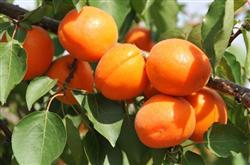
Detailed Guide to Plum and Apricot Tree Cultivation Techniques
I. High-Standard Orchard Establishment 1. Site Selection: Apricot trees are drought-tolerant but not waterlogging-tolerant, tolerant of poor soil, and light-loving, and their blooming period is prone to late frost damage. Therefore, when establishing an orchard, choose a plot that faces away from the wind and toward the sun, with higher terrain, good drainage, and deep soil. 2. Select Strong Seedlings: High-quality strong seedlings are the guarantee of survival rate and high yield...
-
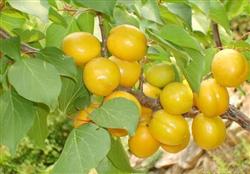
Key Production Techniques for Green Extra-Early Apricot Fruit
June is exactly the ripening and harvesting period for apricot fruit and the physiological differentiation and formation period for flower buds, as well as a peak period for various pests and diseases. Doing a good job of tree management plays an important role in improving apricot fruit quality, promoting flower bud differentiation, and controlling pests and diseases. 1. Proper pruning: First thin out dense branches, and pinch the growing tips of retained new shoots. This can both...
-
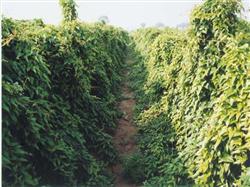
Detailed Explanation of Key Cultivation Techniques for Yam (Dioscorea)
Variety Selection Currently, the main yam varieties cultivated include Fine-Haired Long Yam, Ermao Yam, and the Japanese "Yamato Imo" yam. Both Fine-Haired Long Yam and Ermao Yam belong to the long-column variety of common yam. Japanese yam is a variety with strong adaptability, good quality, strong disease resistance, high yield, and promising development prospects. ...
-
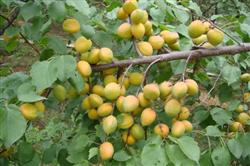
A Detailed Explanation of the Growth and Fruiting Habits of Kernel Apricot and the Key Points of Pruning Techniques
I. Growth and fruiting habits of kernel apricot: 1. Weak branching ability: After planting, kernel apricot produces a few long branches, and once these long branches enter the fruiting stage, they rarely branch, often showing insufficient branch quantity under natural growth. 2. High germination rate: Whether the long branches of kernel apricot are left unpruned or cut back, the vast majority of buds can germinate, ...
-
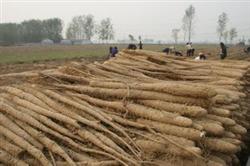
Detailed Explanation of Fertilizer Requirements and Fertilization Techniques for High-Yield Chinese Yam
Fertilizer requirements. Chinese yam has a long growth period and a high fertilizer demand, and it especially favors organic fertilizers with long-lasting effects. Because tuber formation is accompanied by the accumulation of substances such as starch, the demand for phosphorus and potassium is relatively large. In the early growth stage of Chinese yam, because temperatures are low and organic nutrients are released slowly, an appropriate amount of quick-acting nitrogen fertilizer should be supplied to promote...
-
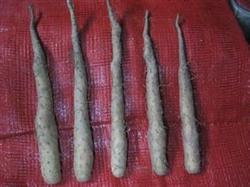
Detailed Explanation of Key Techniques for High-Yield Yam Cultivation
To achieve high yields of yam, selecting good varieties is crucial. Yam varieties can be divided by use into edible yams, medicinal yams, and dual-purpose (medicinal and edible) yams. By shape, they can be divided into long yams, flat yams, and round yams. Long yams are long and columnar; flat yams resemble a foot sole, fan-shaped, narrow at the top and wide at the bottom; round yams are short and round or irregularly clump-shaped. ...
-
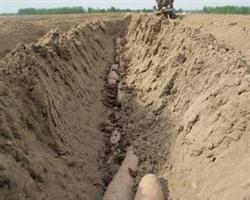
What are the key points of scientific fertilization techniques for yam?
Yam, also known as Chinese yam, is a perennial twining herb of the Dioscoreaceae family, using its tuberous root for medicinal purposes. It is mainly produced in the three provinces of Henan, Shanxi, and Shaanxi, and is also cultivated in Jilin, Liaoning, Shandong, and other places. The tuberous root of yam contains saponins, mannan, phytic acid, allantoin, choline, dopamine, arginine, amylase, protein, fat, starch...
-
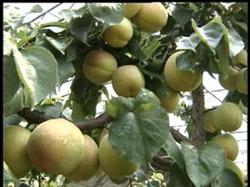
Key Points of Apricot Cultivation Techniques, Detailed Explanation of Planting and Management Methods
1. Orchard establishment: Choose sandy loam orchard land with deep, fertile soil that can be irrigated and drained; waterlogged lowlands, heavily saline-alkali land, and replanted land are not suitable for orchard establishment. For pollinizer trees, choose varieties whose flowering period coincides with or is slightly earlier than that of the main cultivar; the ratio of pollinizer varieties to the main cultivar is generally 1:6-8. Planting density on plains: spacing between plants and rows 3 m x 4-5 m; in...
-
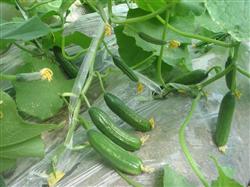
Key Cultivation and Management Techniques for Fruit-Type Cucumbers in Spring Season
Land preparation, fertilization, and transplanting. Fruit-type cucumbers produce a large number of fruits and require an ample nutrient supply. It is advisable to select loam soil with a deep soil layer, high organic matter content, and good water and fertilizer retention for planting. Before transplanting, apply 5000 kg of decomposed organic fertilizer per 667 sq m, along with 30 kg of superphosphate, 200 kg of cake fertilizer, and 5...
-
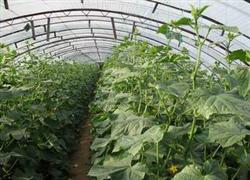
Detailed Explanation of Key Points for Spring Greenhouse Cucumber Cultivation Techniques
Variety selection: Choose early-maturing, disease-resistant, high-quality varieties such as Changchun Mici, Jinza No. 2, Jinchun No. 2, etc. 1. Seedling raising period: Raise seedlings in a greenhouse in early February 2. Preparation of nutrient soil: The ratio is decomposed organic fertilizer : garden soil : fine furnace ash = 5:4:1. Add 0.5 kg of urea per cubic meter of nutrient soil...
条件筛选