Key Production Techniques for Green Extra-Early Apricot Fruit
June is exactly the ripening and harvesting period for apricot fruit and the physiological differentiation and formation period for flower buds, as well as a peak period for various pests and diseases. Doing a good job of tree management plays an important role in improving apricot fruit quality, promoting flower bud differentiation, and controlling pests and diseases. 1. Proper pruning: First thin out dense branches, and pinch the growing tips of retained new shoots. This can both...
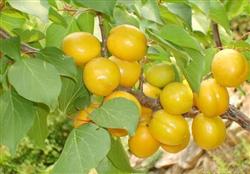 1. Ecological environment requirements for green extra-early apricot fruit
1. Site selection: The production base for green fruit should have a good ecological environment. Therefore, in choosing the site, one should select an environment with fresh air, pure water quality, and uncontaminated soil, staying as far away as possible from industrial areas and major traffic routes, or choosing a location upwind of cities, industrial areas, and major traffic routes. It is also required that surface water and groundwater quality be unpolluted, soil element content be suitable, and soil structure be good. At the same time, the soil should have relatively high fertility.
2. Environmental quality standards: Environmental pollution mainly refers to pollution from conditions such as the atmosphere, water quality, and soil. The atmospheric quality standard should adopt the Class I standard listed in the national atmospheric quality standard GB3095--B2, with strict requirements especially for sulfur dioxide, nitrogen oxides, total suspended particulates, and so on. Water quality should meet the GB--5084--92 farmland irrigation water quality standard, and the content of heavy metal ions such as mercury, lead, cadmium, chromium, arsenic, chloride, and fluoride should be below one part per ten million. For heavy metals and harmful salts in soil, certain limit standards should be set according to soil type, soil depth, and tree species.
3. Control pollution in production links: At present, China divides green food into AA grade and A grade. The former must not use any chemically synthesized pesticides or fertilizers in the production process, while the latter allows limited use of specified chemical pesticides and fertilizers. At present, developing AA grade is relatively difficult, and A grade is more suitable for national conditions.
3.1 Integrated control for extra-early apricot: The occurrence of pests and diseases in the apricot production process is unavoidable. In order not to pollute the environment and fruit and to maintain the balance of the agricultural ecosystem, the use of chemical pesticides should be minimized as much as possible. Plant pesticides, biological pesticides, and microbial pesticides are allowed. Highly toxic, high-toxicity, high-residue pesticides or those with carcinogenic, teratogenic, or mutagenic effects are strictly prohibited. If necessary for production, the production base is allowed to use some organic synthetic chemical pesticides to a limited extent, but pesticides must be applied strictly according to the pesticide use operating procedures and methods.
3.2 Rational fertilization: The fertilizers mainly used in producing green fruit are one category of farmyard manure and one category of non-chemically synthesized commercial fertilizer. Incorrect use of fertilizers in production, and differences in application time and fertilization methods, will inevitably cause pollution to soil, air, and water quality. Heavy use of nitrate nitrogen fertilizer can raise the nitrate content in soil, leading to increased nitrate content in fruit, adversely affecting fruit quality and reducing fruit quality. For this reason, vigorous efforts should be made to advocate applying more organic fertilizer, adopting formula fertilization, and increasing the application of trace element fertilizers. Nitrogen fertilizer must never be used excessively. For chemical fertilizers allowed for limited use, such as urea, potassium sulfate, and potassium dihydrogen phosphate fruit tree special fertilizer, they should be mixed with organic fertilizer and microbial fertilizer, with an organic nitrogen to inorganic nitrogen ratio of 1:1. When used as a topdressing, application should stop 30 days before fruit harvest.
2. Production techniques for green extra-early apricot fruit
1. Select high-quality strong seedlings. For seedlings, as cultivation material, try as much as possible to select those with complete root systems, thick and strong branches, glossy bark color, large and plump buds, a height of about 100 cm, a thickness of 1.2 cm, and no quarantine pests or diseases.
2. Plant cold-resistant, high-yield extra-early apricot varieties. Currently planted varieties include Jintaiyang, Hongfeng, Xinshiji, Qinwang apricot, and others.
3. Rationally configure pollinizer trees. New cold-resistant, high-yield varieties have a certain ability for self-pollination, but cross-pollination gives better results. The configuration ratio of pollinizer trees is 4--5:1.
4. Density and tree shape. The planting density of extra-early apricot is as follows: with a plant and row spacing of 3 m (4--5 m), 44--55 plants per 667 sq m; for close planting, with a plant and row spacing of 2 m (3--4 m), 83--111 plants per 667 sq m. Tree shapes use the free spindle shape and the "V" shape.
5. Planting. Dig large holes for planting. Large holes are generally 60 cm deep and 80 cm wide. Apply sufficient base fertilizer before planting: 3000--5000 kg of decomposed organic fertilizer per 667 sq m and about 50 kg of ternary compound fertilizer. After mixing the fertilizer with topsoil and backfilling for planting, the seedling roots must strictly be prevented from contacting the fertilizer. Irrigate heavily before planting to settle the soil, and determine the trunk height after planting. The trunk height for the spindle shape is 70--80 cm, and the trunk height for the "V" shape is 50 cm. After the apricot tree begins to grow, pay attention to removing buds.
6. Pruning. For young trees, summer pruning is primary, pinching tips to control growth and promote branching. Cultivate a strong high-yield framework and rapidly expand the canopy. The extension branches of scaffold branches are generally pinched once a year, carried out when new shoots reach 40--50 cm. Other vigorously growing new shoots are pinched when about 30 cm long. In September, for scaffold branches with small angles and upright vigorous branches with improper orientation, pull branches to open the angle and adjust the extension direction. During pruning, cut back the extension branches of scaffold branches by 40--50 cm, lightly cut medium and long fruit-bearing branches, and thin out overly dense branches, upright vigorous branches, and competing branches. For pruning bearing trees, in summer promptly remove vigorous buds and vigorous shoots on the back of large branches and at pruning and saw cuts. For positions lacking branches, use measures such as bending and pulling on the vigorous shoots that emerge to open the angle, control their growth, and cultivate and utilize them. In winter pruning, combine heading, leaving, thinning, and renewal. Pay attention to the renewal of branches and perennial branches, thin out overly dense and overly vigorous branch groups to open the light path and promote growth of inner canopy branches, medium-cut medium and long fruit-bearing branches, and retract weak and drooping perennial branches to control the upward and outward movement of fruiting positions. Maintain the canopy structure and the fruiting capacity of perennial branch groups, keep the tree vigor moderate, and regulate the relationship between growth and fruiting.
7. Flower and fruit management. Early-ripening apricot has a short growth period and a high fruit-setting rate, so fruit thinning should be done in time to increase fruit size and improve uniformity. Under normal circumstances, a fruit spacing of 5--8 cm is appropriate.
8. Pest and disease control. The main pests and diseases of apricot trees include aphids, red spiders, scale insects, scab, and shot hole disease. Commonly used pesticides include 10% imidacloprid, pyrethroid pesticides, 65% mancozeb, polyoxin, agricultural antibiotic 120, and others.