-
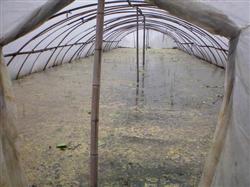
Key Cultivation Techniques for the New "Plant Once, Harvest Three Times" Lotus Root Model
Lotus root is a aquatic vegetable whose cultivation area in our province is second only to wild rice stem. In recent years, with the promotion and application of protected cultivation techniques, the harvest time of lotus root has been advanced to May-July, the market price has risen substantially, and two harvests per year have been achieved, with very significant benefits. 1. Building the shed. Before building the shed, apply sufficient base fertilizer, requiring the use of large and medium-sized...
-

Detailed Explanation of Lotus Root Seed Selection and Seed Retention Techniques
(1) Selection and breeding. Lotus root selection and breeding mainly includes methods such as asexual selection and sexual crossbreeding. 1. Asexual selection. China has abundant lotus root germplasm resources, which provides excellent conditions for asexual selection. In recent years, varieties bred from superior plants of asexual lines include Kexuan No. 1, Elian No. 1, Zhehu...
-
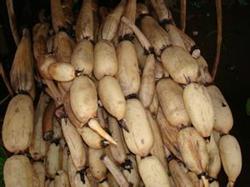
Key Techniques for Early-Maturing, High-Efficiency Lotus Root Cultivation under Plastic Tunnels
1. Select good varieties: choose medium-maturing large purple-red lotus root varieties whose main rhizome has 4-5 nodes. 2. Treat seed rhizomes: select main rhizomes with robust buds, 2-3 nodes and a weight above 0.5 kg as seed rhizomes, or use large secondary rhizomes as seed rhizomes. After the seed rhizomes are dug up, plant them as early as possible, with a seeding rate of 300-400 kg per mu. Before planting, use...
-
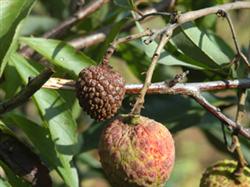
Detailed Explanation of Key Points in Lychee Cultivation and Management Techniques
Lychee anthracnose is an important lychee disease. It damages young leaves, flower spikes and fruits. It causes a large number of rotten and fallen fruits during the lychee ripening period. [Symptoms] Leaf damage often starts at the leaf tip, initially producing round or irregular light brown small spots, which then rapidly expand into dark brown large spots with unclear edges. In...
-
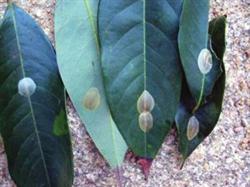
A Detailed Guide to the Key Points of Litchi Fruit Borer Control Techniques
The litchi fruit borer is a major pest of longan and litchi. Its larvae bore into and damage tender shoots, flower clusters and fruit. Damage during the young fruit stage causes severe fruit drop, and damage at maturity leaves the fruit stalk filled with insect frass, affecting quality. When tender shoots and flower clusters are damaged, their tips wither, affecting new shoot growth and the following year's flowering and fruiting. This pest occurs in southern Fujian...
-
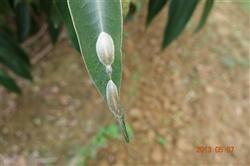
Symptom Identification and Control Techniques for the Litchi Fruit Borer
The litchi fruit borer is a major pest of longan and litchi. Its larvae bore into tender shoots, flower clusters and fruits. Damage during the young fruit stage causes severe fruit drop, while damage at maturity leaves the fruit stalk filled with insect frass, affecting quality. When tender shoots and flower clusters are damaged, their tips wither, affecting new shoot growth and flowering and fruiting the following year. This pest occurs in southern Fujian...
-

A Detailed Guide to the Techniques and Methods of Using Lotus Root Terminal Buds as Seed
In recent years, some farmers in China have converted some low-lying fields to growing lotus root, which has a higher output value. According to surveys, lotus blight (also known as rot disease) occurs in some lotus fields and is the main disease of lotus root. Generally, diseased fields suffer a 20% reduction in yield, and in severe cases 60%-80%. 1. Damage symptoms: Lotus blight mainly damages the underground stem, causing it to turn brown and rot, first...
-

Key Points of Spring Management Techniques for Young Sweet Cherry Trees
The spring management techniques for young sweet cherry trees are summarized as follows: 1. Fertilization. Before bud break, apply 50 grams of urea per tree, and water thoroughly to thaw the soil. 2. Pollination. Sweet cherries are generally cross-pollinated species, with few self-pollinated species; planting not only requires pollinizer trees, but pollination measures must also be taken during the flowering period, generally manual point...
-

-
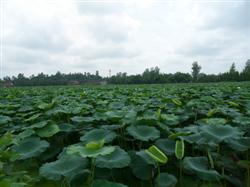
Detailed Explanation of Key Points for Early-Maturing Lotus Root Cultivation Techniques
Based on their adaptability to water levels, lotus roots can be divided into two ecological types: shallow-water lotus root and deep-water lotus root. Shallow-water lotus root is suitable for water levels of 10-20 cm, with a maximum water depth tolerance of 30-50 cm. Deep-water lotus root is suitable for water levels of 30-50 cm, with a maximum water depth tolerance of 1-1.2 m. The general principle for water layer management in shallow-water lotus root is: shallow at the front, deep in the middle, ...
条件筛选