Detailed Guide to Plum and Apricot Tree Cultivation Techniques
I. High-Standard Orchard Establishment 1. Site Selection: Apricot trees are drought-tolerant but not waterlogging-tolerant, tolerant of poor soil, and light-loving, and their blooming period is prone to late frost damage. Therefore, when establishing an orchard, choose a plot that faces away from the wind and toward the sun, with higher terrain, good drainage, and deep soil. 2. Select Strong Seedlings: High-quality strong seedlings are the guarantee of survival rate and high yield...
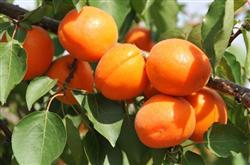 The cultivation techniques for plums and apricots mainly include variety selection, planting, orchard management, training and pruning, pest and disease control, and overwintering protection.
I. Variety Selection: The main plum varieties include Suili No. 3, Suileng Red Plum, and Jilin No. 6. The main apricot varieties include 631 Apricot, Longken No. 1 Apricot, and Yilan Apricot. Suitable varieties should be selected according to the local climate, temperature, and soil conditions.
II. Planting: (1) Seedling preparation. Before planting, prepare enough healthy, strong seedlings with plump buds and no pests or diseases according to plan, soak them in water for a full day and night, and then they can be planted. (2) Land preparation. The land used for establishing the orchard must be deeply plowed, with a depth of 20-30 cm being appropriate, then leveled and raked fine to prepare for planting trees. (3) Marking points and digging holes. According to the variety, terrain, techniques, and the principle of reasonable close planting, determine the row and plant spacing. Generally, plum trees have a row spacing of 4 m and a plant spacing of 2-3 m. For apricot trees under flatland conditions, a row spacing of 4-5 m and a plant spacing of 3-4 m is appropriate; under poor mountain conditions, the row and plant spacing can be smaller. (4) Arrangement of pollinizer trees. Some plum and apricot varieties have a low self-fruit-setting rate, so when establishing the orchard, in addition to considering the main varieties, a certain number of pollinizer trees should also be arranged, which can increase yield. Pollinizer trees should be selected from varieties that are cold-resistant, high-yielding, of good quality, and with a flowering period consistent with the main varieties. (5) Planting time and method. For planting time, plant trees in mid-to-late April during the sap-flow period for a high survival rate. Planting method: Before planting, in each hole, apply 10-15 kg of decomposed horse manure (sheep manure or pig manure is also acceptable) thoroughly mixed with 0.5-1 kg of diammonium phosphate, put it into the hole in a steamed-bun shape, 20 cm from the hole surface. When planting, face the graft union toward the windward side, place the seedling vertically in the center of the hole, spread the root system flat in all directions, and leave the graft union at the ground surface. (6) Irrigation. After the seedlings are planted, make a circular water basin and irrigate immediately, about one bucket of water per plant. After the water seeps in, cover around the trunk with dry soil or sand to prevent water evaporation and surface soil cracking.
III. Orchard Management
1. Soil management of young orchards. In young orchards, the soil surface layer has more root distribution, so keeping the soil loose is beneficial to the growth and development of young trees. Therefore, timely cultivating and weeding should be carried out. Soil tillage in young orchards should mainly be autumn plowing. Usually in late September or early October. Autumn plowing should be combined with fertilization, with a depth of 15-20 cm being appropriate. The tillage range should be somewhat larger than the tree canopy and can be expanded year by year. Spring plowing should be shallower than autumn plowing, generally 10-15 cm being appropriate. The closer to the trunk, the shallower it should be, to avoid damaging the roots.
2. Soil management of mature orchards.
(1) Soil fertilization: ① Fertilization period. Autumn fertilization can be carried out in late September, and spring fertilization from late April to mid-May. The amount of fertilizer should be determined according to the actual conditions of the orchard. Generally, for mature trees, 50-100 kg of organic fertilizer mixed with 0.1-1 kg of diammonium phosphate can be applied per tree as base fertilizer. ② Fertilization methods. The first is broadcasting, in which the fertilizer can be evenly spread on the ground surface in combination with plowing, and then turned into the soil, generally to a depth of 20-30 cm; the second is the ring fertilization method, also called the circular fertilization method, which takes the trunk as the center, starts at 1/2 of the canopy projection radius, opens a ring-shaped ditch 30 cm deep and 40 cm wide, evenly spreads the mixed fertilizer into the ditch, and then covers it with soil; the third is the radial ditch fertilization method, which starts at 1/2 of the tree disk, with the outer end aligned with the outer edge of the canopy, digs 6-8 radial ditches 20-30 cm deep, shallow inside and deep outside, 40 cm wide, sprinkles the mixed fertilizer into the ditches and covers with a layer of soil. In addition, there are also trench application methods, hole application methods, and so on.
(2) Irrigation: ① Irrigation period. According to the water requirements of plum and apricot trees, usually irrigate once before bud break in early spring. Irrigate once more during the fruit enlargement period. Irrigation at this time can accelerate fruit growth and development, not only protecting the fruit but also promoting leaf enlargement and branch growth, which is conducive to producing and accumulating more nutrients. ② Irrigation methods. Tree disk irrigation method: around the trunk, make a circular or square water basin, with a range somewhat smaller than the canopy projection, pour water into the basin, and the amount of irrigation should be appropriate to soak through the soil within the root zone.
(3) Weeding, loosening soil, and removing root suckers.
IV. Training and Pruning
1. Training and pruning of plum trees. According to the growth habits of plum trees, the natural open-center shape is more suitable. The main branches are arranged in a staggered manner and firmly attached, and ventilation and light transmission inside and outside the canopy are good. Pruning periods are divided into winter pruning and summer pruning. In our Huanan County, winter pruning can be carried out in March, and summer pruning can be carried out from June to early July.
Pruning of plum trees at different ages: (1) Training of young trees. Young tree pruning is mainly for training. After the seedlings are planted, determine the trunk height at a certain height above the ground. On flat land it is generally 60-70 cm, and on mountain land the trunk height can be appropriately lower, with 50-60 cm being more suitable. (2) Pruning of mature plum trees. This should be carried out by combining thinning and heading back. Cutting back one-year-old branches is not only beneficial to branch growth but can also expand the canopy and maintain tree vigor. In terms of pruning intensity, it should be somewhat heavier, cutting off a bit more than 1/3 of the branch. According to the position of the branch, the extension branch should be left somewhat longer, while side branches should be appropriately left shorter.
2. Training and pruning of apricot trees. (1) Training and pruning of young trees: According to the growth and fruiting habits of apricot trees, the natural round-headed shape is better. The whole tree can retain 5-6 main branches, with an angle of about 50°, and a certain distance should be maintained between the main branches. (2) Pruning of mature trees: For trees in full fruit period, pruning should be appropriately heavier to prevent the inner canopy from becoming empty and the fruiting area from moving outward. Dense branches on the periphery should be appropriately thinned out, and dead branches in the inner canopy should be removed in time to facilitate ventilation and light transmission. (3) Pruning of aging trees: Severely prune aging trees, renew the main branches in a planned way, and carry out retraction pruning on aging main and side branches to stimulate the sprouting of latent buds and cultivate vigorous branches.
V. Pest and Disease Control. Pest control for plum and apricot trees is mainly chemical control.
In late April and early May, during the active period of mature larvae, spray 50% phoxim emulsion at 30-50 times dilution under the canopy, with a dosage of 1 kg/66TM2. After spraying, shallowly rake the soil, which can not only eliminate larvae emerging from the soil after eclosion but also prevent the phoxim emulsion from decomposing in light. In addition, in June and July when adults emerge in large numbers, spray 40% dimethoate emulsion at 1000 times dilution or 2.5% deltamethrin (Decis) at 2000 times dilution on the trees for control, and after about 5 days spray once more with 25% carbendazim at 300 times dilution or 65% zineb at 500 times dilution for control.
VI. Overwintering Protection. Overwintering protection of the tree body is extremely important. In particular, whether the bark of the trunk and main branches is healthy directly relates to tree vigor, tree lifespan, and yield. Strengthening the protection of the bark of the trunk and main branches of plum and apricot trees can reduce sunscald, freezing injury, pests, and diseases. Commonly used methods such as whitewashing, wrapping with straw, and mounding soil around the root collar can reduce or avoid bark damage caused by temperature changes or low temperatures.