Detailed Explanation of Key Cultivation Techniques for Yam (Dioscorea)
Variety Selection Currently, the main yam varieties cultivated include Fine-Haired Long Yam, Ermao Yam, and the Japanese "Yamato Imo" yam. Both Fine-Haired Long Yam and Ermao Yam belong to the long-column variety of common yam. Japanese yam is a variety with strong adaptability, good quality, strong disease resistance, high yield, and promising development prospects. ...
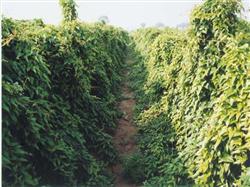
Variety Selection
Currently, the main yam varieties cultivated include Fine-Haired Long Yam, Ermao Yam, and the Japanese "Yamato Imo" yam. Both Fine-Haired Long Yam and Ermao Yam belong to the long-column variety of common yam. Japanese yam is a variety with strong adaptability, good quality, strong disease resistance, high yield, and promising development prospects. Peng Juntian chose the Japanese "Yamato Imo" yam variety.
Site Selection, Trenching, and Bed Preparation
When planting yams, continuous cropping should be avoided as much as possible. Generally, a three-year crop rotation is practiced, and planting after peanuts or red taro is avoided. Choose a plot with deep, loose, and fertile soil, and the soil texture should be consistent from top to bottom. If there is a heavy clay layer or a white sand ridge layer below, it should be thoroughly broken up when digging trenches; at least within 1-1.2 m of soil depth, there should be no clay, sand particles, or other interlayers. Otherwise, it will affect the appearance of the tubers and also affect quality. The soil should preferably be neutral. At present, trenching is generally done mechanically. Yam cultivation is best oriented in a north-south direction, and either double-row or single-row planting can be adopted (if a particular plot must be planted in an east-west direction, you can increase the row spacing). For double-row planting, the large row spacing is 1.7-1.8 m, the small row spacing (the spacing between the two rows of yam within the trench) is 40 cm, the plant spacing is 20-25 cm, the trench depth is 85-100 cm, and the trench width is 70 cm. When preparing the land and beds, level them well to prevent uneven watering. Also design drainage properly to ensure there is no standing water in the field beds. For single-row planting, the row spacing is 80-100 cm, the trench width is 30 cm, the trench depth is 90-100 cm, and the plant spacing is 20-25 cm.
Sowing at the Right Time
Greenhouse yams are generally planted around New Year's Day, and the soil temperature at 5 cm below the surface is generally required to be stably above 9-10°C. Before sowing, air-dry the yam seedlings; this can activate the seed tubers and also help with sterilization and a higher germination rate. If yam stem tubers are cut into sections for use as seed tubers, the cut surfaces can be promptly dusted with lime powder for disinfection. When planting, plant pieces with sprouts together and pieces of similar size together, so that sprouts emerge uniformly. In addition, soak the seeds for 3-5 minutes with 500x carbendazim, 1000x triadimefon, and 1000x 72% chlorothalonil, then air-dry before sowing. Before sowing, the seed surface can be sprayed with Xinguozhimo.
Yams mainly rely on organic fertilizers (such as decomposed cake fertilizer, chicken manure, duck manure, or human and livestock manure), with inorganic fertilizers as a supplement. The general application rate is 2000-4000 kg per mu, plus 40-60 kg of high-potassium compound fertilizer, or 200-300 kg of special bio-organic fertilizer for yams, fully mixed with the soil to prevent seedling burn.
Field Management
1. Light topdressing. If a large amount of base fertilizer was applied, then apply less or no topdressing. To ensure high yam yield, generally apply topdressing 2-3 times. When the aboveground plants grow to about 1 m, apply a high-nitrogen compound fertilizer once, then apply once about every one week thereafter, for a total of 3 times. During the tuber expansion stage, mainly use multi-element compound fertilizer with relatively high phosphorus and potassium content (the yam's demand ratio for nitrogen, phosphorus, and potassium is 1.5:2:5), about 30 kg per mu, preferably by flushing application. In the later growth stage, foliar spray 0.2% monopotassium phosphate and 1% urea to prevent premature aging. In particular, note that the absorptive roots of yams are shallowly distributed, appear early, and extend horizontally, so fertilizer should be applied into the shallow soil layer for uptake by the yam roots.
2. The trellis must be sturdy. Trellising and weeding: after sowing, cover yams with 6-10 cm of loose soil. After watering, use 150-200 g of "special herbicide for yams" mixed with 100 kg of water and spray evenly, then cover with plastic film. After emergence, build the trellis in time. The trellis height should be about 2 m, with a "" (inverted V)-shaped front and diagonal crossing on the sides. Reinforce it every 7-8 m with thick bamboo poles or wooden stakes. In short, it must be firmly built to prevent collapse.
3. Water skillfully. Yams are afraid of waterlogging and should not be too dry either. If too dry, it will seriously affect tuber expansion, especially during the tuber expansion stage, which is approximately from mid-April to late May. During this period, generally water thoroughly once about every 10 days. After late May, watering should be done appropriately according to soil moisture.
4. Pest and disease control must keep pace. Pests and diseases are more severe in continuously cropped plots, while they are milder in plots planted for the first year. After the yam vines are trellised, begin spraying for control. The main disease of yam is anthracnose, a fungal disease, commonly called leaf-drop disease by farmers. It initially shows yellowing leaves and small spots on the leaves, and finally stems wither and leaves fall. This disease should be prevented mainly by practicing crop rotation, selecting disease-free seed tubers, and soaking seed tubers before sowing in 500x 25% carbendazim powder for 25-30 minutes for disinfection. After cultivation, strengthen field management to enhance plant disease resistance.
Generally, in the early stage of disease onset, alternate sprays of 500-600x 70% mancozeb solution and 700-800x 50% thiophanate-methyl solution can be used. When the disease is severe, a specially formulated pesticide for Japanese "Yamato Imo" yam can be used. In the early stage of disease onset, spray every 7-10 days, generally 2-3 consecutive sprays are sufficient.
Harvest
The harvest period for normal open-field yams is very long, from August 20 to April or May of the following year. The yams do not rot or deteriorate underground. The concentrated harvest period is generally around the time of Frost's Descent, to supply the Spring Festival market. However, greenhouse yams are different. Because the harvest time is around June 20, the yams themselves have low starch content and high moisture content, so they are not suitable for long-term storage. Greenhouse yams should be sold promptly after harvest. In addition, due to factors such as planting scale, greenhouse yams are now mostly dug by hand. Because the yam skin is very thin, mechanical damage should be prevented when digging. The yams are piled with mud and skin intact, awaiting sale.
Or
The first method: It is suitable for growing in hole tubes. In addition to hole-tube cultivation, rational fertilization or complete application of decomposed organic fertilizer can improve yam yield and quality. Organic fertilizer can improve soil composition, provide sufficient nutrients, prolong the release and utilization time of nutrients, enhance root respiration, and provide sufficient moisture. For yam plants that have just sprouted new shoots, their nutrients come from the mother tuber. Yams entering the early development stage need more nitrogen fertilizer to promote their growth. By the time the tubers begin to form, potassium fertilizer becomes particularly important. Yams seem to absorb phosphorus fertilizer very easily from the soil. In addition, if magnesium fertilizer can be added, it also helps increase yield.
The second method: To cultivate yam (Dioscorea), you must choose sandy soil that is fertile, deep, has strong water and fertilizer retention capacity, good aeration, and convenient drainage and irrigation, and deep-plow it 35-45 cm. When deep-plowing the land, first turn the top 20-30 cm of topsoil to one side, then continue deep-plowing to 35-45 cm. Never mix up the soil layers. After deep plowing, cultivation trenches are formed, and base fertilizer can be applied into the cultivation trenches. The base fertilizer is generally applied per mu as 20 kg of superphosphate, 3000 kg of decomposed organic fertilizer, and 200-300 kg of plant ash. When fertilizing, first fill the bottom of the planting trench with the topsoil that was previously turned up, to a thickness of 15 cm, then apply the base fertilizer on top of that soil layer, and finally cover with 15 cm of soil.
Yam topdressing is mainly in the middle and late growth stages, while the demand for fertilizer is relatively low in the early stage. After the yams emerge uniformly, apply 20% human manure and urine fertilizer once, then apply once every 20-30 days thereafter. When fertilizing, dig a fertilization trench 6-10 cm deep 30 cm away from the plants, and apply 700-1000 kg of human manure and urine per mu. When the underground tubers enter the peak growth stage, apply a heavy topdressing once. Apply 20-30 kg of compound mixed fertilizer and 40-60 kg of cake fertilizer per mu by hole application or trench application, then cover with soil after fertilizing to ensure sufficient nutrients for tuber elongation and expansion. After that, decide whether to apply more topdressing based on plant growth conditions.