-
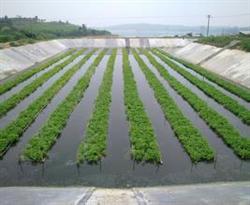
How do you grow water spinach on the water surface? A detailed guide to water-surface growing techniques
Patch after patch of lush green vegetables growing not in a vegetable plot but on the surface of a fish pond, with pretty young men and women from the city poling bamboo rafts and weaving through the floating vegetable garden to pick them... This poetic scene is not a legend, but something that happened at the Baqu River water-surface vegetable base in Wushan Town, Wangcheng District, Changsha, Hunan. "This year in May...
-
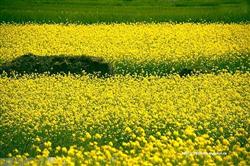
Techniques for Achieving High-Quality, High and Stable Yields in Rapeseed through Heavy Application of Boron Fertilizer
Rapeseed is a boron-demanding crop, and especially high-yield, high-quality cabbage-type "double-low" hybrid rapeseed is particularly sensitive to boron deficiency. Boron deficiency at the seedling stage causes slow rooting, dark green and wrinkled leaves, and stunted growth; boron deficiency at the bud-bolting stage causes swelling of the root crown, leaves turning purple to blue-purple, and abnormal flower bud development; boron deficiency at the flowering stage causes plant dwarfing and abnormal pollen...
-
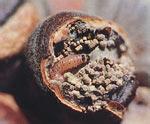
Detailed Explanation of Key Points for Pollution-Free Chestnut Cultivation Techniques
The larvae of the peach fruit borer in chestnuts bore into the nuts, filling the kernels with frass and making them unfit to eat, and also causing fruit drop, greatly affecting both yield and quality. Its hosts also include peach, plum, pear, sunflower, corn stalks, and others. Control methods: 1. Pick up fallen fruit, remove infested fruit, and destroy them. 2. Chemical control. Master the...
-
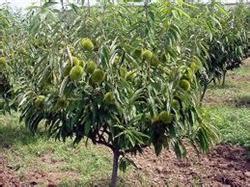
Detailed Explanation of Key Techniques for Early High Yield in Young Chestnut Trees
1 Technical Measures to Promote Female Flower Formation 1) Watering in early spring. The 3 weeks before bud break is the period of female flower morphological differentiation; meeting the tree's water needs makes the fruiting branches thick and strong with many buds, laying the foundation for the next step of female flower bud formation. 2) Foliar topdressing. When the basal leaves have just unfolded and are turning from yellow to green, spray once with a 1000-fold dilution of PP200...
-
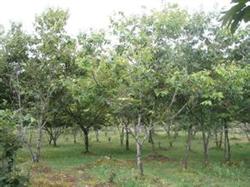
Key Pest and Disease Control Methods and Techniques for Chestnut
1. Select good varieties and prepare enough scion wood. Select good varieties. For the improvement of chestnut orchards, the three new varieties Dahongpao, Qingmaozao and Hongmaozao should be selected. These new varieties have been trial-planted in our city and have the characteristics of early fruiting, high quality, high yield, large fruit and strong stress resistance, and are suitable for promotion and planting throughout the city. Scion collection and storage...
-
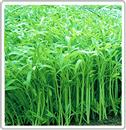
Detailed Explanation of Key Points of Pollution-Free Cultivation Techniques for Water Spinach
Water spinach, also called water convolvulus, tong cai, or rattan vegetable, is a fast-growing leafy green vegetable that has been actively introduced in various regions in recent years. Its leaves and tender stems are eaten, and it can be served cold-dressed, stir-fried, or boiled in soup. It is not only rich in nutrients but also has medicinal value such as clearing heat and detoxifying, promoting urination, and stopping bleeding. It has now become one of the specially needed vegetables for major hotels and restaurants....
-
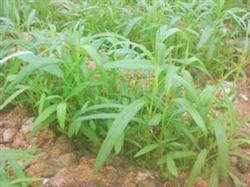
Detailed Explanation of Key Techniques for Winter Plastic Greenhouse Cultivation of Water Spinach
Water spinach is widely cultivated throughout our province and is a major green leafy vegetable that fills the gap in summer and autumn. Water spinach likes high temperatures and high humidity, has strong heat tolerance, and is not tolerant of frost; when frost occurs, the stems and leaves wither and die. The optimum growing temperature is 25-30°C, and growth stops below 10°C. Therefore, plastic greenhouses should be used for off-season cultivation in winter. 1. Varieties...
-
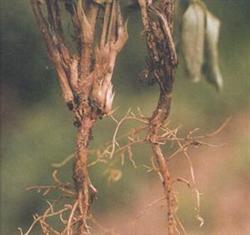
Detailed Explanation of the Occurrence and Control Techniques of Peanut Stem Rot
In recent years, the peanut planting area in our region has increased year by year, and peanut diseases have also risen accordingly, especially peanut stem rot, whose damage has increased relatively rapidly. According to survey statistics, from 2001 to 2003, fields affected by this disease accounted for 89.6%, with mild diseased plant rates of 10-20%, and severe cases reaching over 60%, or even dying in patches with total crop failure....
-
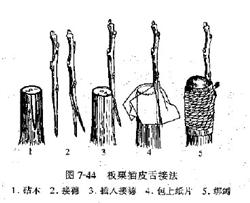
Key Points of Pruning and Training Techniques for Densely Planted Chestnuts
Selection of scions from superior varieties: Choose excellent local chestnut varieties with good performance. Select robust fruiting branches that are fully grown, with plump terminal and lateral buds and free of pests and diseases as scions. The length is generally 7-8 cm, with 3-4 buds retained. Scions should be collected and grafted immediately, or collected in advance, wax-sealed and stored at low temperature until use. Grafting period: one...
-
Detailed Explanation of Water-Saving Techniques for Chestnut Planting on Hillsides
Chestnut blight, also known as chestnut cortical rot, chestnut tree rot, and chestnut plague, is one of the main diseases of chestnut trees. It occurs in all major chestnut production areas in China, with severe damage in some production areas, and the chestnuts grown in Nanxiong are also very severely affected. The bark of affected chestnut trees rots, the tree vigor weakens, and in severe cases it causes dead branches and dead trees. I. Harm...
条件筛选