-
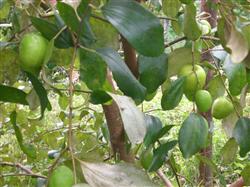
Cultivation Techniques and Management Key Points for Taiwan Green Jujube
Taiwan green jujube was developed from the Indian jujube through years of improvement and selection. Its fruit is large (typically weighing 60-100 grams), with a small pit, crisp flesh, sweet taste, and high nutritional value; moreover, it bears fruit in the same year it is planted, and can enter the full production period in the second year. Taiwan green jujube is a vigorous grower with strong adaptability to temperature, able to withstand high temperatures of 35 degrees and lows of -10...
-
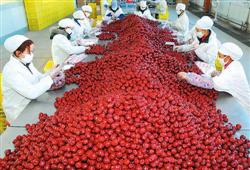
Detailed Explanation of Key Techniques for Scientific Harvesting, Storage and Fresh-Keeping of Fresh Jujubes
Fresh jujubes are now widely cultivated in rural areas across the country. Their fruit has a bright red appearance, a crisp and sweet refreshing taste, and is rich in various nutrients. The vitamin C content of fresh jujubes is 60-80 times that of apples and 30 times that of citrus. Scientific storage and fresh-keeping of jujubes can greatly reduce losses for growers, achieve increased production and efficiency. Ensuring a long-term supply of fresh jujubes on the market...
-
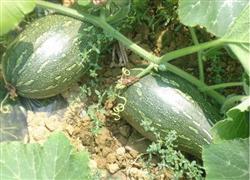
Detailed Explanation of Key Points for Open-Field Cultivation Techniques of Pumpkin
1. Variety selection and seed treatment: Chinese pumpkin cultivars must be used, with local superior landraces being preferred, such as Huangpiao pumpkin, Mopan pumpkin, pillow pumpkin and long-handled pumpkin, etc. After the pumpkin seeds are sun-dried for 1-2 days, scald them in 50°C warm water for 5-10 minutes, then soak and sprout them. 2. Fertilization and land preparation: With...
-
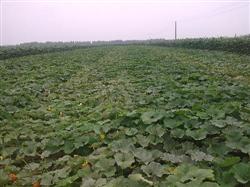
Detailed Explanation of Key Techniques for Autumn Pumpkin Cultivation
Pumpkins have a strong root system with deep and extensive distribution, strong stress resistance, and a powerful ability to absorb water and nutrients. When pumpkins are cultivated in greenhouse soil with high fertility levels, the stems and leaves often become excessively lush, frequently causing flower and fruit drop, resulting in low yields. Therefore, when cultivating pumpkins in arched sheds, management must be strengthened, with appropriate close planting and controlled...
-
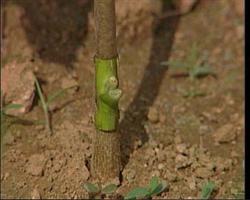
Detailed Explanation of Summer Bud Grafting Techniques and Methods for Jujube Trees
Pre-grafting preparation: Select wild jujube (Ziziphus jujuba var. spinosa) seedlings that are vigorous, free of pests and diseases, and have a basal stem diameter of more than 0.5 cm as rootstock. Cut vigorous, pest-free, plump-budded, current-year lignified branches as scions, 0.4-0.6 cm thick, remove the leaves but keep the petioles. Cut the scions into 20-30 cm long sections, wrap them in wet sand...
-
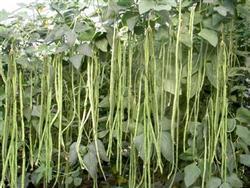
Key Points of Plastic Film Mulching Cultivation Techniques for Spring Asparagus Beans
(1) Variety selection: At present, the widely cultivated asparagus bean variety is Zhijiang 28-2, which can be used for spring plastic film mulching cultivation. (2) Sowing time: The suitable lower limit temperature for sowing asparagus beans is 14°C, and sowing should be done when the temperature steadily passes 4°C around the time of the last frost. The sowing method for asparagus beans can be the same as that for common beans (kidney beans)...
-
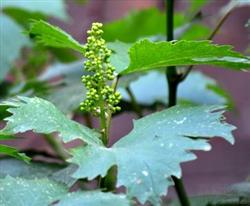
Detailed Explanation of Key Grape Spring Management Techniques
Spring is the season when grapes bud and unfold leaves, canes extend, and they send out clusters and bloom and set fruit. How to strengthen spring grape management and improve grape yield and quality is a matter of widespread concern among fruit growers. The following focuses on the main management work for grapes from February to April. 1. Late February to early March, budding stage: irrigate to promote bud break,...
-
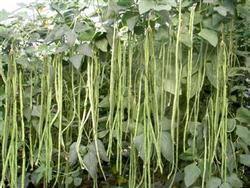
Plastic Greenhouse Cultivation Techniques for Early Spring Beans
Symptoms of bean blight: It mainly affects stems, leaves and pods. When the stem is infected, it initially appears water-soaked, then becomes wet-rotted and constricted around the stem, and the leaves and vines above the diseased part wither and die. When humidity is high, the cortex rots and white mold appears on the surface. When leaves are infected, the diseased part initially shows dark green water-soaked spots, which then expand into round light brown spots with white mold on the surface...
-
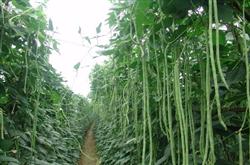
Detailed explanation of key points for early spring ground bean cultivation techniques
Pre-sowing preparation: irrigate before winter to build good soil moisture for early spring sowing. Prepare 6 kg of "American ground bean" high-quality seed per mu, ultra-thin plastic film (film width 70 cm), apply 3000 kg of organic fertilizer as base fertilizer, 10 kg of urea, 8 kg of diammonium phosphate, and 10 kg of potassium chloride. Sowing: after the ground thaws in early spring, make beds and cover with film. Bed width 50...
-
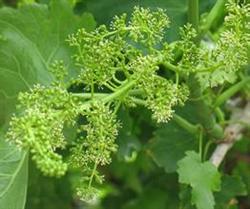
Two Techniques for Thinning Grape Inflorescences
A grape inflorescence may contain 300-1500 flowers, and most of the flowers and berries will drop during fruit set. Therefore, thinning the inflorescences retained on the fruiting canes can strengthen the development of the remaining flowers. 1. Removing inflorescences. This refers to removing the entire inflorescence from the fruiting cane. When the vine has a heavy crop load and too many inflorescences, it is necessary to...
条件筛选