Detailed Explanation of Fertilizer Requirements and Fertilization Techniques for High-Yield Chinese Yam
Fertilizer requirements. Chinese yam has a long growth period and a high fertilizer demand, and it especially favors organic fertilizers with long-lasting effects. Because tuber formation is accompanied by the accumulation of substances such as starch, the demand for phosphorus and potassium is relatively large. In the early growth stage of Chinese yam, because temperatures are low and organic nutrients are released slowly, an appropriate amount of quick-acting nitrogen fertilizer should be supplied to promote...
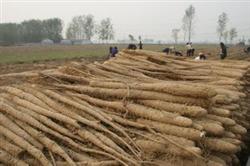
Fertilizer requirements. Chinese yam has a long growth period and a high fertilizer demand, and it especially favors organic fertilizers with long-lasting effects. Because tuber formation is accompanied by the accumulation of substances such as starch, the demand for phosphorus and potassium is relatively large. In the early growth stage of Chinese yam, because temperatures are low and organic nutrients are released slowly, an appropriate amount of quick-acting nitrogen fertilizer should be supplied to promote stem and leaf growth; in the middle and late growth stages, tuber growth increases sharply and requires the absorption of large amounts of nutrients, especially phosphorus and potassium fertilizers, and special attention should be paid to preventing premature aging caused by fertilizer shortage. Chinese yam is a chlorine-sensitive crop. Excessive chloride ions in the soil will affect the growth of Chinese yam, manifesting as vigorous vine growth, reduced tuber yield, declined quality, brittleness and easy breakage, and poor storage and transport tolerance. Therefore, chlorine-containing fertilizers should not be applied.
Fertilization techniques. For Chinese yam, fertilization is generally based mainly on basal fertilizer, with topdressing as a supplement. Basal fertilizer is mainly fully decomposed high-quality farmyard manure and compound fertilizer, and nitrogen, phosphorus, and potassium can also be applied in a formulated ratio. The focus of topdressing, however, is during the tuber expansion period, when an appropriate amount of quick-acting fertilizer should be applied according to plant growth to promote healthy growth and prevent premature aging. Apply 2000-4000 kg of decomposed farmyard manure and 60-80 kg of compound fertilizer of equal amount (18-18-18) per mu (mix the two thoroughly before application), or 2000 kg of organic fertilizer, 25 kg of urea, 25 kg of diammonium phosphate, and 30 kg of potassium sulfate. The basal fertilizer should be evenly broadcast over the whole field before land preparation, and after application the fertilizer should be plowed into the 30 cm plow layer. The principle for skillful topdressing is "heavy in the early stage, steady in the middle stage, and preventing premature aging in the late stage."