Key Points of Apricot Cultivation Techniques, Detailed Explanation of Planting and Management Methods
1. Orchard establishment: Choose sandy loam orchard land with deep, fertile soil that can be irrigated and drained; waterlogged lowlands, heavily saline-alkali land, and replanted land are not suitable for orchard establishment. For pollinizer trees, choose varieties whose flowering period coincides with or is slightly earlier than that of the main cultivar; the ratio of pollinizer varieties to the main cultivar is generally 1:6-8. Planting density on plains: spacing between plants and rows 3 m x 4-5 m; in...
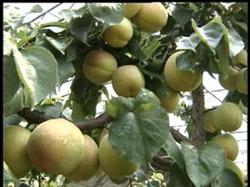 Cultivation Value
Apricot is a fruit tree commonly cultivated in China north of the Huaihe River and Qinling Mountains. It is drought-resistant, tolerant of poor soil, and cold-resistant, with strong adaptability to soil, and can grow and bear fruit on mountainous hills, sandy wasteland, and saline-alkali land. It bears fruit early, and its economic life is longer than that of other stone fruit trees. It is suitable both for intensive block planting and for "four-side" planting.
The fruit ripens in early summer, exactly during the off-season for fruit on the market. It can be eaten fresh and can also be processed into various products such as preserved apricots and canned apricots in syrup. Apricot kernels contain large amounts of fat and protein and are nutritious. Sweet kernels can be supplied to the pastry industry or further deeply processed into various products such as almond cream; bitter kernels can be used medicinally and have effects such as relieving cough and asthma, and lubricating the intestines to relieve constipation. They are one of the traditional export commodities. Preserved apricots and apricot jam are also extremely popular abroad.
Main Types and Varieties
Apricot is a plant of the genus Prunus, subgenus Armeniaca, in the family Rosaceae, and is most closely related to the Japanese apricot (mei). In economic cultivation, besides apricot, the variety Liguan apricot is also cultivated in the northwest region, and the variety Shan apricot is mostly used as rootstock or for kernel production. In the northeast, north China, and other places, there are also wild species such as Liaoning apricot and Mongolian apricot.
Apricot has abundant local varieties. According to use, they can be roughly divided into several major categories such as fresh-eating types, processing types, kernel-use types, and dual-purpose kernel-and-flesh types. In production in the Huaibei region and the Yangtze River basin, mostly the former category is cultivated; among them the main varieties include Badou apricot, Shuibai apricot, Jidan apricot, Hebao apricot, and Daxingmei from Anhui and Jiangsu, and Daban apricot, Maihuang apricot, Dayong apricot, and Xupu apricot from Hubei and Hunan. In addition, there are many fine varieties in nearby areas, such as Yangshao Huang apricot from Henan, Dahebao apricot and Matihuang apricot from Zaozhuang, Shandong, and Hongyu apricot, Honghebaoxing, and Laoshan Hong apricot from Licheng. In recent years, Shandong has also introduced fine varieties such as Manao apricot and Kate apricot from the United States. However, when introducing and cultivating them, attention must be paid to selecting varieties with strong climatic adaptability, late flowering, and a high fruit-setting rate.
Growth and Fruiting Habits
Apricot is a tall deciduous tree. Its root system is deep and extensive, and its trunk is strong. During the young tree stage, branches grow vigorously, often causing flowers without fruit. The buds have precocious nature, and 2-3 rounds of branching can occur in one year. Its growth habit is similar to that of Japanese apricot (mei): long shoots or very long shoots grow from the tips, short shoots form in the middle and lower parts, and basal buds become latent buds. However, both budbreak rate and branching ability are relatively weak.
Apricot flower buds form easily, and the tree begins to bear fruit 3-4 years after planting, but entering the full fruiting stage is often relatively late, generally requiring about 10 years, though the full fruiting stage lasts a long time. Long, medium, and short shoots of all types, as well as secondary shoots, can form fruiting branches. During the young tree stage, long and medium fruiting branches account for a relatively large proportion; after entering the full fruiting stage, short fruiting branches and bouquet-like fruiting branches are the main fruiting branches and can bear fruit continuously for several years. Flower buds are pure flower buds, with 1 flower per bud. On long and medium fruiting branches, they are often borne alongside leaf buds and other flower buds, similar to peach. Solitary flower buds are mostly located at the upper ends of long fruiting branches and at the nodes of short fruiting branches and bouquet-like fruiting branches; the fruit-setting rate of the former is not high.
Apricot has a short dormancy period and flowers before leafing out in spring, making it vulnerable to late frost damage. The number of flowers is large, but the fruit-setting rate is often low, with many degenerated flowers. The severity is related to variety, tree age, tree vigor, and tree nutritional level. On young trees, there are more degenerated flowers on long and medium fruiting branches; on mature trees, there are more degenerated flowers in the upper part and inner canopy of the crown. The main feature of degenerated flowers is that the pistil is shortened, shriveled, or even absent, and cannot pollinate, fertilize, and set fruit normally. Apricot is a cross-pollinated plant and needs pollination by different varieties to set fruit normally. Like Japanese apricot (mei), the flowers on the same tree open in batches, but the first batch of flowers is of good quality and has fewer degenerated flowers.
During the growth of young fruit, there are mainly two physiological fruit drops. Excessive or weak growth and adverse climatic conditions will intensify fruit drop. Sometimes pre-harvest fruit drop also occurs.
Characteristics of Cultivation Techniques
1. Propagation and planting: For economic cultivation, apricot is mostly propagated by grafting. The rootstock is generally common apricot, which can reduce the occurrence of crown gall; peach or mountain peach can also be used, which tends to bear early and yield well but has a shorter lifespan; using plum as apricot rootstock tends to produce root suckers. Seeds are sown in autumn or sown in spring after stratification, with stratification requiring 70-100 days. Grafting methods: budding is mostly used in summer and autumn, and stem grafting is mostly used in spring. For specific operating techniques and post-grafting management, refer to other fruit trees.
Frost during the flowering period is the main reason affecting the stability of apricot yield. The planting site should be chosen in a place sheltered from the wind, facing the sun, and well drained; low-lying land where cold air easily accumulates should not be selected. For concentrated block cultivation, windbreak forests need to be established. Selecting late-flowering varieties helps avoid frost. Apricot fruit is not storage-resistant. To extend the fresh fruit supply period, some varieties with staggered ripening periods should be deliberately selected for mixed planting. At the same time, apricot has strong self-incompatibility, so attention must also be paid to the selection of pollinizer varieties when configuring varieties.
Spacing between plants and rows (4-5) m x (5-6) m; on poor land, planting density can be appropriately increased. Autumn planting or spring planting. After planting, covering the tree dish area with plastic film or other materials helps prevent drought and increase temperature in winter and spring, and improves the survival rate of planting.
2. Training and pruning: According to the strength of the trunk of different varieties and their growth vigor, apricot generally adopts the natural open-center form or the delayed open-center form. The natural open-center form is suitable for varieties with weaker trunks, and the training technique is basically the same as that for peach. However, apricot has a smaller branching angle and fewer branches, so the trunk height is generally left appropriately longer, and 3-4 main branches are trained on the trunk. The delayed open-center form is suitable for varieties with stronger trunks, with two layers of branches, 3-4 retained in the first layer and 2-3 in the second layer, with a layer spacing of 60 cm-80 cm. After the second-layer main branches are selected, the central leader is cut back to open the center. In addition, some let the tree grow naturally, selecting and retaining 5-6 branches on the trunk as main branches, then appropriately configuring secondary main branches on the main branches to form a natural round-headed tree shape.
Pruning during the young tree stage is mainly to develop the tree framework, carried out according to training requirements, and at the same time to develop branch groups. Apart from thinning out water sprouts and overly dense branches, all other branches can be left unpruned with light pruning or bent, to promote the formation of large numbers of fruiting branches in the middle and lower parts; after 3-4 years of fruiting, they are then shortened and branching is promoted. During the full fruiting stage, in order to maintain tree vigor and stabilize yield, renewal pruning should be strengthened, drooping branch groups should be retracted in time, overly dense bouquet-like fruiting branches should be appropriately thinned to reduce flower quantity, and at the same time some 2-3-year-old branches should be shortened to promote the continuous formation of new fruiting branches and improve fruiting ability. When bare areas appear in the inner canopy, water sprouts arising from the base can be heavily pruned to promote branching and fill the gaps. After entering the aging stage, heavy retraction pruning can force latent buds to sprout, renew main branches in a planned way, and prolong the fruiting years.
3. Soil, fertilizer, and water management and flower and fruit preservation: Although apricot is tolerant of poor soil, when tree vigor declines, the number of degenerated flowers increases and yield decreases, so soil improvement should be carried out every year by expanding planting holes and deep digging in combination with the application of base fertilizer. Apricot is sensitive to fertilizer and water. In addition to applying base fertilizer in autumn, topdressing should also be carried out after fruit set is stable and after harvest to promote fruit enlargement, improve quality, promptly restore tree vigor, increase nutrient accumulation in the tree, and reduce the proportion of degenerated flowers; its yield-increasing effect is obvious. Both topdressings should be mainly nitrogen fertilizer, combined with phosphorus and potassium fertilizers. Apricot trees begin growth activities early and in a concentrated manner in spring, so base fertilizer should be applied early; for trees without base fertilizer, an additional topdressing should be applied before flowering.
When severely short of water, physiological fruit drop in apricot intensifies. When conditions permit, irrigation can be combined with fertilization, or grass can be spread over the tree dish to prevent drought. In areas lacking fertilizer and water, the fertilizer-saving and water-saving methods of plastic film mulching and hole storage of fertilizer and water can also be promoted. For specific methods, refer to the relevant content. Apricot is extremely intolerant of waterlogging, and standing water should be drained promptly during the rainy season.
Apricot has severe flower and fruit drop, and the fruit-setting rate is usually less than 5%. In production, flower and fruit preservation should be carried out according to different causes.
(1) For those with a high proportion of degenerated flowers, start with strengthening tree nutrition. In addition to applying base fertilizer early in autumn, after harvest spray 0.5% urea on the leaves 2-3 times, and add gibberellin at a concentration of 50 ppm-100 ppm to strengthen leaf function and prevent early defoliation. Spraying 0.1% paclobutrazol after short shoots stop growing in mid-to-late May can significantly reduce degenerated flowers.
(2) When there are many flowers but poor quality, appropriately thin the bouquet-like fruiting branches on perennial branches and thin out the second and third batches of flowers to save stored nutrients; at the same time strengthen fertilizer and water in early spring to improve flowering quality and leaf assimilation capacity, and spray 0.2% urea plus 0.15% borax, etc., during full bloom, which can effectively increase the fruit-setting rate.
(3) For flower and fruit drop caused by vigorous new shoot growth, after the leaves on short branches have formed (mid-to-late May), spray 0.1% paclobutrazol on new shoots, or apply paclobutrazol to the soil at a dose of 0.5 g/sq m-0.8 g/sq m of tree dish 15-20 days after flowering to control growth.
(4) For flower and fruit drop caused by poor pollination and fertilization despite normal flower development, bees can be released during the flowering period, or artificial supplementary pollination can be used as a remedy.
In addition, measures such as girdling, proper tree dish soil management, and delaying the flowering period can all achieve the purpose of preserving flowers and fruits to varying degrees.
Main Pests and Diseases and Their Control: Many pests and diseases of apricot are the same as those of peach, such as scab, gummosis, bacterial shot hole, aphids, leafhoppers, scale insects, red-necked longhorn beetle, etc., and can be controlled by reference. The following mainly introduces the control methods for apricot blister disease and globular scale insect.
(1) Apricot blister disease: also called red swelling disease, mainly damaging shoots and leaves, and also damaging flowers and fruits. The pathogen may overwinter in buds. In early spring, as shoots and leaves grow and flowering and fruiting occur, the mycelium spreads, and symptoms appear in May. Diseased shoots are stunted in growth, thick and short; the leaves on them are clustered, turn yellow, and thicken; later the diseased leaves dry up and are not easy to fall off. After flowers are damaged, the calyx becomes thickened and difficult to open; after fruits are damaged, growth stagnates and they shrink in the later stage. In control, orchard sanitation must be done well, and diseased branches and leaves should be cut off in autumn and winter and burned. Continue in the following year. In combination with the control of other pests and diseases, spray 5 degrees Beaume lime-sulfur mixture before budbreak; for severe occurrence, spray 0.3 degrees Beaume lime-sulfur mixture once more after leaf expansion.
(2) Globular scale insect: nymphs and female adults gather on branches, trunks, and leaves to suck sap, causing damaged branches to grow weakly and, in severe cases, to die. Control method: spray 5 degrees Beaume lime-sulfur mixture once before budbreak in spring, and during the nymph hatching and dispersal period spray 0.3-0.5 degrees Beaume lime-sulfur mixture or 50% dichlorvos emulsifiable concentrate 1000-1500 times solution once. In the Yangtze River basin, this is about May; in the field, attention should be paid to investigation, observation, and protection of natural enemies.
Harvest, Storage, and Processing
Apricot fruit has thin skin and much juice and is easily bruised and rotted, so it should be handled gently during picking. For fresh fruit supplied to the local market, it is suitable to harvest at 90% maturity; for fruit intended for long-distance transport or for making preserved apricots, it should be harvested slightly earlier. Apricot fruit is not resistant to storage and transport, but can be made into many processed products. When making preserved apricots, choose fruit with fine texture, orange-yellow color, and still fairly firm texture. After washing, cut in half and remove the pit, spread in a steamer basket and fumigate with sulfur for 2-4 hours, then rinse with clean water to remove the sulfur smell. Then place in boiling sugar solution for repeated hot blanching and soaking. The first time, blanch in 25%-30% boiling sugar solution for 3 minutes and soak for 12 hours; the second time, blanch again in 40%-50% boiling sugar solution for 2 minutes and soak for 10 hours (some also use a higher-concentration boiling sugar solution for a third blanching). After removing and draining, wash off the surface sugar liquid with hot water, place at 60C-65C for drying, turning frequently to prevent scorching. Stop when the fruit slices are golden, translucent, elastic, and not sticky to the hand. The processed product is slightly shaped by pressing, then dried again until the moisture content reaches the standard of 13%-20%, and the finished product is obtained.
Like Japanese apricot (mei), apricot can also first be made into salted apricot blanks, sun-dried, and then used instead of mei fruit to make "huaxing."