-
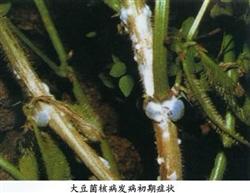
Occurrence Patterns and Control Methods of Soybean Sclerotinia Stem Rot
Soybean Sclerotinia stem rot is a common disease on soybean crops, mainly causing stalk rot, with pale white lesions, hollow stems containing black sclerotia, and easy breakage. In the past two years, soybean Sclerotinia stem rot has shown a trend of increasing severity year by year. Causes and characteristics: 1. Large number of sclerotia in the field. The pathogen of soybean Sclerotinia stem rot is a fungus...
-
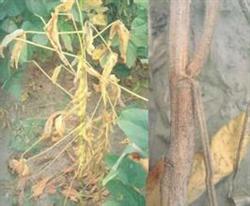
Occurrence and Control Methods of Soybean Rhizoctonia Damping-off
Soybean Rhizoctonia damping-off is commonly known as "dead seedling," "damping-off," or "black root disease." In years with severe disease, the rate of dead plants in lightly affected fields is 5%-10%, while in heavily affected fields the rate of dead plants reaches over 30%, and individual plots may even die off entirely, resulting in total crop loss. 1. Field symptoms: Soybean Rhizoctonia damping-off occurs only at the seedling stage, affecting the main root...
-
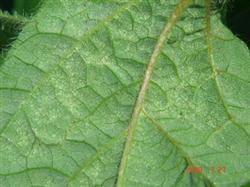
Occurrence Patterns and Control Methods of Soybean Red Spider Mites
Red spider mites is the collective name for red leaf mites, a composite population of several leaf mite species belonging to the family Tetranychidae. In Huachuan County, they occur to varying degrees every year, though these are generally light occurrence years. However, according to this year's surveys, due to the effects of recent high temperatures and drought, the damage caused by red spider mites to soybeans in Huachuan County has risen from a secondary position to a primary...
-
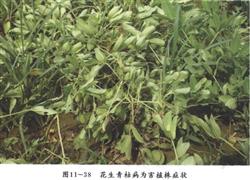
How to prevent and control peanut bacterial wilt? Understanding the patterns of occurrence is key
Peanut bacterial wilt, commonly known as "green wilt", "seedling death", "plague", and "vine death", is a major disease in peanut-growing areas. In ordinary plots, the disease incidence is 10%-25%, and in severely affected plots the incidence reaches over 50%. Peanut bacterial wilt is a typical vascular disease that can occur throughout the entire growth period of peanuts, but...
-
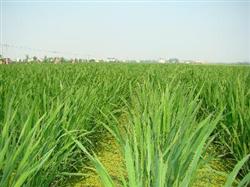
Occurrence Characteristics of Pests and Diseases in High-Mountain Water Bamboo and Integrated Control Techniques
The key points of off-season cultivation techniques for double-cropping water bamboo at low altitudes are introduced as follows: 1. Selection of improved varieties. The Zhejiang Yidianhong water bamboo (a single-cropping type) is selected. 2. Land preparation and seedling raising. Select a field sheltered from wind and facing the sun, with convenient irrigation and drainage and loose, fertile soil, as the seedling bed. In early November, sun-dry the seedlings until they are 60-70% dry, 1...
-
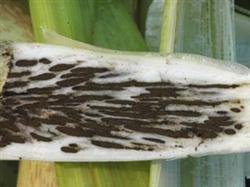
Occurrence and Integrated Control Methods of Water Bamboo Smut
Water bamboo smut is a major disease of water bamboo (Zizania latifolia), mainly affecting the leaf sheaths and the edible swollen stems, leading to reduced yield and quality of water bamboo. The main symptoms and integrated control methods of this disease are briefly described below: 1. Main symptoms: In the early stage of leaf sheath infection, the lesions appear as small dark green round spots, which later develop into oval tumor-like protrusions; in the later stage, the leaf sheaths are filled with black spore masses, causing the leaf sheaths to turn black. When the edible swollen stem is infected, the smut fungus fills the water bamboo tissue, causing the middle to swell and protrude, the edible stem strips to become shorter, and the outer surface to have many longitudinal grooves. It becomes rough, and in severe cases the edible stem is unfit for consumption.
-
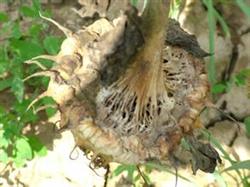
Occurrence patterns and control methods of sunflower sclerotinia rot
As the pace of planting structure adjustment accelerates, market demand for confectionery-type sunflower seeds is increasing day by day. Sunflower is an economical crop that is easy to manage and saves labor and effort. Because field management is too extensive and because of years of continuous cropping on the same land, many diseases have occurred and spread and have worsened year by year, directly causing sunflower yields to decline...
-
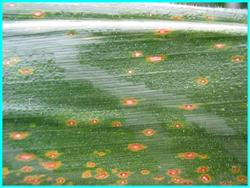
Occurrence Patterns and Control Methods of Curvularia Leaf Spot in Corn
Corn Curvularia leaf spot, also known as yellow spot disease and called yellow leaf disease by farmers, is another important disease of corn in our province in recent years, following large and small spot diseases and rust. After the onset of Curvularia leaf spot, the leaves are covered with lesions, and when they merge, the leaves dry up and die, seriously affecting corn growth and reducing yield. I. Symptoms: ...
-
Occurrence and Control Methods of Jackfruit Stem-End Rot and Fruit Rot
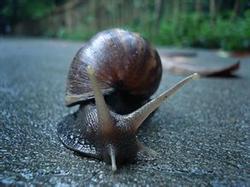
The African giant snail, also known as the French snail, is a pest that harms pineapple. It mainly bites the base of the fruit from June to August when the fruit is ripe, leaving holes of varying depths, which makes the pineapple prone to infection by pathogens and rot, thereby reducing the commercial value of the fruit and even making it inedible. Control methods: (1) Manual capture. In the African giant snail...
-
Detailed Explanation of the Occurrence Characteristics of Grape Black Pox (Elsinoë ampelina)
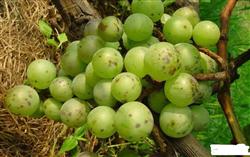
The pathogen mainly overwinters as sclerotia on the lesions of new shoots and tendrils. In the following spring, when the temperature rises above 2°C and high humidity persists for more than 24 hours, a large number of conidia are produced from the sclerotia and spread by rain to the young green parts of the grapevine. In water, the conidia produce germ tubes, quickly attach to the substrate, and after germination cause primary infection. This...
条件筛选