Occurrence patterns and control methods of sunflower sclerotinia rot
As the pace of planting structure adjustment accelerates, market demand for confectionery-type sunflower seeds is increasing day by day. Sunflower is an economical crop that is easy to manage and saves labor and effort. Because field management is too extensive and because of years of continuous cropping on the same land, many diseases have occurred and spread and have worsened year by year, directly causing sunflower yields to decline...
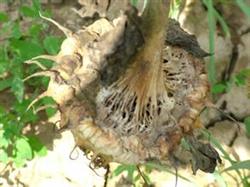
As the pace of planting structure adjustment accelerates, market demand for confectionery-type sunflower seeds is increasing day by day. Sunflower is an economical crop that is easy to manage and saves labor and effort. Because field management is too extensive and because of years of continuous cropping on the same land, many diseases have occurred and spread and have worsened year by year, directly causing sunflower yields to decline, threatening the development of its production and farmers' income. After several years of field investigation and experimental research, the occurrence and control techniques for sunflower sclerotinia rot are summarized as follows.
1. Symptoms and disease occurrence The survey results show that before 1996 sunflower sclerotinia rot occurred very little in our region, with an incidence rate of less than 1.5%; starting in 1998 it rose to about 3%, reached 5% in 1999, about 8% in 2002, and reached 20.1% in 2003, with severely affected plots reaching 45%. The heavy rain in October 2003 caused large areas of sunflower lodging, intensifying the widespread epidemic of the disease, with yield losses of more than 30%. In our region this disease mainly shows two symptom types, namely the stem rot type and the flower rot type. The stem rot type can occur at all parts of the stalk; initially an oval brown lesion appears on the stem surface and gradually expands; after about 15-20 days, a large dark brown lesion encircles the stem to form a ring, after which the plant wilts and dies or suddenly collapses and dies in the wind. This symptom type is mostly seen in the middle and lower parts of the stem or at the neck of the head. In the flower (head) rot type, after sunflower flowering, a water-soaked light brown circular lesion appears on the receptacle part behind the flower disc; after it expands to the whole flower disc, the tissue rots and softens, and after decomposition there is no obvious foul odor. In humid weather or when rain occurs, white mycelium appears, and finally black sclerotia form. The pathogen can also infect and spread to the front of the flower disc, with mycelium spread among the seeds, forming a black sclerotial network covering the flower disc. In the later stage, because the flower disc tissue structure rots, the entire flower disc falls to the ground, or part or all of the seeds fall to the ground. Symptoms on the seeds are generally not very obvious; in severe cases the pericarp loses color and turns white, and the seed kernel is brown, losing commodity and seed-use value.
2. Pathogen source and epidemic patterns The pathogen is a sclerotinia fungus of the genus Sclerotinia, family Sclerotiniaceae, black in color. When the disease occurs on the stem, few sclerotia form; when the flower disc is affected, there are more sclerotia. Sclerotia can resist adverse environments and remain viable after 10 minutes at -40°C or moist heat at 55°C, but under flooded conditions they rot and die after only 30 days. When conditions are suitable, sclerotia begin to germinate and can directly form mycelium to infect the host, or can form apothecia that produce asci and ascospores. After ascospores are spread by wind and rain to the host surface, they germinate into mycelium and infect, causing sunflower disease. The pathogen overwinters in the form of sclerotia in soil and seeds. In plots with severe sclerotinia rot, the seed contamination rate is above 10%; sclerotia can be mixed among seeds, and the pericarp, seed coat, cotyledons and embryo can all carry the pathogen. After sowing, it can cause seedling death or disease of the seedling roots and root crown. Most sclerotia in the soil are distributed in the 0-10 cm soil layer, and mycelium germinating from sclerotia can directly invade sunflower roots or the root crown through wounds and cause disease. Sclerotia on the soil surface can all produce apothecia and release ascospores that spread with wind, rain and airflow to stems, leaves or the flower disc, and can invade directly or through wounds. During infection the pathogen secretes oxalic acid and some enzymes, such as pectinase and polygalacturonase, which promote rotting and decomposition of host tissues and produce disease symptoms.
3. Control techniques Because sunflower sclerotinia rot occurred severely and caused serious damage in 2003, it brought great hidden dangers to sunflower production in 2004, mainly by increasing seed contamination and the number and density of sclerotia in the soil. The following measures should be taken in control techniques.
3.1 Practice crop rotation Sclerotia can survive in soil for several years, and generally most lose viability after 3 years, so rotating sunflower with gramineous crops can greatly reduce disease occurrence. The longer the rotation time, the better the effect, but it cannot be rotated with crops such as legumes and crucifers.
3.2 Do a good job of field sanitation Thoroughly remove diseased plants, residual branches and fallen leaves, diseased flower discs and seeds from the field and bury them deeply or burn them to reduce the pathogen.
3.3 Seed treatment Introduce seeds from disease-free areas or collect seeds from healthy flower discs, remove mixed sclerotia by selection, and before sowing use agents such as 50% procymidone wettable powder or 50% dimethachlon wettable powder at 0.3%-0.5% of the seed amount for seed dressing; the control effect can reach more than 80%.
3.4 Spray timely at flowering stage When sunflower has buds and flowers, if continuous overcast and rainy weather occurs, or if the field itself is a severely diseased continuous-cropping plot, pesticides should be applied early for control. The agents can be 50% procymidone wettable powder at 800-1000 times dilution, or 50% carbendazim wettable powder at 500 times dilution, or 40% dimethachlon wettable powder at 500 times dilution; after full flowering, spray 2-3 times continuously at intervals of 7 days, and the control effect is significant.