Occurrence Patterns and Control Methods of Soybean Sclerotinia Stem Rot
Soybean Sclerotinia stem rot is a common disease on soybean crops, mainly causing stalk rot, with pale white lesions, hollow stems containing black sclerotia, and easy breakage. In the past two years, soybean Sclerotinia stem rot has shown a trend of increasing severity year by year. Causes and characteristics: 1. Large number of sclerotia in the field. The pathogen of soybean Sclerotinia stem rot is a fungus...
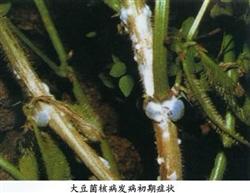
Soybean Sclerotinia stem rot is a common disease on soybean crops, mainly causing stalk rot, with pale white lesions, hollow stems containing black sclerotia, and easy breakage. In the past two years, soybean Sclerotinia stem rot has shown a trend of increasing severity year by year.
Causes and characteristics:
1. Large number of sclerotia in the field. The pathogen of soybean Sclerotinia stem rot is a fungus that forms cylindrical or mouse-dropping-shaped sclerotia on soybean stems, irregular in shape, measuring 1-4 mm x 3-7 mm. The sclerotia germinate under rainy, humid and light conditions. The pathogenic fungus overwinters as sclerotia scattered in the soil and mixed among seeds, and seeds can also carry the pathogen.
2. Environmental factors. During the soybean flowering period, high soil surface temperature, high air humidity and abundant rainfall favor the occurrence of this disease.
3. Seed-borne sclerotia. If soybeans harvested the previous year are used as seed year after year, the residual amount of sclerotia in the seeds may increase, causing soybean Sclerotinia stem rot to worsen year by year.
4. Improper cultivation management. Fields with high planting density have severe soybean Sclerotinia stem rot. The reason is that excessive dense planting causes poor ventilation and excessive humidity, which favors disease development; fields adjacent to sunflowers and rapeseed have severe soybean Sclerotinia stem rot; in addition, fields with continuous cropping or alternating cropping have severe soybean Sclerotinia stem rot.
Control measures:
1. Reasonable crop rotation. Soybean Sclerotinia stem rot only spreads and harms soybeans, sunflowers and rapeseed, and does not infect grass family crops. Therefore, the farming system should be reformed, with rotation of more than three years implemented, avoiding adjacency to sunflower and rapeseed fields, and controlling the spread of soybean Sclerotinia stem rot.
2. Careful seed selection. Before sowing, screen out the sclerotia mixed in soybean seeds, and select disease-resistant improved varieties free of sclerotia for sowing.
3. Strengthen cultivation management. Reasonable dense planting, drainage and waterlogging control, land leveling, ditching and drainage, preventing water accumulation and water-borne spread, and timely hoeing and ridging before soybean canopy closure to eliminate germinated sclerotia and apothecia. After harvesting soybeans in severely affected fields, deep plowing should be carried out to turn diseased residues and sclerotia into the ground.
4. Chemical control. During the soybean flowering period, when soybean Sclerotinia has just begun to germinate and emerge from the soil to the peak period of apothecia formation, spray 50% Procymidone wettable powder at 1500 times dilution on the soil surface of the ridge platform, or spray 30 kg of 50% Vinclozolin wettable powder at 1000 times dilution. Fields sprayed with the above agents can achieve a control effect of over 85% against soybean Sclerotinia stem rot.