How to prevent and control peanut bacterial wilt? Understanding the patterns of occurrence is key
Peanut bacterial wilt, commonly known as "green wilt", "seedling death", "plague", and "vine death", is a major disease in peanut-growing areas. In ordinary plots, the disease incidence is 10%-25%, and in severely affected plots the incidence reaches over 50%. Peanut bacterial wilt is a typical vascular disease that can occur throughout the entire growth period of peanuts, but...
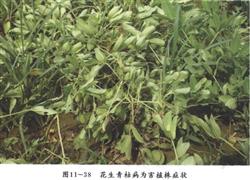
Peanut bacterial wilt, commonly known as "green wilt", "seedling death", "plague", and "vine death", is a major disease in peanut-growing areas. In ordinary plots, the disease incidence is 10%-25%, and in severely affected plots the incidence reaches over 50%. Peanut bacterial wilt is a typical vascular disease that can occur throughout the entire growth period of peanuts, but it occurs most often at the flowering stage. The pathogen mainly infects the roots, first causing the main root tip to discolor and become soft and rotten; initially it turns the vessels and other tissues light brown, then dark brown, and spreads from the roots to the aboveground parts all the way to the top of the plant. When the diseased part is cut crosswise, the vascular bundles can be seen to be discolored and necrotic; when the diseased root is squeezed by hand, milky-white cloudy bacterial pus droplets can be seen. Diseased plants take about 7-15 days from infection to death; early symptoms are not obvious, and symptoms begin to appear after 3-4 days. The main manifestations are that the leaves open late in the morning and close early in the afternoon; the second leaf from the top of the main stem is the first to show water-loss wilt, and the leaves on the side branches droop. After another 2-3 days, the whole plant dies, but the leaves remain light green.
Control methods: First, disease-resistant improved varieties should be selected, such as Luhua No. 3, Wanhua No. 2, etc. Second, implement paddy-upland rotation. In recent years we have generally adopted a rice-peanut rotation system, which has basically controlled the occurrence of peanut bacterial wilt. Where there is no water source, it is best to use a rotation method with a two-year interval. Third, carry out chemical control. At the peanut cluster stage and early flowering stage, use 5% Xunduqing aqueous solution at 500 times dilution or 50% compound carbendazim suspension at 500-800 times dilution for two applications; alternatively, in the peanut field dig holes 10-17 cm in diameter every 30 cm, inject 3 ml of 90% chloropicrin liquid into each hole, firm the topsoil, then cover with plastic film, and remove the film after 7 days.