-
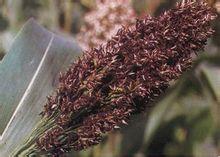
Occurrence Patterns and Control Methods of Sorghum Head Smut
As the sorghum planting area continues to expand and the planting years lengthen, the damage caused by sorghum head smut is becoming increasingly serious, directly affecting the development of sorghum production. I. Degree of damage: In the early 1990s, sorghum head smut occurred only sporadically in a few local areas of the county. By 2000, the affected area in individual townships was about 43 hectares, with a diseased plant rate of 15%, while other planting areas had only mild occurrence. According to a 2004 survey, the affected area in the county was 800 hectares, accounting for 34% of the total sorghum sown area, with an average diseased plant rate of 20.5% in affected fields; in 2005, the affected area in the county was 1333 hectares, accounting for 67% of the total sorghum sown area, with an average diseased plant rate of 31.2% in affected fields. In the sorghum planting area of the Second Brigade of Biesituobie Township, the diseased plant rate reached 70.5%, with a severity of 70%.
-
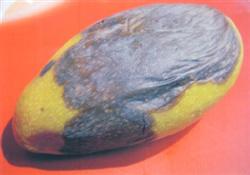
Occurrence Patterns and Control Methods of Mango Anthracnose
1. Damage symptoms: It mainly damages mango flowers, fruit, and tender shoots. After tender leaves are infected, many small round brown spots appear, surrounded by a yellow halo, and they gradually expand into round, polygonal, or irregular brown lesions, which later rupture and perforate. Wounds on leaves and young fruit caused by gall midges, leafhoppers, and other pests are also easily infected by this disease. Severely infected...
-
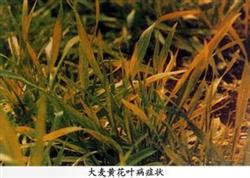
Occurrence Patterns and Control Methods of Barley Yellow Mosaic Disease
Barley yellow mosaic disease occurs mainly in the lower Yangtze River basin, in the provinces and municipalities of Hubei, Zhejiang, Jiangsu, Shanghai and Anhui, among which Jiangsu, Zhejiang and Shanghai are the most severely affected. Diseased plants die off prematurely, leading to a lower rate of productive tillers in barley, a marked reduction in seed-setting rate, lower thousand-grain weight, lower flour yield and reduced quality. When barley develops...
-
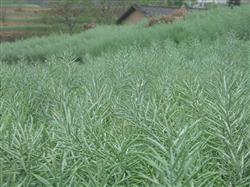
Weed Occurrence Characteristics and Control Methods in Rapeseed Fields
To obtain high quality and high yield in cultivated rapeseed, in addition to normal management such as timely sowing to secure seedlings, weeding and reducing waterlogging, skillful fertilizer application is the key to high yield. 1. Apply sufficient base fertilizer. Applying sufficient base fertilizer is the foundation for high rapeseed yield and should account for about 60% of the total for the whole growing period. To achieve a yield target of about 250 kg per mu, for medium-fertility...
-
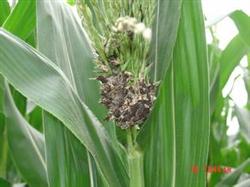
Occurrence Patterns and Control Methods of Black-Streaked Dwarf Disease in Spring Corn
Black-streaked dwarf disease is a viral disease transmitted by the virus-carrying small brown planthopper (Laodelphax striatellus), with the seedling stage being the main susceptible period. Since the 1990s, with changes in planting structure, black-streaked dwarf disease in single-season rice and spring corn in Chun'an County has worsened year by year, especially since 2000, when rice black-streaked dwarf disease has occurred throughout the county,...
-
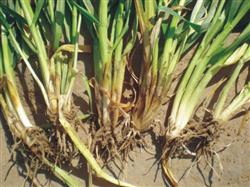
Spring Occurrence Patterns and Control Methods of Wheat Sharp Eyespot
Wheat sharp eyespot is a fungal disease mainly spread through the soil. As yield levels have increased, with the promotion of high-yielding varieties and wheat field management involving heavy watering and heavy fertilization, its damage has become increasingly serious. The pathogen of wheat sharp eyespot has a broad host range; besides infecting wheat, it can also infect corn, rice, foxtail millet, sorghum and many other...
-
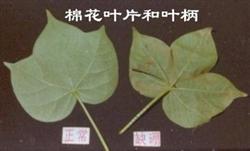
Applying microbial fertilizer to cotton can prevent disease occurrence
Boron deficiency at the seedling stage: Boron deficiency symptoms can appear in cotton right after emergence, manifesting as thickened and enlarged cotyledons with a darker color, fragile young shoots that break easily, and wilting and drooping in a "" shape (normal leaves stand upright in a "Y" shape); the terminal bud's development stalls, and in severe cases no true leaves emerge, ultimately leading to seedling death. With boron deficiency at the seedling stage, because the terminal bud's growth...
-
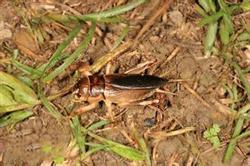
Occurrence, Damage Characteristics and Control Methods of the Peanut Field Cricket
What are the characteristics of the damage caused by the field cricket on peanuts? How to control it? (1) Morphological characteristics: The field cricket is commonly known as the large mole cricket, big-headed cricket, etc. ① Adult: body length about 41 mm, width 13 mm, body yellow, brown, or dark brown. Between the compound eyes there is a "Y"-shaped shallow groove. The pronotum is well developed, with a distinct longitudinal groove, and on both sides there are peach-colored patches of a lighter shade...
-
Analysis of the Causes of Peanut Rust Occurrence and Spread
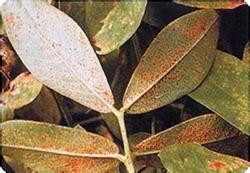
What are the causes of peanut rust occurrence and spread? First, peanut rust is a fungal disease caused by Puccinia arachidis. The urediniospores are yellow, round or nearly round, with minute spines on the surface, and each urediniospore has one germination pore on each side of its middle section. Most urediniospores produce only one germ tube, and an appressorium forms at the tip of the germ tube, from which an infection hypha penetrates the peanut. Urediniospores can germinate only in the presence of water droplets or a water film. They have strong tolerance to low temperatures and poor tolerance to high temperatures. Under normal conditions, the germ tube penetrates the internal tissue after 65 hours, the hyphae continue to grow and produce haustoria, and after 7 days, pinpoint-sized white spots appear and begin to produce urediniospores; after 8 days, the white spots turn yellow-brown and form uredinia; after 10 days, the epidermis of the uredinia ruptures and releases urediniospores to continue infection. During the peanut growing period, the expansion and spread of peanut rust are mainly from local inoculum sources, but in the northern peanut regions, there is also the issue of external inoculum sources for the pathogen in early spring. The main factors affecting the occurrence and spread of peanut rust: First, the amount of overwintering inoculum. If the amount of overwintering inoculum is large, peanut rust may occur severely the following year.
-
Detailed Explanation of the Occurrence Patterns and Control Methods of Chrysanthemum Powdery Mildew
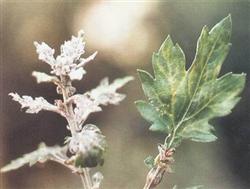
Chrysanthemum powdery mildew is one of the common diseases in flowers, and it is distributed in both southern and northern China. Chrysanthemum powdery mildew causes poor plant growth, leaf death, and even failure to bloom, seriously affecting greening and beautification results and flower production; it also harms cineraria, pot marigold, coneflower, African daisy, cosmos, aster, dahlia...
条件筛选