-

Occurrence Patterns and Control Measures of Edible Mushroom Diseases and Pests
Occurrence of Edible Mushroom Diseases and Pests and Control Measures
-
Occurrence and Control Methods of Mushroom Cap Spot Disease
Occurrence and Control of Mushroom Cap Spot Disease
-
Identification, Occurrence and Control of Neurospora Disease in Edible Mushrooms
Occurrence and Control of Neurospora in Edible Mushrooms
-
A Detailed Explanation of the Occurrence Patterns of Mushroom Wet Bubble Disease
Occurrence patterns: This pathogen is widely distributed in the topsoil at a depth of 2-9 cm. Its optimum growth temperature is around 25°C; below 10°C it grows extremely slowly, and above 35°C it basically cannot grow. Tests show that in soil and compost, its pathogenic spores die after 4 hours at 56°C (or 1 hour at 65°C). The pathogen spreads mainly through soil, spray water, people, tools, insects and other routes. In addition, poor ventilation in the mushroom house, high temperature and high humidity are also important reasons for the occurrence of this disease.
-
Occurrence and Control of Pests and Diseases in Industrialized Mushroom Cultivation
In the late 1990s, China successively introduced industrialized mushroom production lines from Japan and the Taiwan region, which led to rapid advances in mushroom production technology, making it possible to enjoy delicious and nutritious fresh products such as enoki mushrooms (Flammulina filiformis), crab-flavored mushrooms (Hypsizygus marmoreus) and king oyster mushrooms (Pleurotus eryngii) even in the hot summer. In the Shanghai area, there are currently 3 large-scale enoki mushroom enterprises in production and 1 crab-flavored mushroom enterprise, with 3 more added by the end of 2005. It is expected that the daily output of enoki mushrooms will reach 50 t, crab-flavored mushrooms 5 t and king oyster mushrooms 1.5 t, making it the largest industrialized mushroom production base in the country.
-
Occurrence and Control Methods of Common Diseases in Oyster Mushrooms
In recent years, with the expansion of oyster mushroom cultivation areas and the increase in cultivation years, pest damage has become increasingly common, showing a trend of early and rapid occurrence, and in severe cases, entire flushes of mushrooms are lost. Because oyster mushrooms are relatively sensitive to pesticides and prone to phytotoxicity, applying chemicals after pest outbreaks makes it difficult to achieve the effect of eliminating pests while protecting the mushrooms. Therefore, identifying the damage characteristics of various pests and reducing infection sources are effective measures to avoid and reduce pest occurrence. I. Pest Species 1. Sciarid flies, also called dark-winged fungus gnats, commonly known as small black mosquitoes, small flies, or white maggots (referring to larvae). They belong to the order Diptera, mosquito-like insects.
-
Occurrence Characteristics and Control Methods of Mushroom Gall Midge
I. Morphological Characteristics The gall midge, also known as the small red maggot or mushroom gnat, has adults that resemble small mosquitoes, tiny and delicate, difficult to see with the naked eye. The head, thorax, and dorsal side of the body are dark brown, while the rest is grayish-brown or light orange. Larvae can hatch from eggs or be reproduced by the mother's larvae. Each female can produce an average of more than 20 larvae. In the early stage, larvae cause damage in the substrate, resulting in sparse and weak mycelium. In the later stage, they move to the mycelium and fruiting bodies. When fruiting bodies are damaged, they first breed at the base of the mushroom stipe, then climb to the junction between the stipe and the cap, and some bore into the gills, which are eaten into scars and trails, appearing light orange-red. A single mushroom can host 20 to 30 larvae in severe cases, seriously affecting the quality and yield of mushrooms.
-
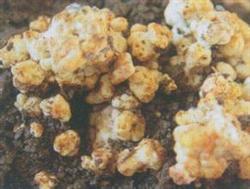
What to Do When Oyster Mushrooms Get Walnut Meat Fungus Disease? Occurrence Patterns and Integrated Control
Recently, many readers have reported that the oyster mushrooms they cultivate have been affected by walnut meat fungus (Diehliomyces microsporus). We are therefore reposting an article titled "Occurrence Patterns and Control Techniques of Walnut Meat Fungus in Oyster Mushrooms" published by Yang Yongheng, An Xiurong and others of the Tai'an City Institute of Agricultural Sciences, Shandong, for growers' reference: In recent years, Tai'an City and its surrounding...
-
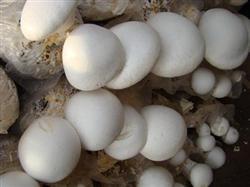
Analysis of Six Major Characteristics of Pest and Disease Occurrence in King Oyster Mushroom (Pleurotus eryngii var. nebrodensis)
1. The culture substrate carries multiple sources of pests and diseases. The hosts of the vast majority of pathogenic bacteria and harmful insects are organic matter. For example, rice straw, cottonseed hulls, and poultry and livestock manure themselves carry large amounts of fungal spores, mycelia, mites, and eggs of mosquitoes and flies. Before use, the culture substrate needs to be sterilized or fermented to eliminate or reduce...
条件筛选