-

Grim Situation of Major Pests and Diseases at the Wheat Ear Stage
At present, wheat in the Jianghuai, Huanghuai and other regions has successively entered the booting and heading stages, which is an important period for yield formation and also a critical period for the occurrence and control of pests and diseases. Affected by last year's warm winter, the base number of wheat pests and diseases in some areas is relatively high; recently, continuous rainy weather has appeared in Jianghuai and other areas,
-
Is the garlic return a normal occurrence or an isolated incident? A review of China-South Korea trade frictions
Since the establishment of diplomatic relations between China and South Korea in 1992, the economic and trade cooperation between the two countries has developed rapidly. By the 20th anniversary of the establishment of diplomatic relations, bilateral trade between China and South Korea had grown from 5 billion USD to 256.3 billion USD in 2012, an increase of 50 times. At present, China has become South Korea's largest trading partner, largest export market and largest source of imports, while South Korea is China's third-largest trading partner and fifth-largest source of foreign investment. South Korean President Park Geun-hye said that China-South Korea trade volume could reach 300 billion USD in 2015. On November 10 last year, Chinese President Xi Jinping and South Korean President Park Geun-hye held a meeting in Beijing, and the two sides jointly confirmed the conclusion of substantive negotiations on the China-South Korea Free Trade Area, meaning that China-South Korea trade is about to open a new chapter.
-
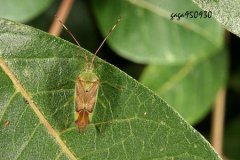
Occurrence of the bamboo mirid bug on crops and its control methods
The bamboo mirid bug is a pest you surely know about. So how do you control it and eliminate its harm to agriculture? Let's take a look below. Currently, chemical control can still effectively control the bamboo mirid bug, but because it is not suitable to apply pesticides during the continuous bamboo shoot harvesting period (April to October)
-
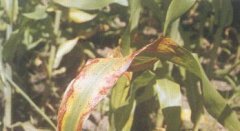
Causes, Symptoms and Control Methods of Sorghum Sheath Blight
What causes sorghum sheath blight? What are its symptoms? How should it be controlled? Let's take a look together. Symptoms: It mainly damages the leaves and the base of the stem. On the leaf sheaths near the ground level, small white-green water-soaked lesions first appear, then expand into oval shapes, with brown margins and lighter centers. Lesions on the leaves appear grayish-green or grayish-white and cloud-like, and most of the lesions merge into a tiger-stripe pattern, causing the entire leaf to wither and die.
-
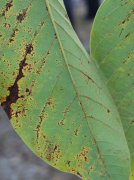
Symptoms and Control Methods of Rust Disease in Atemoya Orchards
Because orchards in mountainous areas and river valleys have high humidity, they are prone to triggering the spread and expansion of "annona rust." The Taitung District Agricultural Research and Extension Station of the Council of Agriculture (hereinafter referred to as the Taitung Station) recently monitored Beinan, Luye, and Donghe, among other areas, and found that some atemoya orchards
-
What to Do When Chinese Cabbage Splits Its Heads? Causes and Control Methods Explained
Chinese cabbage, a biennial herb, 40-60 cm tall, usually the whole plant is hairless, sometimes with a few bristles on the midvein on the underside of the leaves. Native to northern China, it is a leafy vegetable of the genus Brassica in the family Brassicaceae, usually referring to Chinese cabbage (napa cabbage); it also includes bok choy and the heading cabbage derived from cultivated varieties of cabbage, namely "round cabbage" or "foreign cabbage". Introduced to the south, it is cultivated throughout the north and south. It was introduced to Japan, Europe and the United States in the 19th century. There are many kinds of Chinese cabbage; northern Chinese cabbage includes Shandong Jiaozhou Chinese cabbage, Beijing Qingbai, Tianjin Qingmaye Chinese cabbage, Northeast Daaicai, Yutian Chinese cabbage, Shanxi Yangcheng Damaobian, and others. Chinese cabbage is eaten for its tender head, rosette leaves or flower stalks. It is widely used, and its cultivation area and consumption rank first among all vegetables in China.
-
Symptom Identification and Control Methods for Truffle Disease in Oyster Mushrooms
Oyster mushroom (scientific name: Pleurotus ostreatus; also known as oyster cap, rough-skinned oyster mushroom, oyster mushroom, black peony mushroom, and called Xiuzhen mushroom in Taiwan, China) is a species in the family Pleurotaceae, order Agaricales, phylum Basidiomycota, and is a quite common gray edible mushroom. The germ tubes of the oyster mushroom continuously branch and elongate, forming
-
A Detailed Guide to the Occurrence and Control of Cowpea Rust Disease
Cowpea (scientific name Vigna unguiculata), commonly known as black-eyed pea, ginger bean, belt bean, hanging bean pod. Cowpea is divided into two types, long cowpea and rice cowpea, and belongs to the legume family. Cowpea is an annual plant of the legume family. The stem has three types: dwarf, semi-climbing and climbing. In the south, climbing types are mainly cultivated,
-
Symptom Identification and Control Methods of Cucumber Phytophthora Blight
Cucumber (scientific name Cucumis sativus Linn, English name Cucumber), a plant of the genus Cucumis in the Cucurbitaceae family. Also called hu gua and qing gua. The fruit is oily green or emerald green, with soft small spines on the surface. It is widely cultivated throughout China and is now widely grown in temperate and tropical regions.
-
The Occurrence Mechanism and Control Methods of Bottle Gourd Fruit Spot Disease
Bottle gourd, aliases: sweet gourd, sweet bottle gourd, bottle gourd, Jingjie chui, Longmi melon, Tian gua, long gourd, flat gourd; phylum Angiospermae, a species under the genus Lagenaria in the family Cucurbitaceae, a variety of the genus plant bottle gourd (Lagenaria siceraria), an annual climbing herb. It differs from the bottle gourd (original variety) in
条件筛选