-
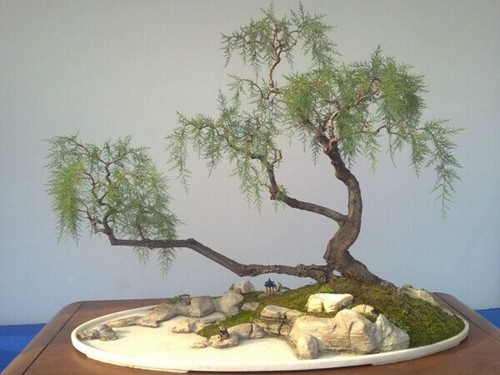
Detailed Explanation of the Methods and Steps for Making a Tamarisk Bonsai
Tamarisk has fine branches and small leaves, with drooping branches that are graceful and charming, resembling a weeping willow; its trunk is like iron, ancient and peculiar, possessing the quality of pine and cypress; it blooms three times a year with a long flowering period, and the pink flowers cover the branches, making it even more enchanting; its roots are like roaming dragons, with wonderful forms, whether viewing roots, trunks, leaves, or enjoying flowers
-
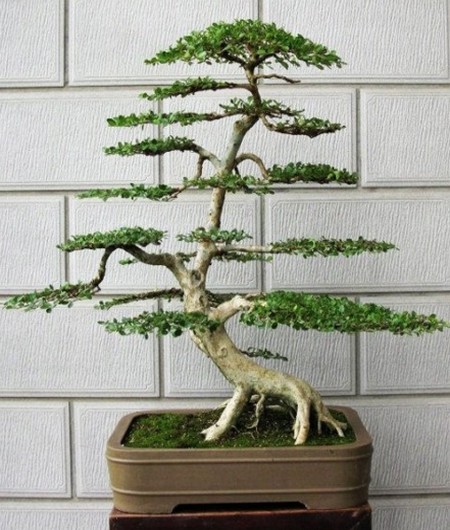
Detailed Guide to Making a Boxwood Bonsai
Littleleaf boxwood is an evergreen shrub or small tree of the genus Buxus in the order Euphorbiales. The trunk is grayish-white and smooth, the branches are densely borne and four-angled. The leaves are opposite, leathery, entire, elliptical or obovate, with a rounded or slightly notched tip, bright green on the surface and yellow-green on the underside. The flowers are clustered in the leaf axils or at the branch tips, opening from April to May, and are yellow-green
-
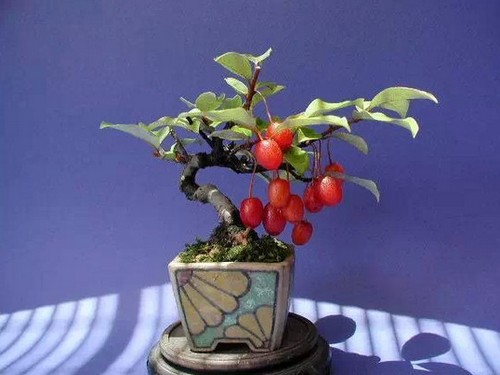
Detailed Guide to Making Elaeagnus Bonsai
Elaeagnus, also known as banchunzi, tianbangchui, queersu, and yangnaizi, with the scientific name E. pungens, is native to China and the temperate and subtropical regions of the Northern Hemisphere. It is an evergreen shrub of the family Elaeagnaceae. Its fruit is sweet and edible when ripe. The roots, leaves, and fruit are all used medicinally. The plant has a natural form, fragrant flowers, and red fruit.
-
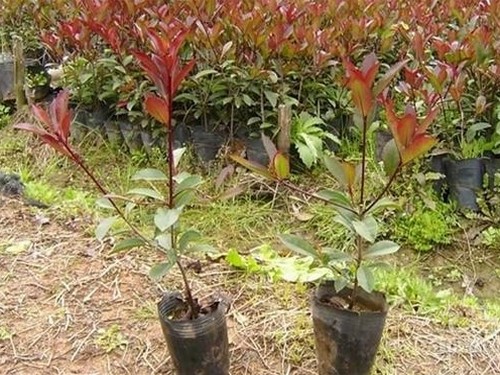
Detailed Guide to Making and Managing Red-Leaf Barberry Bonsai
Red-leaf barberry blooms with yellow flowers in spring and bears red berries in autumn; it is an ornamental shrub beautiful in leaf, flower and fruit alike. It is suitable for use in gardens as a flowering hedge, planted in groups at the corners of garden paths, edging large flower beds, or pruned into symmetrical spherical shapes for companion planting. It can also be dotted among rocks or beside ponds. It can also be made into bonsai; widely used in landscaping, it delivers excellent greening results.
-
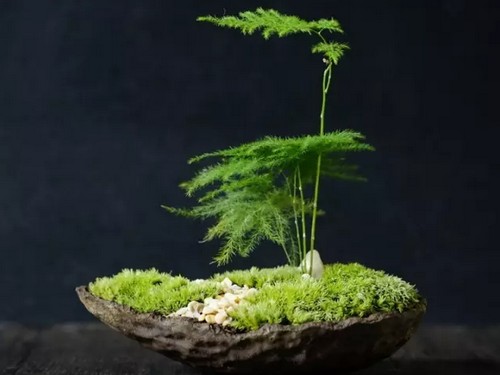
Illustrated guide to making bonsai moss: detailed steps that are easy to understand at a glance
Moss is generally used in bonsai only as a layer spread over the potting soil to retain moisture, but growing moss separately in a water-stone pot and viewing it as a moss bonsai in its own right actually has a distinctive charm. As the saying goes, three parts cultivating the plants, seven parts cultivating the person. Every morning, bend down and feel the primal wild breath together with the moss.
-
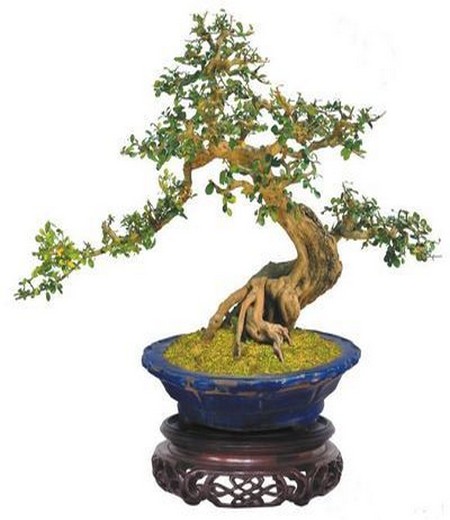
A detailed guide to the entire process of making boxwood bonsai, beginners can learn it too
Boxwood branches and trunks are grayish-white and smooth, with leaves as small as broad bean petals, thick and glossy, emerald green in all four seasons, and ornamental all year round. After pruning and wiring into cloud-layer forms, they are flat and thin as if shaved; or when accented with rocks, they become even more natural and exquisite. Boxwood bonsai has a graceful tree posture, leaves as small as broad bean petals, thick and glossy, evergreen through all four seasons, and can be enjoyed all year round. Yang-style boxwood bonsai
-
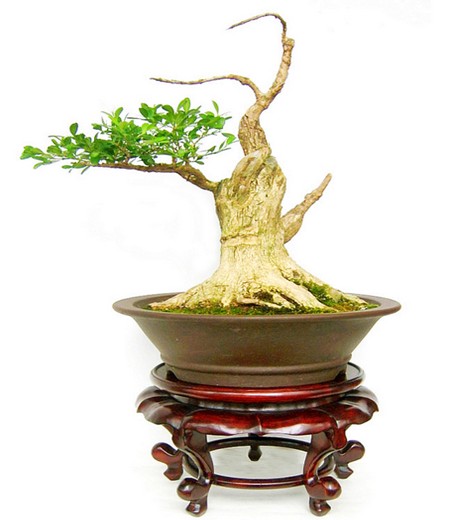
A detailed guide to making big-leaf boxwood (Euonymus japonicus) bonsai, easy enough for beginners to learn
Boxwood bonsai has a graceful tree posture, with leaves as small as broad beans, thick and glossy, evergreen all year round, and can be enjoyed throughout the year. In the Yang-style boxwood bonsai, the branches and leaves are pruned and trained into cloud-like pads, flat and thin as if shaved, then dotted with rocks, elegant and beautiful as a painting. In spring, when the tender leaves of boxwood first emerge, the whole tree is tender green and very pleasing to the eye. An ancient poem praising boxwood
-
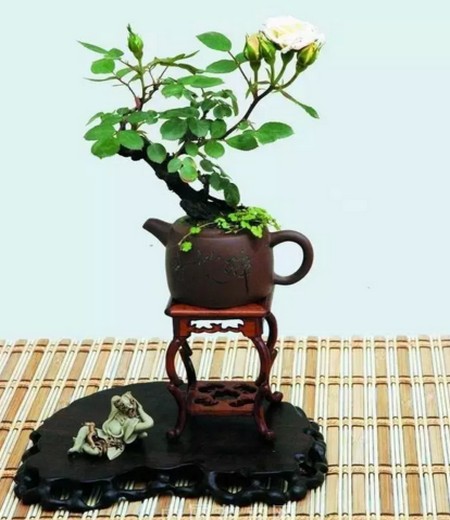
Detailed Explanation of the Key Techniques for Making Rose Bonsai
Roses are a very promising material for bonsai. The combination of rose flowers and bonsai has both the natural beauty of bonsai and the gorgeousness of rose flowers. A exquisitely made, vividly shaped rose bonsai is a highly impressive work of art. Rose flowers are brilliantly colorful and gracefully charming, and have long been known as the "Queen of Flowers."
-
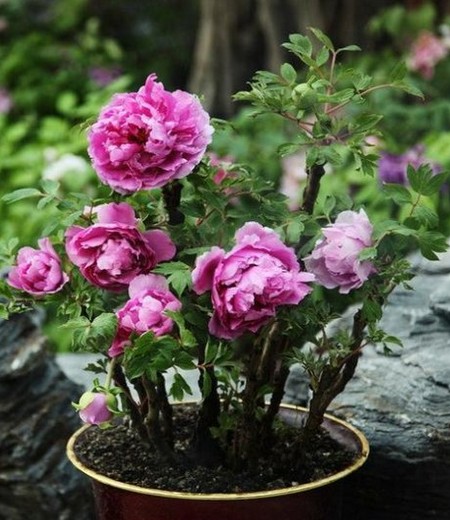
Detailed Explanation of the Making Methods and Steps of Peony Bonsai
Peony bonsai is a newly emerging flowering bonsai category. It combines the magnificent peony with the rustic and elegant art of bonsai, forming an artistic form with a unique Central Plains local style, and has been praised by experts and scholars in China's bonsai circles.
-
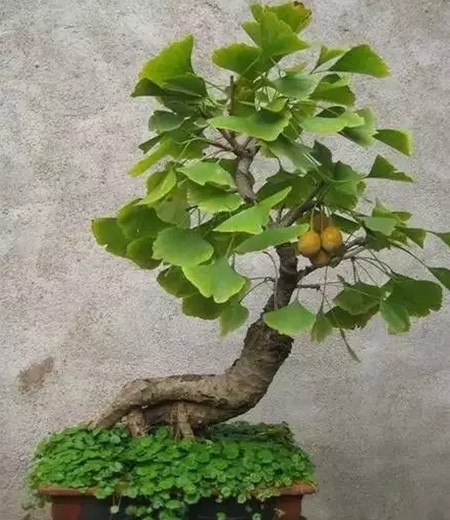
Detailed Explanation of the Key Techniques for Making Fruiting Ginkgo Bonsai
Fruiting ginkgo bonsai can be divided into: A Single Branch Standing Out (single branch), Flying Wing to Wing (two branches), and Three Legs of a Tripod (three branches). As the saying goes: "If you have a son but no grandson, do not plant a ginkgo orchard," meaning that only when the grandfather plants the ginkgo tree can the grandson benefit, which shows how slowly the ginkgo tree grows and how late it bears fruit. Generally, for a ginkgo bonsai to take shape and bear fruit, it takes even longer and later
条件筛选