-
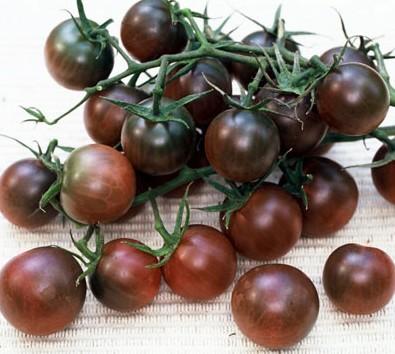
Black vegetables have high nutritional value, making them the nutrition experts among vegetables.
Spring Festival is almost here. Have you finished your holiday menu? Have you considered whether your choices are nutritionally balanced and healthy enough? Today...
-

Detailed Guide to the Technical Method for Making Maltose from Potato Residue
Potato residue is the by-product left after starch extraction. Using this residue to make maltose turns waste into treasure. 1. Making malt: Soak barley in clean water for 1-2 hours, keeping the water temperature at 20-25°C. Scoop out the barley and place it indoors at 25°C to germinate, sprinkling water twice a day. After 4 days, once the malt has grown to more than 2 cm, it is ready. 2. Ingredients: Grind the potato residue fine, sift it, add 25% rice husks, sprinkle 8% clean water onto the prepared ingredients, mix well and let stand for 1 hour. Steam the mixture in a steamer in 3 batches,
-
Method for Making River Crab Feed from Potatoes
Using potatoes to make river crab feed has the advantages of widely available raw materials, low cost, good palatability and rich nutrition, and river crabs like to eat it and grow readily. At the same time, this feed-making method is relatively simple; it can be produced on a large scale with machinery or made by hand, so potato crab feed has broad application value. The key processing and feeding techniques are introduced below for the reference of aquaculture farmers. Process flow: material selection -> cleaning -> cutting into pieces -> steaming -> crushing -> ingredient mixing -> shaping -> drying. Processing techniques: (1) Material selection. Choose potatoes free of pests and diseases, without sprouting,
-
Detailed Instructions for Making Potato Sausage
Ingredients formula: fresh potatoes 70%, scallion and ginger seasonings 5% each, soybean flour 5%, vegetable oil and animal fat 2.5% each, starch coagulant 14.5%, food preservative 0.5%. Key steps: Wash and peel the potatoes, cut into granules, place in a steamer and cook for about 10 minutes, then add the coagulant. Then mix the animal fat, vegetable oil, soybean flour, food preservative, etc. into the cooked potato granules. After stirring evenly, stuff the mixture into pre-prepared sausage casings, then heat to sterilize, and air-dry until half-dry. It can also
-
Detailed Explanation of the Method for Making Regular Potato Starch Noodles
1. Process flow. Raw material selection → starch processing → making starch paste and dough → extruding noodles through a perforated ladle → cooling and drying the noodles as finished product. 2. Key operating points. (1) Raw material selection: choose potatoes free from insect damage and rot, and wash off the sand, soil and dirt on the surface. (2) Starch processing: crush and filter the washed potatoes, add an appropriate amount of sour slurry and stir to precipitate (the sour slurry water is made by separately storing the floating water from the first precipitation); the amount of sour slurry used depends on the air temperature. If the temperature is around 10°C, the pH value should be adjusted to 5.6-6.0; if the temperature is above 20°C, the pH value should be adjusted to
-
Making Potato Starch Noodles
1. Process flow. Raw material selection → starch processing → making the starch paste and kneading the dough → extruding the noodles through a perforated ladle → cooling and drying the noodles as the finished product. 2. Key operating points: (1) Raw material selection: choose potatoes free of insect damage and rot, and wash off the mud, sand and dirt on the skin. (2) Starch processing: crush and filter the washed potatoes, add an appropriate amount of sour slurry and stir to let it settle (the sour slurry water is made by separately storing the clear water from the first settling). The amount of sour slurry used depends on the air temperature. If the temperature is around 10°C
-
Making Potato Jam
Frozen-storage spinach can be divided into two types: ordinary frozen storage and ventilated cool storage. (1) Ordinary frozen storage method: choose a shaded, dry place, set up a shade barrier along an east-west orientation, and dig one or several trenches within the shaded area on the north side of the barrier. Their specifications vary with the regional climate conditions. In the Beijing area, the trench depth is mostly about 15 cm, and the width depends on the size of the spinach bundles and the quantity placed, generally about 30 cm. Then spread a layer of fine sand on the bottom of the trench. Wait until the temperature steadily drops below 0°C, then bundle the spinach into bunches and place them in, immediately covering with a layer of fine sand. As the weather gets colder, cover with soil in stages; the thickness and number of soil coverings depend on the regional climate conditions.
-
Rice cultivation in cold regions requires water-saving irrigation, selection of improved varieties, making the most of accumulated temperature, and growing strong seedlings
Heilongjiang Province is located in a high-cold region, where heat and water resources are relatively scarce, annual atmospheric precipitation is extremely unevenly distributed, spring is windy with little rain, and drought is quite severe. The author discusses how to achieve water-saving, high-quality, and high-yield rice cultivation in cold regions. 1. Selecting excellent varieties is the prerequisite for ensuring high-quality and high-yield rice. The varieties that rice farmers plant directly affect the quality and yield of rice. Therefore, in production, varieties with a suitable maturity period, excellent quality, stable and high yield, and strong stress resistance should be selected. First, select varieties that have passed national approval, been named, and promoted, which can ensure relatively stable rice traits, steady and rising yields, and safe and reliable use; second, introduce varieties with suitable maturity periods according to different accumulated temperature zones, and never introduce varieties across zones; third, pay attention to seed quality, and select first-grade improved seeds with a purity above 98%, a germination rate above 90%, and a moisture content no higher than 14% for production use; fourth, purchase seeds from nationally certified seed companies, research institutes, and agricultural colleges, and eliminate blind planting; fifth, in actual planting, unify varieties as much as possible, plant in contiguous fields, form scale, and achieve industrialized planting.
-
Production Process and Detailed Steps for Making Soy-Sauce Garlic
Garlic is the bulb of plants in the genus Allium of the lily family (commonly known as "garlic head"). Every 100 grams of fresh garlic contains 4.4 grams of protein, 0.2 grams of fat, 23 grams of carbohydrates, 0.2 grams of crude fiber, 1.3 grams of ash, and 70 grams of water, and also contains calcium, iron, phosphorus, thiamine, riboflavin, nicotinic acid, ascorbic acid, and selenium, among others. In addition, garlic also contains substances that kill bacteria, treat disease, promote health, and prevent cancer, and has relatively high physiological and medicinal value. When garlic is used to prevent and treat disease, it is mostly effective only when eaten raw, but after a brief dormancy garlic does not store well,
-
Processing Flow and Operating Methods for Making Vinegar from Sweet Potato
1. Process flow: raw material treatment -- adding bran koji and yeast culture -- saccharification and fermentation -- acetic acid fermentation -- adding salt and post-ripening -- leaching vinegar -- aging -- sterilization and blending -- finished product. 2. Key points of process operation: ① Ingredients: 100 kg dried sweet potato, 50 kg coarse rice husk (rice chaff), 40 kg yeast culture, 175 kg fine rice husk (unified rice husk), 50 kg bran koji, 40 kg acetic acid bacteria seed, 3.75-7.5 kg salt. ② Raw material treatment: grind the dried sweet potato into powder. When mixing with the unified rice husk, while mixing
条件筛选