A detailed guide to making big-leaf boxwood (Euonymus japonicus) bonsai, easy enough for beginners to learn
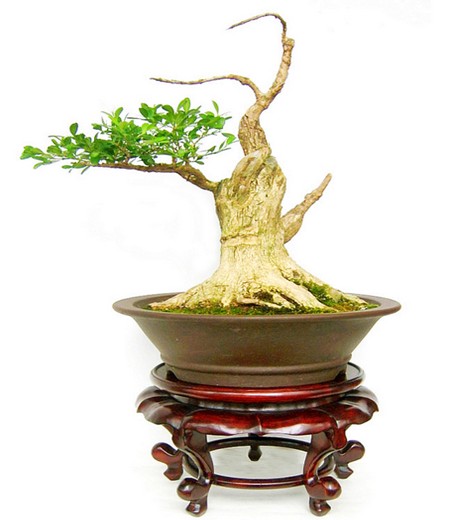
Boxwood bonsai has a graceful tree posture, with leaves as small as broad beans, thick and glossy, evergreen all year round, and can be enjoyed throughout the year. In the Yang-style boxwood bonsai, the branches and leaves are pruned and trained into “cloud-like pads”, flat and thin as if shaved, then dotted with rocks, elegant and beautiful as a painting. In spring, when the tender leaves of boxwood first emerge, the whole tree is tender green and very pleasing to the eye. An ancient poem praising boxwood: a boxwood tree just a foot tall, with thousands of layered, swaying branches, its deep leaves like a garden of jade, crouching like an ancient curled dragon. It depicts the elegant bearing of boxwood, making it an excellent material for growing bonsai at home.
1. Obtaining material
Seedlings propagated by sowing or cuttings can be transplanted into pots for training after several years of growing. You can also select old stumps from the mountains and wilds; after digging them up, trim the overly long roots and dense branches, first grow the stock in the open ground for 1-2 years, and then pot them up for training.
2. Potting
① Choosing a pot: Boxwood is glossy green all year round, so it is best to use a purple clay ceramic pot, with the pot color preferably purple or light yellow. The pot shape is determined by the styling form. For the cliff-hanging style, a deep cylindrical pot is suitable; for the slanting style or curved-trunk style, an oval or rectangular pot is used.
② Soil: For bonsai soil, use aged garden soil or leaf mold mixed with an appropriate amount of rice husk ash as the growing medium; it should be fertile and loose, and loam with good aeration and drainage is best. When potting an old stump, it is best to keep some of its original soil.
③ Planting: Boxwood is relatively cold-tolerant, so planting can be done before spring budding. When planting, trim overly long and dense roots, and never let the roots curl up in the pot. Newly planted boxwood should be placed in a semi-shaded spot.
3. Styling
Boxwood has strong sprouting ability. Before styling, you can cut back the trunk to encourage new shoots to sprout around or below the cut surface, then according to the requirements of the artistic design, train and wire the branches and trunk; in spring, wiring with palm fiber is best. You can also do coarse wiring and fine pruning to create cloud-like pads or bun shapes, or train them into a natural tree form. The trunk should follow its natural tendency, forming a slanting style or a prostrate style. If you dot a boxwood stump with elegant stones, it becomes a “boxwood bow”. Boxwood is very tolerant of pruning and has strong sprouting ability, so to maintain a beautiful tree shape it must be regularly trained and reshaped.
A major reason people grow big-leaf boxwood is that they appreciate its ornamental value, so if you turn them into bonsai, their value will increase many times over. How can you shape them into high-value bonsai? It mainly includes the following points.
1. Start from the young
The so-called “young” refers to the seedlings of big-leaf boxwood. “Start from the young” is a reminder to choose the most valuable seedlings to plant and cultivate. The most valuable seedlings mentioned here do not specifically mean only those plants that grow neatly and conventionally; they also include those plants that grow with individuality and distinctive features.
After growing tired of big-leaf boxwoods that look normal and orderly, many people's aesthetic views have now quietly changed. Many no longer like the old square and upright bonsai, but have turned their attention to those oddly shaped plants. This tells growers that when buying seedlings, they should not forget to choose some special plants.
2. Shaping the plant
When a girl goes to do her hair, it needs to be styled, and the same principle applies when making bonsai. Shaping is to make the plant grow according to the grower's wishes, so that the cultivated big-leaf boxwood can maintain a beautiful tree shape. Shaping the seedlings not only helps maintain the tree shape, but also helps horticulturists prune them, thereby creating exquisite bonsai.
3. Matching the pot
In making bonsai, besides spending time and energy on the plant, you must also pay attention to the pot chosen for the bonsai. We all know that whether a bonsai is truly attractive depends not only on the charm of the plant itself, but also on the pot chosen for it as an important influencing factor. Whether the color and shape of the pot in a bonsai match the plant will directly affect the visual effect of the bonsai. Therefore, when making bonsai and choosing pots, people must not be careless, and even less should they be arbitrary.
Making big-leaf boxwood bonsai is a very particular process: you must choose a good plant, and also have a highly skilled horticulturist prune it; in addition, you must select the most suitable and best-matching pot to pair with it. Only in this way can you truly create the most attractive bonsai.