-
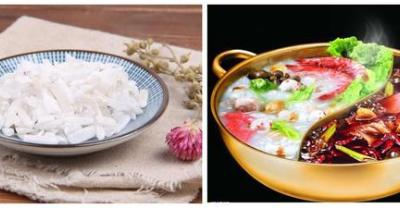
What are the commonly used Chinese medicinal herbs for making soup?
Soup-making herbs are Chinese medicinal herbs used as soup ingredients. By pairing herbs with food, the medicinal properties of the herbs are used to enhance the soup's nutritional value and edible benefits. Different...
-

How to make watermelon rind taste good? The method for making licorice watermelon rind strips
Watermelon rind is rich in carbohydrates, minerals and vitamins, and has effects such as clearing heat and detoxifying, and promoting urination. The following introduces the technique for making licorice watermelon rind strips: Cut into strips. Thoroughly wash fresh watermelon rind with clean water, drain off the water, remove the green outer skin and the red flesh, then use a stainless steel knife to cut the watermelon rind into strips 0.2 cm wide and 6 cm long. Salting. First mix sodium benzoate and table salt, in amounts of 0.1% and 10% of the weight of the watermelon rind strips respectively. Then, in a container, salt in the order of one layer of watermelon rind and one layer of mixed salt, with a somewhat larger amount of mixed salt on the topmost layer. The salting time is generally 24 to 48 hours. Rinsing. Put the salted watermelon rind strips into a container holding clean water, changing the water once every 1 hour, until the salt content in the watermelon rind strips drops to 1% (the salt content is tested with a handheld salinity refractometer). Sugar processing. Put the rinsed watermelon rind strips into a bamboo basket and drain off the water. Then, in a container, process with sugar in the order of one layer of watermelon rind strips and one layer of sucrose. The amount of sucrose used is 20% of the fresh watermelon rind strips, and the sugar processing time is 24 to 48 hours. Baking. Take out the sugar-processed watermelon rind, drain off the sugar liquid thoroughly, arrange it evenly on a baking tray, send it into the drying room, and bake at 65 to 70 degrees C until the moisture content of the watermelon rind is 25%. Auxiliary ingredient formula. Calculated per 100 kg of fresh watermelon rind strips, prepare the auxiliary ingredients: sodium saccharin 0.05 kg, monosodium glutamate 0.2 kg, citric acid 0.05 kg, table salt 0.5 kg, potassium sorbate 0.01 kg. Soaking the auxiliary ingredients. Place the dried watermelon rind strips in a container. Dissolve the auxiliary ingredients according to the formula in licorice water, pour into the container, and mix the watermelon rind strips thoroughly from top to bottom. On the second day, mix from top to bottom another 1 to 2 times, leave for 2 days, take out the watermelon rind strips and bake them. The licorice aqueous solution is made by boiling 4 kg of licorice and 25 kg of water per 100 kg of fresh watermelon rind strips, and filtering it. Baking. Evenly arrange the watermelon rind strips that have been soaked with auxiliary ingredients on a baking tray, and send them into the drying room for baking. It is suitable to control the drying room temperature at 60 to 65 degrees C. During baking, turn them several times, and when the moisture content of the product drops to about 25%, the baking is finished. Mixing in licorice powder. Cool the watermelon rind strips at room temperature. Mix licorice powder (used in an amount of 0.1% of the fresh watermelon rind strips) into the watermelon strips, and mix evenly to obtain the finished product.
-
Detailed Explanation of the Making Methods and Steps of Lingzhi (Reishi) Bonsai
1. Selection of materials: Different types of pots should be chosen according to the species, color, form, and size of the lingzhi (reishi). Generally, dark-colored ceramic pots are better. If it is red lingzhi or Matsutake lingzhi (Ganoderma tsugae), brown or purple pots are ideal, as they make the color tone harmonious, simple and elegant. If it is black zizhi (Ganoderma sinense) or black lingzhi, white porcelain pots should be chosen, using strong contrast to highlight the features of the lingzhi's form. Pots with the same or similar color tone as the lingzhi should not be chosen, to avoid a monotonous color tone. For lingzhi materials, wild-collected or artificially cultivated ones can be used. Artificially
-
Honeysuckle can prevent and treat poultry and livestock diseases, making it a valuable medicine for farming
Honeysuckle, also known as silver flower or Japanese honeysuckle flower, is the flower bud of Japanese honeysuckle (Lonicera japonica), a perennial semi-evergreen climbing vine of the Caprifoliaceae family. Honeysuckle is distributed throughout China, especially common in the south, and is now also cultivated artificially, with significant economic benefits, making it a path to wealth. It is mainly produced in Guangxi, Guangdong and Henan provinces and autonomous regions. From March to July each year, flower buds that are about to open are picked in the early morning and dried in the sun for later use. Every part of the honeysuckle is a treasure; it is a rare traditional Chinese medicine. At the same time, it is also a good medicine for preventing and treating poultry and livestock diseases. 1. Chicken diseases
-
A Detailed Guide to Processing and Making Licorice Watermelon Seeds
Ingredients: 500 g watermelon seeds, 10 g peanut oil, 25 g refined salt, 3 g licorice, 50 g quicklime. Method: 1. Pour the quicklime into a large bowl, add 500 ml of clean water, stir well to make lime water, then add the watermelon seeds and soak for 4-5 hours, then remove them, rinse thoroughly with clean water, and remove the mucous membrane on the shells. 2. Put the refined salt and licorice into a pot, pour in 150 ml of clean water, place over high heat and boil for 10-15 minutes, filter out the licorice to make licorice salt brine
-
Detailed Explanation of the Methods and Techniques for Making a Goji Berry Bonsai
Goji berry (Lycium chinense) is a semi-evergreen shrub with arched, vigorous branches; its roots are like swimming snakes, gnarled and full of grace; in autumn and winter, it is heavy with red berries, earning it the name "snow-pressed coral," making it an excellent material for bonsai. The specific method for making a goji berry bonsai is as follows: Digging up the stump In early April, when the goji berry just begins to sprout, select a stump with a good shape, first shorten the long branches, cut off the messy branches, dig carefully, extract the complete roots, and immediately place them in a plastic bag, tie the opening tightly to prevent moisture evaporation. Soil and pot Select a flower pot with a diameter and height of 20 cm
-
Processing method for making a beverage from goji leaves
Formula (calculated for 1 ton of product): goji leaf juice 400 kg, gelatin 2 kg, white granulated sugar 10 kg, citric acid 1.5 kg, CMC-Na 2 kg, ethyl maltol 0.02 kg, diluted with water to 1 ton. Key operating points. Selection and washing of raw materials: select tender leaves and tender tips of goji (Lycium barbarum), requiring that the tissue is not shriveled and there is no insect damage; rinse away sand and impurities on the surface of the goji leaves with water, and drain off the water. Blanching and color protection: place the raw materials in a 90°C water bath and hold for 2 minutes, then remove. Crushing and extraction
-
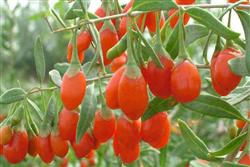
Step-by-step guide to making goji berry tea
To increase the commercial value of goji berries, the following aspects should be noted during harvesting and drying: 1. Pay attention to the harvesting period of goji berries. When the fruit is bright red in color, smooth and glossy on the surface, the fruit body becomes soft and elastic, the flesh thickens, and the fruit separates easily from the stem, it is ready to be harvested. The harvest of goji berries generally must be done at the awn...
条件筛选