-
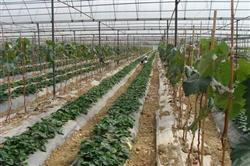
Intercropping strawberries has high economic returns and is a planting model worth trying
1. Intercropping in greenhouse strawberry fields: Fengxiang or Mingbao strawberries are planted by early September. Before the cold wave arrives from late October to early November, greenhouse film is covered. In winter, straw curtains are added outside, and plastic film plus small tunnels are used inside. Other management is the same as for greenhouse strawberries. On November 20, tomato and bell pepper seedlings are raised, and all seedlings are sold before April 20 of the following year. On March 5...
-
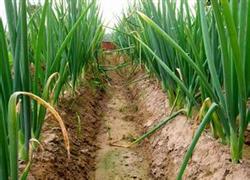
Key Winter Management Techniques for Intercropping Welsh Onions in Wheat Fields
In early autumn the weather turns cool and the onions begin vigorous growth, but the temperature is still relatively high and the plants grow slowly. Their water demand is not high, so they should be watered sparingly. Watering should be done in the morning and evening; never water at noon, as this suddenly lowers the soil temperature and affects root growth. In late August, when the average temperature in North China is below 24°C, Welsh onions...
-
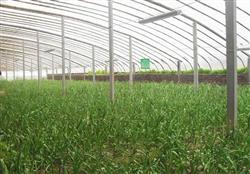
Cultivation Techniques for Intercropping Corn with Cucumber Followed by Garlic
Garlic is an essential seasoning in daily life; it is indispensable for cooking and stir-frying. In recent years, people have discovered many pharmacological effects of garlic, finding that it can prevent and treat a variety of diseases. American scientists have listed garlic as a basic health food. At present, garlic has become a worldwide vegetable, especially in...
-
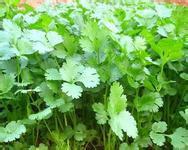
Detailed Explanation of the Intercropping Cultivation Technique for Chili Pepper, Loofah and Cilantro
By intercropping loofah and cilantro with chili pepper in greenhouses, greenhouse space can be used rationally, with a per-mu yield of 3000 kg of chili pepper, 1500-1800 kg of loofah and 550-600 kg of cilantro, giving considerable economic benefits. The cultivation technique is introduced as follows: 1. Variety selection. For chili pepper, choose the early-maturing superior varieties Wan Jiao No. 4 or Su Jiao No. 5...
-
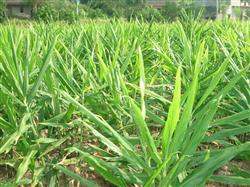
Key Techniques for High-Yield Cultivation of Ginger Intercropped with Watermelon
When planting ginger, apply heavy base fertilizer and increase phosphorus and potassium fertilizer; avoid applying too much nitrogen fertilizer. Apply sufficient base fertilizer, mainly organic fertilizer, with a combination of slow-release and quick-release chemical fertilizers. Base fertilizer generally accounts for 40% of the total fertilizer application. Before sowing, apply 15 kg of imported compound fertilizer plus 50 kg of calcium magnesium phosphate fertilizer per mu as deep-layer base fertilizer. After sowing, use high-quality farmyard manure...
-
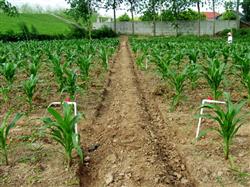
Detailed Explanation of Ginger and Corn Intercropping Cultivation Techniques
Ginger is a shade-tolerant crop, and high temperatures and strong light are unfavorable for its growth. Intercropping tall-stalk crops in a ginger field can make full use of the three-dimensional space of tall and short crops, provide shade for ginger, improve light energy utilization, and also improve land utilization, increasing yield per unit area. It does not affect the yield and quality of ginger, and can also...
-
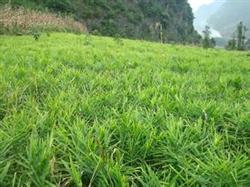
Intercropping and Relay Cropping Technique for Lettuce, Ginger, Watermelon and Bok Choy
1. Topdressing: generally 2 to 3 times. The first is in early to mid-June, applying 1000 kg of barnyard manure plus 15 kg of urea per mu between the rows, covered with a thin layer of soil. The second is in early to mid-July after the mother ginger is dug, applying 150 kg of decomposed rapeseed cake or 30 kg of compound fertilizer per mu; the third is in early September after the frame is removed, applying another dose of human excrement and urine to prevent nutrient deficiency...
-
Detailed Explanation of Asparagus Intercropping and Relay Cropping Vegetable Cultivation Techniques
Asparagus brown spot disease is an important disease affecting asparagus quality and yield, and it occurs commonly in various regions. 1. Pathogen: Asparagus brown spot disease is caused by infection by fungi of the genus Cercospora in the Deuteromycotina. 2. Symptom identification: When plants are affected, stems, lateral branches, and cladodes all suffer damage; diseased leaves turn yellow, dry up, and fall...
-
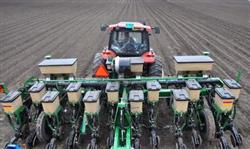
Detailed Explanation of Key Technical Points for Relay-Intercropping Corn Sowing
Improving sowing quality: To ensure full stands and strong seedlings of corn, generally apply 5 kg of diammonium phosphate and 1 kg of zinc sulfate per mu as seed fertilizer. Before sowing, spread out heaps of wheat straw evenly so as not to affect sowing and seedling emergence. When sowing, pay attention to the operating speed of the seeder to prevent missed sowing or sowing seeds on wheat stubble. Try to achieve "rows...
-
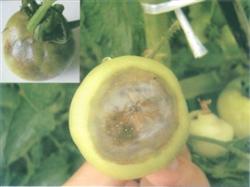
High-Efficiency Intercropping Cultivation Techniques for Spring Cauliflower and Pumpkin
I. Symptoms: 1. Seedlings: infected plants develop dark green water-soaked lesions that spread from the leaves to the main stem, causing the petioles and stems to become thin, dark brown, rotten and collapsed, with the whole plant wilting; when humidity is high, a white mold layer forms on the diseased parts. When the base of the young stem is affected, water-soaked constriction forms, and the seedling wilts or falls over. 2...
条件筛选