-

Intercropping Peas After Tobacco in Yongde, Yunnan Helps Farmers Increase Income
To accelerate the adjustment of the planting structure, improve the utilization rate of small spring land, and increase farmers' income, Wumulong Township has fully tapped the land resources after tobacco harvest, carried out scientific planning and rational layout, taken increasing farmers' income as the starting point, and actively explored the scientific planting of peas after tobacco. At present, the whole
-
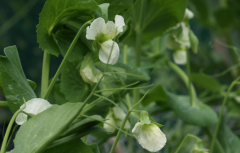
Garden Pea Planting Plan with Intercropping, Succession Planting, and Pruning Methods
Garden peas, including shelling peas, snow peas, and snap peas, have two characteristics that make them strong candidates for a super-productive planting plan. First, peas vine upward, and their vertical habit makes it possible to grow low-growing crops at their base. Second
-
Key Technical Points and Cultivation Methods of Three-Dimensional Vegetable Planting Explained in Detail
Abstract Three-dimensional intercropping of chili pepper with amaranth: In early to mid-April, broadcast amaranth seeds, then plant chili pepper seedlings. Three-dimensional intercropping of tomato with winter melon: Plant tomatoes in mid-to-late March, then intercrop winter melon in early April, with 1 row intercropped on one side of each bed. Sugarcane three-dimensional
-
Detailed Explanation of the Intercropping Technique of Angelica dahurica and Vegetables
Angelica dahurica is a plant of the Apiaceae family, and its medicinal part is the root. It is one of China's 40 major commonly used traditional Chinese medicines, with functions such as dispelling wind and removing dampness, draining pus and promoting tissue regeneration, and activating blood circulation to relieve pain. Besides being used in medicinal prescriptions, Angelica dahurica is also a main raw material for Chinese patent medicines such as Shengui Zaizao Pills, Shangqing Pills, Mugua Pills, and Niuhuang Shangqing Pills.
-
How to cultivate intercropped Bupleurum for high yield?
Bupleurum (Bupleurum chinense), also known as Di Xun, Zi Hu, Qie Cao, etc., is a perennial herbaceous plant with a plant height of 80-100 cm, compound umbel inflorescence, yellow plump flowers, roots with irregular branching, varying in thickness, the main root often not obvious, bark black or white. In the early stage of plant growth, the above-ground stems
-
Detailed Explanation of New Green Pest Control Technologies for Tea Cultivation
1. Intercropping with Other Tree Species On the remaining slopes around the edges of the tea garden, appropriately plant some tree species such as ginkgo and persimmon (planting giant eucalyptus is strictly prohibited) to improve the microclimate of the tea garden, increase biodiversity, and reduce the occurrence and damage of tea tree pests and diseases. Plant about 15 trees per mu, do not
-
Key Points of High-Yield Cultivation Techniques for Intercropping and Relay Cropping of Medicinal Tree Peony
Tree peony is a precious Chinese medicinal herb with a long growth cycle, high yield and stable and considerable economic benefits. In recent years, market demand has been increasing. In order to improve economic benefits, the Bozhou Municipal Institute of Rare Medicinal Herb Cultivation has, through years of trial planting, successfully developed a new technique for
-
Sharing Experience in Rice-Black Fungus (Wood Ear Mushroom) Intercropping
Intercropping black fungus during the rice growing season: the microclimate of the paddy field can better meet the needs of fruiting body growth conditions, thus increasing black fungus yield by 1-2 times, with a yield of 250 kg per mu. 1. Fruiting temperature and humidity: black fungus is a mesophilic edible fungus, and its mycelium will
-
Key Cultivation Techniques for Intercropping Cassia obtusifolia with Arisaema
The medicinal herb Cassia obtusifolia is the dried mature seed of Cassia obtusifolia or Cassia tora of the Fabaceae family. It has the effects of moistening the intestines and relieving constipation, lowering blood lipids and improving eyesight, and treating constipation, hyperlipidemia and hypertension. The demand for this medicinal herb is large and its price is relatively stable. Arisaema, also known as Arisaema heterophyllum, is a perennial herbaceous plant
-
Cultivation Methods and Technical Points for Intercropping Onions with Corn
This model is suitable for promotion and planting in river-irrigated areas with good water and heat conditions. The usual yields are 7500 kg/hectare for corn and 57000 kg/hectare for onions, with an output value of 38000 yuan/hectare and a net income of 32250 yuan/hectare. 1. Planting arrangement Onions are sown in drills in mid-to-late September at a row spacing of 20 cm
条件筛选