Cultivation Techniques for Intercropping Corn with Cucumber Followed by Garlic
Garlic is an essential seasoning in daily life; it is indispensable for cooking and stir-frying. In recent years, people have discovered many pharmacological effects of garlic, finding that it can prevent and treat a variety of diseases. American scientists have listed garlic as a basic health food. At present, garlic has become a worldwide vegetable, especially in...
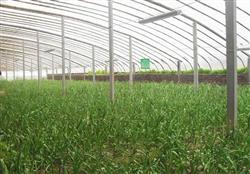 Spring corn intercropped with autumn cucumber between the rows; the corn is harvested at the green ear stage for early marketing, the corn stalks are used as trellises for the cucumber and for shade during the seedling stage, and garlic is planted after the cucumber harvest. This planting pattern yields relatively good economic benefits.
Crop rotation arrangement: Spring corn is sown in early May, planted in wide and narrow rows, with a wide row spacing of 90 cm, a narrow row spacing of 25 cm, and a plant spacing of 25 cm. Varieties such as Nongda 108 are selected. Before sowing, apply 20 kg of diammonium phosphate, 25 kg of urea, 15 kg of potassium chloride, and an appropriate amount of organic fertilizer per mu. In mid-July, sow 2 rows of cucumber in the wide rows of corn, with a row spacing of 40 cm and a distance of 25 cm between cucumber and corn; during the growing period, the corn stalks serve as trellises. Cucumber varieties such as Jinza No. 2 and Jinchun No. 4 are selected. In late September, after the cucumber harvest, remove all cucumber and corn stalks, plow the soil, and then sow garlic. Before sowing, apply 2000-3000 kg of decomposed human and animal manure and 30 kg of superphosphate per mu, plant in wide and narrow rows, with a wide row spacing of 30 cm and a narrow row spacing of 17 cm. Six rows form one planting strip, cultivated with plastic film mulching, and harvested in late May of the following year.
Field management: (1) For corn, apply a one-time topdressing when the 10th leaf unfolds, deeply applied 15 cm to the side of the seedlings. (2) For cucumber topdressing, follow the principle of frequent but light application, appropriately applying quick-acting nitrogen and phosphorus fertilizers early; after fruit set, increase the frequency and amount of topdressing, generally applying once after picking 1-2 cucumbers. Pay attention to preventing and controlling Phytophthora blight and downy mildew. (3) For garlic, when the seedlings are 3-4 cm tall, apply diluted human feces and urine or biogas slurry to promote seedling growth, applying once every 5-7 days for 3 consecutive times. When the seedlings are 20 cm tall, apply urea plus potassium fertilizer diluted with water between the rows. Before Minor Snow, water to seal the soil before freezing. After spring begins, pay attention to preventing and controlling diseases and pests such as Phytophthora blight, viral diseases, and root maggots.