Detailed Explanation of the Intercropping Cultivation Technique for Chili Pepper, Loofah and Cilantro
By intercropping loofah and cilantro with chili pepper in greenhouses, greenhouse space can be used rationally, with a per-mu yield of 3000 kg of chili pepper, 1500-1800 kg of loofah and 550-600 kg of cilantro, giving considerable economic benefits. The cultivation technique is introduced as follows: 1. Variety selection. For chili pepper, choose the early-maturing superior varieties Wan Jiao No. 4 or Su Jiao No. 5...
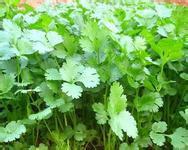
By intercropping loofah and cilantro with chili pepper in greenhouses, greenhouse space can be used rationally, with a per-mu yield of 3000 kg of chili pepper, 1500-1800 kg of loofah and 550-600 kg of cilantro, giving considerable economic benefits. The cultivation technique is introduced as follows:
1. Variety selection
For chili pepper, choose the early-maturing superior varieties Wan Jiao No. 4 or Su Jiao No. 5; for loofah, choose Wu Ye Xiang loofah; for cilantro, choose large-leaf cilantro.
2. Raising strong seedlings
Chili pepper is raised in cold seedbeds in greenhouses from late October to early-to-mid November, and loofah is raised in nutrient pots in early-to-mid March.
Disinfect chili pepper seeds with 0.1% potassium permanganate solution at 55°C for 10 minutes, wash them clean, soak them in 25°C warm water for 3-4 hours, drain off the water, and place them at 28°C with moisture retained to promote germination. When 70% of the seeds have sprouted white, they can be sown in the seedbed.
Soak loofah seeds in warm water for 3 hours, then wrap them in gauze and place them at 30°C to promote germination; once the seeds have cracked open, they can be sown in nutrient pots.
Before sowing cilantro, rub apart the seed balls, soak the seeds in clean water for 6-8 hours, and hang the seeds above the water surface in a well to promote germination.
3. Seedbed management
When chili pepper seedlings have 2 true leaves and 1 heart leaf, transplant them into 8 cm x 10 cm nutrient pots. During overwintering, use greenhouses with small arched tunnels plus straw curtain covering to prevent cold and freezing, control watering in winter, and avoid excessive humidity in the seedbed. Control the daytime temperature at 20-25°C and the nighttime temperature above 15°C. On sunny days, ventilate in time. After the Beginning of Spring, the ground temperature gradually rises, so appropriately apply dilute water manure. A 0.2% potassium dihydrogen phosphate solution can be sprayed to promote seedling growth, and carbendazim, thiophanate-methyl and chlorothalonil can be sprayed appropriately to prevent diseases. When the seedling age is 100-120 days, the leaves are dark green, and most have formed flower buds, they can be planted out.
Before loofah emergence, control the daytime temperature at 25-30°C and the nighttime temperature at 18-20°C; after emergence, ventilate in time to lower the temperature. When the seedling age is 35-40 days and each plant has 3-5 true leaves, they can be planted out.
After sowing cilantro, cover the soil surface with shade netting, keep spraying water morning and evening during high-temperature and drought weather, and keep the soil moist to promote emergence.
4. Rational intercropping
Plant chili pepper in the greenhouse on a sunny morning in early March, at 4500 plants per mu, with a plant-row spacing of 30 cm x 45 cm. 7-10 days before planting, apply 4000-5000 kg of decomposed farmyard manure, 50 kg of cake fertilizer and 25 kg of ternary compound fertilizer per mu. After planting, close the greenhouse for 5-7 days to retain heat and moisture and promote seedling recovery.
In late April, interplant loofah between the chili pepper rows and about 20 cm inside the lower edge of the greenhouse frame, planting 2 rows in each greenhouse, at 220-250 plants per mu.
After the chili pepper vines are pulled up in late July, prepare the land and apply fertilizer in time, applying 20 kg of compound fertilizer and 2000 kg of decomposed farmyard manure per mu, and sow cilantro promptly under the loofah trellis.
5. Timely field management
According to the growth progress of chili pepper, rationally regulate the greenhouse temperature and skillfully apply fertilizer and water. Before fruit set, ventilate in time on sunny days and cover appropriately at night to keep warm and prevent frost damage; during the flowering and fruiting stage, prevent high temperatures from damaging the seedlings on sunny days, controlling the daytime greenhouse temperature at 25-28°C and the nighttime temperature at 15-18°C. According to the growth condition, apply 1500-2000 kg of dilute water manure plus 7.5 kg of urea per mu, for a total of 2-3 applications. Combined with pest and disease control, spray 0.2% potassium dihydrogen phosphate or Tianyuan liquid fertilizer 2-3 times as a foliar feed. Remove the small tunnels in late April and remove the large greenhouse film in late May. After June, pay attention to clearing ditches and managing drainage to drain waterlogging and reduce waterlogging damage.
At the early stage of loofah vine extension, first insert short bamboo poles beside the greenhouse frame. After the greenhouse film is removed in late May, guide the vines, arrange the vines and tie the vines in time so that they climb up the greenhouse frame along the bamboo poles. Stretch ropes or tie bamboo poles between the greenhouse frames to facilitate vine guiding. At this time, appropriately apply dilute water manure to promote vine growth. In mid-June, loofah enters the flowering and fruiting stage, so shallow intertillage and loosening of the soil should be done moderately, the vines should be arranged in time, and the lower side vines should be removed. During the full fruiting stage, frequently remove old leaves and weak vines, frequently apply fertilizer and water, and frequently harvest the gourds. In mid-to-late August, after the cilantro has emerged uniformly, gradually remove the vines to increase light under the trellis and promote cilantro growth.
After cilantro emerges, remove the covering in time, sprinkle water morning and evening during dry weather, keep the soil moist, and apply decomposed dilute water manure once every 5-7 days to promote seedling growth. When the plant height is 10-12 cm, combine with watering, apply 7.5 kg of urea per mu, and spray a 20 mg/kg "920" solution to promote rapid growth of cilantro. When the plant height is above 20 cm, it can be harvested in batches for market.
In early-to-mid October, the stubble can be cleared and celery or green vegetables can be planted.
6. Pest and disease control
A 500-fold solution of 64% oxadixyl-mancozeb wettable powder can be used to control Phytophthora blight, and a 600-800-fold solution of 70% thiophanate-methyl wettable powder or an 800-fold solution of 80% anthracnose-fumei wettable powder can be used to control anthracnose. A 150-fold solution of 83 Zeng Kang Ji or a 500-800-fold solution of 20% Virus A can be used to control viral diseases. In the greenhouse, aphid-killing smoke agents can be used to control aphids; after the greenhouse film is removed, a 2000-3000-fold solution of 10% imidacloprid can be used to control aphids, and a 2000-2500-fold solution of 2.5% deltamethrin can be used to control melon borers.