Intercropping strawberries has high economic returns and is a planting model worth trying
1. Intercropping in greenhouse strawberry fields: Fengxiang or Mingbao strawberries are planted by early September. Before the cold wave arrives from late October to early November, greenhouse film is covered. In winter, straw curtains are added outside, and plastic film plus small tunnels are used inside. Other management is the same as for greenhouse strawberries. On November 20, tomato and bell pepper seedlings are raised, and all seedlings are sold before April 20 of the following year. On March 5...
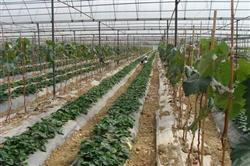
1. Intercropping in greenhouse strawberry fields
Fengxiang or Mingbao strawberries are planted by early September. Before the cold wave arrives from late October to early November, greenhouse film is covered. In winter, straw curtains are added outside, and plastic film plus small tunnels are used inside. Other management is the same as for greenhouse strawberries. On November 20, tomato and bell pepper seedlings are raised, and all seedlings are sold before April 20 of the following year. On March 5, cucumbers are intercropped, and harvest ends in mid-July. On April 5, loofah is intercropped, using the greenhouse as a trellis for the loofah, and loofah harvest ends in September. Small green vegetables are intercropped under the loofah trellis. Strawberries are planted in mid-September, and vegetables are intercropped. Vegetable harvest ends in November. The arrangement for intercropping the following year is then made.
2. Intercropping in open-field strawberry fields
Strawberries are transplanted in mid-October, and cucumbers, tomatoes, eggplants and bell peppers are intercropped. On April 23, loofah is intercropped, and harvest ends at the end of September. In October, strawberries are planted, and vegetables are intercropped or interplanted, with arrangements made for intercropping or interplanting the following year.
3. Intercropping in paddy fields
After the rice harvest, fertilizer is applied and the field is prepared immediately, and vegetables such as spinach and garland chrysanthemum are sown, followed by planting strawberries; or strawberries are transplanted first, and then small garden vegetables are interplanted (planted before the end of October), with management intensified. The vegetables are all sold before the Spring Festival, and then strawberry management is intensified. During the overwintering period, strawberries suffer less cold damage among the vegetables and grow vigorously, and intercropping does not affect strawberry growth. After the strawberries are picked in May, the strawberry plants are buried in the soil as base fertilizer, and rice is transplanted. After the rice harvest, strawberries continue to be grown, with vegetables intercropped.
Using strawberry plants as base fertilizer, the rice grows vigorously in the early stage, grows steadily in the middle stage, and has green stalks and yellow grains in the late stage, ripening fully to the end. Through large-scale comparative trials in 1993, 1994 and 1995, where strawberry plants were used as base fertilizer, 10-15 dan of high-quality pig manure and 5-6 jin of earing fertilizer (urea) could be applied less per mu, and the yield increased by more than 10% compared with applying pig manure. Strawberry-rice rotation and intercropping not only makes full use of part of the winter fallow fields and green manure stubble, improves economic returns and increases farmers' income, but also, when organic fertilizer and green manure are insufficient, finds an effective new way to build soil fertility, playing a positive role in stabilizing grain production.
4. Intercropping in strawberry seedling fields
After the rice harvest, fertilizer is applied and the field is prepared, spinach or garland chrysanthemum is sown, and then strawberries are planted (about 800 plants per mu); or strawberries are planted first and then small garden vegetables are grown (required to be planted in October). Field management and fertilizer-water management are intensified, and the vegetables are all harvested before the Spring Festival, after which management is the same as for field strawberries. After the strawberries are harvested in May, every 2 plants are thinned to leave 1 as a mother plant, and two seasons of small green vegetables are intercropped, with the small green vegetables all harvested in early August. For autumn tomatoes, seeds are broadcast in a seedling bed in early July or seedlings are raised in nutrient pots, and a shade frame is built. Management is intensified, and after the small green vegetables are harvested, the tomato seedlings are transplanted with fertile soil into the strawberry field at 1000 plants per mu. After the strawberry seedlings are sold in October, fertilizer is applied and the field is prepared, strawberries are planted, and vegetables are intercropped. Autumn tomato harvest ends in mid-November. Seedling fields can also be intercropped with other crops such as corn and sesame.
5. Intercropping in young orchards
Before the rows close in young orchards of grapes, citrus, green plums, peaches, etc., 4-6 rows of strawberries are interplanted between the rows, and interplanting is finished by the end of October. After that, management is the same as for field strawberries, and the fruit is harvested and sold in May.
In addition, intercropping strawberries in wheat fields has also been relatively successful, taking advantage of the strawberry's characteristics of trailing on the ground and tolerating shade and moisture.
To prevent the spread of diseases after continuous cropping of the soil, formalin should be used for soil disinfection. The method is to use 1 kg of formalin solution per mu; after plowing in summer, add water and splash it on, breaking up the soil while splashing, then cover with plastic film for 3 days to improve the sterilization effect of the chemical.
Because of continuous intercropping, soil fertility is lost considerably, so organic fertilizer should be applied. Additional phosphorus and potassium fertilizer should be applied to improve soil fertility. Intercropping in strawberry fields can provide shade for strawberry runners in summer and keep strawberries warm for overwintering in winter.