Key Techniques for High-Yield Cultivation of Ginger Intercropped with Watermelon
When planting ginger, apply heavy base fertilizer and increase phosphorus and potassium fertilizer; avoid applying too much nitrogen fertilizer. Apply sufficient base fertilizer, mainly organic fertilizer, with a combination of slow-release and quick-release chemical fertilizers. Base fertilizer generally accounts for 40% of the total fertilizer application. Before sowing, apply 15 kg of imported compound fertilizer plus 50 kg of calcium magnesium phosphate fertilizer per mu as deep-layer base fertilizer. After sowing, use high-quality farmyard manure...
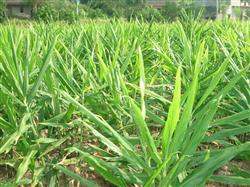 1. Economic benefits: Years of practice have proven that this model generally yields an output value of about 8,000 yuan per 667 sq m, of which ginger production is 3,200-4,500 kg, harvested and marketed in October at 1.60 yuan/kg, with an output value of 5,100-7,200 yuan; when marketed around the Spring Festival, the price is higher and the output value is greater. Watermelon production is 3,000-4,000 kg, marketed in mid-July at 0.60 yuan/kg, with an output value of 1,800-2,400 yuan.
2. Planting layout: The sowing strip is 2.3 m wide, with 4 rows of ginger planted, row spacing 50 cm, occupying a width of 2 m, leaving a 30 cm gap, which together with the ginger beds forms ridges for planting plastic-mulched watermelon.
3. Cultivation key points
1. Land preparation and balanced fertilization. Choose fields with relatively high terrain, convenient drainage and irrigation, fertile soil, and where ginger has not been grown for 3 years. Deep plow the land before New Year's Day. After a winter of sun-drying and freezing, not only can some pathogens and underground pests be killed by freezing, but the plow layer can also be deepened, the physical properties of the soil improved, and the root growth environment enhanced. After the Spring Festival, in the 3rd lunar month, finely prepare the land once more. The land should be leveled and the soil finely crumbled. Apply 5,000-6,000 kg of high-quality farmyard manure per 667 sq m, uniformly turned into the soil along with land preparation. The balanced fertilization method is: for ginger, the nitrogen-phosphorus-potassium ratio is 3.5:1:4; apply 21 kg nitrogen, 6 kg phosphorus, and 24 kg potassium per 667 sq m. Base fertilizer is applied as furrow fertilizer and should be placed between two ginger seed pieces. Apply 13 kg diammonium phosphate, 40 kg potassium chloride, 23 kg urea, 1 kg zinc sulfate, and 0.5 kg borax per 667 sq m. When turning the furrow around the Beginning of Autumn, apply 10 kg urea, 1 kg zinc sulfate, and 0.5 kg borax in bands in the furrow per 667 sq m. In early to mid-September, apply 10 kg urea as a flush application per 667 sq m, and water once 2 days after fertilization to ensure the chemical fertilizer does not leach away. For watermelon, generally apply 7-10 kg nitrogen, 13 kg phosphorus, and 10 kg potassium per 667 sq m. Base fertilizer should be applied in bands or holes, accounting for 60%-70% of the total fertilizer amount; topdressing should be applied in holes, accounting for 30%-40% of the total fertilizer amount.
2. Variety selection. According to local soil conditions, select disease-free, pest-free, robustly growing ginger rhizomes with many buds and thick flesh from the current year as seed stock, such as Laiwu Large Ginger, Taiwan Fat Ginger, Linquan Lion Head Ginger, etc. For watermelon, select high-yield, high-quality, early-maturing varieties, such as Extra Large Red Treasure, Extra Early Mi Long, Jing Guan Long, etc.
3. Pre-sprouting of varieties. In early April, take the seed ginger out of the ginger cellar. Generally, 350-450 kg of seed ginger is needed per 667 sq m. Select plump, full, bright-skinned seed ginger and remove diseased and inferior pieces. Sun-dry for 1-2 days, then break into pieces. Ginger pieces weighing 50-75 g give the highest yield. Seal the cut surfaces with Shuangxiaoling or plant ash to prevent pathogen invasion, then sun-dry for another 2 days before sprouting. Sprouting can be done in a corner of the kitchen or in a sunny place. Regardless of the sprouting method, spread a 10 cm thick layer of wheat straw around the ginger pieces, then cover with transparent film to retain heat and moisture. The optimum temperature for sprouting is 21-24°C. If the temperature is low, sprouting is slow; if the temperature is high, the sprouts grow thin and weak, affecting yield. When the ginger sprouts grow to 0.5-2 cm long and 0.5-2 cm thick, they can be planted. In mid-March, watermelons are raised in nutrient pots in a greenhouse at a germination temperature of 20-25°C, and transplanted around April 20. After transplanting, plastic film mulching should be applied to increase soil temperature.
4. Planting method. Ginger is planted in furrows with a furrow spacing of 50 cm, furrow depth of 15 cm, and plant spacing of about 15 cm, planting 7,000-9,000 plants per 667 sq m. Before sowing, soak the seeds in carbendazim solution for about 30 minutes for disinfection. Water thoroughly at the bottom of the furrow, then place the ginger pieces flat at the bottom of the furrow with the sprouts angled upward and oriented in one direction. Drop pre-mixed compound fertilizer between two ginger pieces, then cover with 4-5 cm of fine soil. For watermelon planting, first make ridges 30 cm wide, transplant watermelon seedlings onto the ridges with a plant spacing of about 40 cm, apply the mixed compound fertilizer in holes between two watermelon seedlings, then cover with plastic film. If conditions permit, an additional small arched tunnel can be used. This can advance the watermelon growth period and shorten the symbiotic period between watermelon and ginger.
5. Chemical weed control. 2-5 days after planting ginger, spray 200 g of Lasso plus 50 kg of water per 667 sq m. After 1 month, the weed control effect still reaches over 90%. Nitrofen, trifluralin, and amiprophos can also be sprayed after planting and before emergence to keep ginger seedlings safe. Watermelon can be transplanted after spraying herbicides.
6. Disease and pest prevention. Ginger leaf blight occurs most frequently in August. Before the disease season and in the early stage of the disease, spray 2-3 times with 1:1:150 Bordeaux mixture, or spray with 800-fold carbendazim solution, which also has good control effects on watermelon anthracnose and fusarium wilt. Ginger blast disease, caused by the pathogen Ralstonia solanacearum of the genus Pseudomonas, develops rapidly in high-temperature seasons and is difficult to control once it occurs, so early prevention and early treatment are essential. When the disease occurs, drenching the roots with 160-fold 40% amobam solution is effective. During the disease season, spray with 600-fold 40% amobam solution for prevention. Generally spray once every 7 days. For ginger stem borer, commonly known as the stalk-cutting worm, before the 3rd instar, spray with 1,000-fold 50% methamidophos or 90% trichlorfon, focusing on the heart leaves. Spray when the insects are small, once every 10-15 days. This also provides good control of aphids and yellow squash beetles on watermelon vines.
7. Field management of watermelon. During the watermelon seedling stage, because the temperature is relatively low at that time, soil temperature should be increased as much as possible to promote early and rapid root development. The aboveground parts must be strictly protected; protecting the leaves is very important. During plant growth, when keeping 1 fruit per plant, generally the first female flower is not retained for fruit setting; most often the 2nd or 3rd female flower on the main vine is selected for fruit setting. At the young fruit stage, select 1 well-shaped fruit to keep and remove the other young fruits to ensure that the selected young fruit expands and grows rapidly. After seedling transplanting, water as little as possible or not at all to promote the formation of a well-developed root system in the seedlings. As the plant grows, the water requirement of watermelon gradually increases. Generally, before flowering and fruit setting, moisture should still be controlled to prevent excessive vegetative growth. After fruit setting, a sufficient water supply should be ensured to facilitate fruit expansion and increase weight. Do not water in the 7-10 days before harvest, so that the fruit can accumulate sugars, thus obtaining large fruits of good quality.