-

Intercropping soybeans with yew can increase the survival rate
Recently, 2.46 million rooted cuttings of Maire yew (Taxus media) cultivated at a yew nursery in Youxian County, Zhuzhou, Hunan, have been growing rapidly in Tongshan Village, Yajiangqiao Town in that county, and passed expert inspection at the end of August. The nursery's new seedling-raising method of "intercropping with soybeans" has raised the survival rate of yew seedlings to more than 95%. It is reported that the successful introduction and propagation of Maire yew not only helps protect the precious wild Chinese yew (Taxus wallichiana var. mairei) resources, but also opens up broad prospects for developing this "golden plant." At present, the nursery is engaged in forestry
-
Planting Techniques for Intercropping Shrubs in Southern Magnolia Fields
In the first 3 years of southern magnolia seedling growth, to offset the drawbacks of large initial investment and no profitable output from field-planted trees in the early stage, small shrubs such as littleleaf boxwood, golden-leaf privet, and red-leaf barberry can be intercropped. During the first 3 years of intercropping small seedlings, 6000-7000 plants per mu at an average of 0.5 yuan per plant can yield more than 3000 yuan in income. After the 4th year, the southern magnolia has grown to 5-6 cm, and can then be sold selectively at about 80 yuan per plant. From then on, annual sales all generate income. Cultivation points: southern magnolia 1-year
-
Detailed Explanation of the No-Till Intercropping Model for Shallow-Water Lotus Root
Traditional one-crop-per-year cultivation of shallow-water lotus root fields has limited the improvement of economic returns because of the low utilization rates of land, temperature and light resources. In recent years, Suining County, Hunan Province, has vigorously promoted no-till three-dimensional planting models for shallow-water lotus root; generally each technique can increase returns by 300 yuan per mu, and the highest can reach 1,600 yuan. The 6 three-dimensional planting models are introduced below. Shallow-water lotus root - pak choi: after the shallow-water lotus root field has been drained for 3-5 days, evenly broadcast 0.5-0.6 kg per mu of cabbage seeds such as Siyue Man and Zao Shu No. 5; at the 3-leaf stage of the pak choi
-
Key Cultivation Techniques for Wide-Film Intercropping of Linear Chili Pepper with Cumin
Linear chili pepper is grown with wide-film flat mulching and intercropped with cumin; the chili pepper yield remains stable, and cumin is also harvested, achieving the goal of two harvests per year. I. Pre-Sowing Preparation 1. Field Selection Choose autumn-plowed and winter-irrigated land with good soil texture and moisture; the previous crop is best as a gramineous crop. 2. Seed Preparation Before sowing, treat chili pepper seeds with warm water at 55-60°C for soaking, or dress with 0.3% dexon to prevent seed rot and seedling-stage diseases; select Turpan large-grain cumin or local farmer varieties from the Yanqi Basin, and before sowing use 10% salt
-
Technique of Intercropping Small Shrubs in Southern Magnolia Fields
In the first 3 years of southern magnolia seedling growth, to offset the drawbacks of large investment and no profitable output from planting trees in open fields in the early stage, small shrubs such as Japanese boxwood, golden-leaf privet, and red-leaf barberry can be intercropped. During the first 3 years of intercropping small seedlings, at 6000-7000 plants per mu, averaging 0.5 yuan per plant, more than 3000 yuan in returns can be obtained. After the 4th year, the southern magnolia has grown to 5-6 cm, and at this point they can be sold selectively, at about 80 yuan per plant. From then on, selling each year yields returns. Cultivation points: when planting 1-year-old southern magnolia seedlings, plant spacing 1.2-
-
Common problems and solutions in wheat-intercropped Three-Cherry pepper cultivation
With the adjustment of the agricultural structure, Three-Cherry pepper began to be planted in Neihuang County in 1993, and by 2004 it had grown to 4300 hectares, with the most concentrated area being Lucun Township, where the planting area is about 2900 hectares, and a trading market covering 6.5 hectares, with an annual trading volume of 87 million t and an annual trading value of 29.58 million yuan, was established, achieving good economic and social benefits, but many problems still exist, restricting farmers' economic returns. 1 Problems existing in production
-
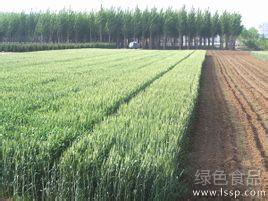
What are the technical characteristics of wheat field intercropping and multiple cropping patterns?
Analysis of the technical characteristics of the "intercropping and multiple cropping" pattern in wheat fields
-
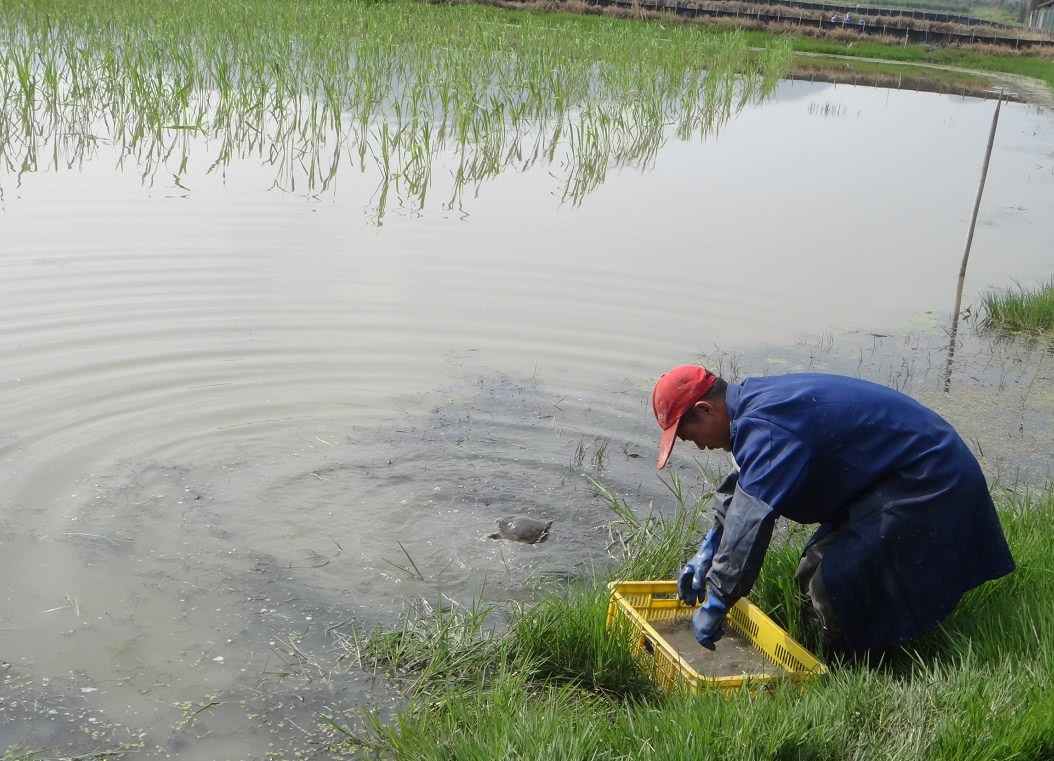
Intercropping "millennium longevity fish" in wild rice stem fields: 300 yuan each and no worries about selling them
This season is the harvest season for all kinds of agricultural products, and also the season when wild rice stems mature. Many people love to eat wild rice stems; white as jade, they are commonly known as "water bamboo shoots" and are also highly nutritious. Wild rice stem is a plant that grows in freshwater ponds, so...
-
Key Cultivation Techniques for Intercropping Bitter Melon in Greenhouse Cucumber
Bitter melon is a heat-tolerant crop with few pests and diseases. Using a solar greenhouse for intercropping cucumber with bitter melon makes full use of the greenhouse's idle period, improves the utilization rate of greenhouse facilities, and increases economic returns. Variety selection. For cucumber, use Xintai Mici as the scion and black-seed pumpkin as the rootstock for grafted seedling raising....
-
Key Techniques for Three-Dimensional Intercropping of Greenhouse Green Peppers, Loofah, and Cilantro
Summer spinach, also known as fu spinach, is difficult to cultivate and can only be grown on a small scale because it tends to bolt prematurely, and it also has the shortest leaf growth period of any crop in the year, resulting in unsatisfactory quality and yield, with pests and diseases hard to control. 1. Variety selection: It is advisable to choose varieties with strong drought resistance, heat tolerance, rapid growth, and low sensitivity to day length...
条件筛选